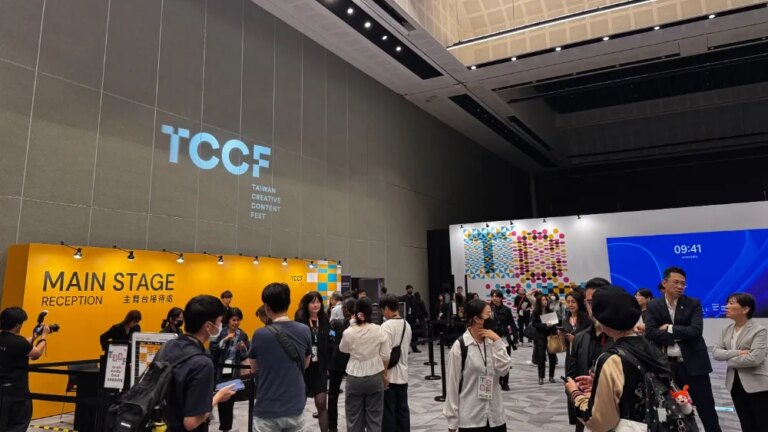
The 2026 edition of the Taiwan Creative Content Fest (TCCF) concluded in Taipei, showcasing a significant shift within the exhibitor landscape. This year’s festival highlighted the prominence of animation and character IP companies, which collectively represented the largest group of exhibitors, increasing from 19 in 2025 to 29 out of a total of 107 exhibitors, as indicated by the Taiwan Creative Content Agency (TAICCA). The participation included 69 Taiwanese exhibitors and 38 international representatives, a decrease from last year’s total of 117.
Representatives from television and media networks also rose from 20 to 22, while new media, streaming, and entertainment companies increased from six to eight. In contrast, film and TV production and distribution firms dropped from 22 to 16, digital tech, VFX, and immersive media shifted from 15 to eight, and the publishing, comics, and webtoons category saw a decrease from 12 to five.
The Pitching program showcased a total of 93 projects and stories, including entries from TAICCA School, and attracted participants from 28 countries. The agency is currently finalizing buyer attendance data and the total business generated during the event.
Hollywood’s AI Pivot Lands in Taipei
A key highlight came on the opening day, November 6, when Weta FX, the renowned New Zealand visual effects company behind blockbuster franchises such as “The Lord of the Rings” and “Avatar,” signed a memorandum of understanding with TAICCA. This partnership aims to position Taiwan as an AI hub for Asia’s content industries. Weta FX plans to collaborate with Taiwanese animation and VFX studio Moonshine Studio to establish a technology platform that will support Taiwanese film and TV projects and facilitate exchanges and internships for emerging Taiwanese filmmakers.
Weta FX CEO Daniel Seah noted that early discussions around generative AI within studios often faced legal challenges. By the start of this year, there was a growing demand from clients to understand Weta’s AI strategy primarily to learn about cost efficiencies. “It’s, ‘If you don’t have an AI strategy, don’t bother to work with us,’” Seah remarked regarding the current shift in industry dynamics.
Taiwan’s burgeoning semiconductor industry has fueled its national strategy surrounding AI, leading to swift advancements from companies like Moonshine. During the festival, Japanese studios also displayed their own AI initiatives. For instance, Toei Animation, famous for productions like “Kamen Rider,” shared insights on its use of generative AI to create backgrounds, with President Yoshimura Fumio expressing that he views AI as a tool that expands creative possibilities rather than a threat to jobs.
At a TCCF panel focusing on AI in animation, OLM Digital’s Yotsukura Tatsuo introduced a groundbreaking coloring tool designed under a government-supported research initiative, while Blue Spirit’s Charlies Beirnaert emphasized that their studio is currently restricted from using AI in Netflix projects. Taiwanese tech firm imCore Corp. also unveiled Core Studio, an AI filmmaking platform boasting over 24 dedicated agents.
Vietnam Rises, Japan Leans In
Interest from Vietnamese buyers has surged, as noted by Grace Chan, a program planner at Taiwan Television Enterprise (TTV), contrasting with last year’s focus on Korean buyers. Southeast Asian markets were a major theme throughout the program, with insights from K7 Media’s Trang Nguyen highlighting Indonesia as the region’s largest film market, notably thriving in the horror genre. Additionally, Thai director Thiti Srinuan described how the revenue generated from music videos significantly financed Taibaan Studio’s film projects.
Japan’s engagement with Taiwan continues to grow, as evidenced by cinematographer Wayne Lo’s interactions with Japanese filmmakers. He reported an increasing interest in Taiwanese content, although he acknowledged Japan’s broader film genre offerings. Yoshimura of Toei noted that Japanese films dominated the Taiwanese market in 2025, advocating for long-lasting partnerships and co-productions in Taiwan.
Characters Take Over the Show Floor
The surge in animation and character IP exhibitors was matched by thematic sessions throughout the event. Toei’s new games label is focusing on original titles rather than adaptations, with Yoshimura stating that the goal is to foster long-term talent in game creation as a new source of IP development. Similarly, producers of microdramas are exploring adaptations into manga and animation.
Despite a dip in publishing, comics, and webtoon exhibitors, Pitching events still attracted interest. Notably, Mirror Fiction’s “The Three Witches of Shetou” won both the TAICCA Award for Best Story and the friDay Video Original Story Award. Increased interest was also observed for Taiwanese comic artist Gao Yan’s “The Song About Green” following its TCCF presentation, prompting numerous meeting requests from potential collaborators spanning Thailand, South Korea, Singapore, and even Europe.
“Creative talent and resources are increasingly consolidated in Asia, yet the uniqueness and audience appeal of the material remain crucial,” stated Chang Chen-yu from World Softest Production Film Co.
Telecoms Put Money Into Taiwanese Content
TAICCA also showcased its joint-venture funds, which have financially backed 27 projects, securing NT$4.9 billion in private capital along with NT$740 million from the agency, totaling around $180 million. Two funds are collaborative efforts with Taiwanese telecom companies.
“Television stations are facing substantial challenges from declines in advertising revenue while still maintaining acquisition budgets,” TTV’s Chan commented. “We hope to leverage connections made at the market to discover suitable content and potentially explore original and co-productions to mitigate risks.”
The Chunghwa Digital Cultural and Creative Fund, primarily owned by Chunghwa Telecom, has committed NT$1 billion ($32 million) for backing projects and companies. TAICCA’s Enjoy Entertainment fund, partnering with Far EasTone, has invested in 15 projects in its first ten months, including a Taiwanese remake of the popular Korean series “Our Blues,” set to debut globally on Netflix on December 3. The momomini Kids Content Fund, focusing on children’s content, aims to elevate a sector previously overlooked in Taiwan.
A notable investment from Enjoy ties into a key highlight of the week—“The Rope Curse 4: Kuntilanak,” a Taiwan-Indonesia horror collaboration that also received backing from Toei and achieved NT$80 million ($2.6 million) at the Taiwanese box office, marking a franchise record.