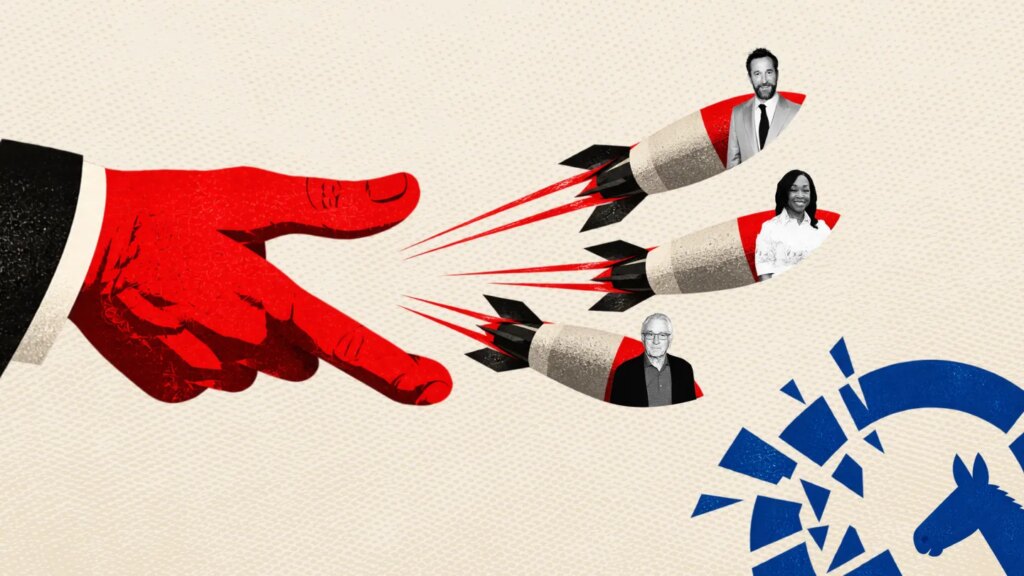
In a peculiar twist of the political narrative, James Talarico, a Democratic candidate vying for a U.S. Senate seat in Texas, is facing unexpected allegations from his opponent, Ken Paxton. Paxton has falsely suggested that Talarico is running for Senate in California, claiming, “California already has two senators. If elected, James Talarico would be California’s third senator.” This unfounded attack marks one of the latest efforts by Republican strategists to utilize the Hollywood connections of Democratic candidates as a tactic to sway voters.
Hollywood’s Influence in Politics
Talarico’s campaign has garnered significant support from notable Hollywood figures, which, rather than being seen as an asset, is becoming a point of contention. Notable entertainers like Peter Chernin and Damon Lindelof have hosted fundraisers for him, while Robert De Niro headlined a New York event. With stars like Brad Garrett, Holland Taylor, and Noah Wyle contributing to Talarico’s campaign, the narrative spins towards painting him as excessively tied to Hollywood’s elite, an angle Republicans are keen to exploit.
Attacks on Celebrity Connections
As the midterm elections approach, Republicans are zeroing in on candidates’ ties to Hollywood, especially in regions where these connections are perceived unfavorably. This anti-celebrity strategy has been bolstered after the 2024 elections, where high-profile endorsements from celebrities like Beyoncé and Eminem did not benefit Kamala Harris and may have even hindered her campaign in pivotal swing states. GOP strategists now seem convinced that a candidate’s celebrity associations can negatively impact their appeal.
Case Studies of Anti-Hollywood Sentiments
Democratic Senator Jon Ossoff is another example of this trend. His campaign has attracted substantial Hollywood support, thanks to fundraisers organized by figures like Shonda Rhimes and contributions from stars such as Sally Field and Larry David. His opponent, Mike Collins, has seized on this connection, claiming Ossoff is more aligned with Hollywood, California, than with constituents in Georgia. Such sentiments have been echoed by conservative outlets criticizing Ossoff for spending on makeup services, framing it as a disconnect from working-class realities.
Hollywood Bashing and Its Ironies
Ironically, Republicans who are now rallying against Hollywood connections seem to forget that their own party has a history of celebrity involvement, from Ronald Reagan to prominent figures like Arnold Schwarzenegger. This hypocrisy is especially glaring as candidates like Michele Tafoya, a former sideline reporter, seek to secure positions in historically red states while navigating the fine line between celebrity status and voter appeal.
A Shift in Targeting Tactics
This campaign season reflects a growing trend wherein technology and Big Tech have supplanted Hollywood as the primary villain. In Wisconsin, Republican gubernatorial candidate Tom Tiffany branded his opponent David Crowley as “Data Center David” to criticize support for tech projects. This shift indicates that the recent Hollywood bashing may not resonate as strongly with voters as anticipated. In contrast, polls show Ossoff leading his opponent despite his Hollywood ties, suggesting that negative associations may not hold the weight Republicans expect.
Conservative Celebrity Engagement
Interestingly, Republicans are not entirely distancing themselves from celebrity culture. In Tennessee, Senator Marsha Blackburn shared an AI-generated video of herself engaging with Kendrick Lamar’s music, a move that drew significant criticism given her voting record on civil rights issues. This juxtaposition highlights the complexities of celebrity engagement in modern politics, where both sides maneuver to leverage pop culture effectively.
The evolving landscape of political campaigning underscores a significant pivot within Republican strategies, where Hollywood aligns more closely with controversy than with the aspirational narratives it once represented. As the election approaches, it remains to be seen how effective this new angle will be in swinging voters amidst an increasingly polarizing political atmosphere.