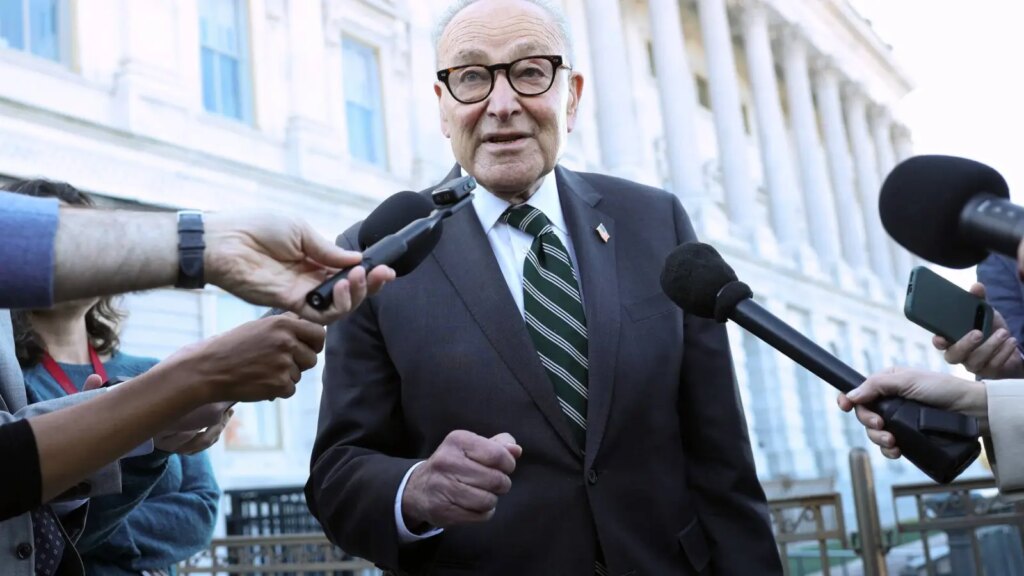
As the Democrats navigate a generational struggle over leadership in the Senate, contrasting visions are coming into focus. On one side stands Chuck Schumer, the 76-year-old veteran of Congress, who has held his seat since the early 1980s. On the other, 67-year-old Chris Van Hollen from Maryland, who has gained traction among lefter-leaning senators. This defining moment for the party almost resembles a saga from a galaxy far, far away, where experience meets a push for fresh perspectives.
Fueling Van Hollen’s Challenge
Democratic insiders are intrigued by the motivations behind Van Hollen’s challenge. The party’s decision to rally behind him raises questions: Why target the man who recently led Democrats to a remarkable victory? Part of this unrest is rooted in ideological differences, particularly regarding the U.S.’s stance on Israel. While Schumer has criticized certain actions of the Israeli government, he has consistently supported American aid and arms sales to Israel. In contrast, Van Hollen has expressed genuine concern about Israel’s aggression, potentially resonating more with the growing progressive wing of the party.
An underlying theme driving this contest is the perception of party messaging. With the stark realization that the image of an aging career politician may not inspire confidence, some Democrats worry about Schumer’s capability to connect with a broader audience. Even if he’s not yet an octogenarian, the concern remains that he could evoke memories of Joe Biden’s waning influence among the electorate.
Generational Power Dynamics
For Van Hollen, more than just a political challenge exists; it’s a generational reckoning. In an industry town like Washington, where power dynamics seem to shift over generations, younger members of the party might feel pinned between an entrenched old guard and the rising stars. Many Democrats recognize the suffocating grip of the boomer generation, who seem resistant to pass the baton. If the trajectory mirroring the recent political landscape holds, younger generations may soon find themselves either sidelined or, at best, in transitional roles that barely scratch the surface of the establishment.
Recent Democratic victories across the country reflect a shifting tide, and while Van Hollen represents a bridge between the old and the new, he, too, is technically part of the boomer generation. Yet his cultural alignment leans toward Generation X, offering a blend of respectability and approachability. Time is of the essence for Van Hollen; a failure to act now could see power leapfrog him directly to much younger senators like Brian Schatz, Elissa Slotkin, or Chris Murphy, none of whom have reached 55 yet.
The Vote and Its Implications
With just days until the caucus vote, indications suggest that many Democrats have yet to voice their support for either Schumer or Van Hollen. This uncertainty might imply that Van Hollen could have more backing than anticipated. Celebrity endorsements for Van Hollen, while notable, reveal frustrations over the secrecy of the voting process—highlighting the internal party contention regarding leadership’s visibility versus strategy. Nonetheless, Schumer’s extensive experience in securing votes presents a formidable challenge for Van Hollen, leaving many to speculate about Schumer’s confidence in retaining his role.
Despite skepticism surrounding Schumer’s leadership, it is essential to remember the core focus of his role: to ensure the party’s majority. His successful navigation through the fundraising and recruitment process added heft to the Democrats’ resurgence. Given the significant achievements Schumer has made this year—the return to majority status—critics arguing for a change based solely on age may find their challenge unconvincing.
A Path Toward Transition
The debate surrounding leadership also brings to mind the recent scenario with Nancy Pelosi. She remained in her position while promising to step down in the future, a strategy that ultimately led to her legacy as one of the most effective speakers in history. Schumer, too, could find a balanced approach by making a similar commitment. By pledging to step aside at the end of 2028 after contributing to the election of a Democratic president, he would set the stage for a smoother transition while allowing Van Hollen to claim credit for instigating this change. This move could serve as a bridge fostering the future of the Democratic leadership without sacrificing legacy or unity.
Navigating the complexities of generational leadership in a changing political landscape is no easy task. Yet, should Schumer lean into a strategic handover, he may find a path forward that secures his legacy while allowing a new generation to rise.