“Love Language,” directed by Joey Power, emerges as a nostalgic romantic comedy that, while gently embracing Gen-Z themes, ultimately clings to the genre conventions established by previous generations. The film’s exploration of youthful romance remains tethered to ’90s tropes, from the classic meet-cutes to the obligatory gay best friend and dramatic airport confessions. Although it introduces modern elements like queer marriage and contemporary humor, it suggests that the fundamental dynamics of dating and romantic connection have not changed all that much. For many viewers under 30, the film may serve as a comforting escape, a sentiment likely appreciated by their older counterparts as well.
Plot Overview
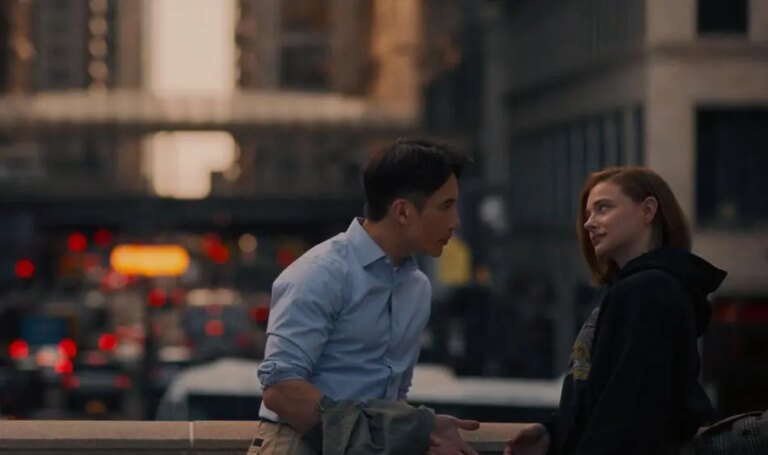
Starring Chloë Grace Moretz as Louisa, a talented writer grappling with a creative block, “Love Language” follows her unexpected journey into a lucrative side gig of crafting wedding vows for others. Struggling to express her feelings amidst a love triangle, Louisa’s story becomes a tapestry of chaotic romantic entanglements. The film, visually warmed by Chicago‘s autumnal palette, leans heavily on the charm of its ensemble cast rather than the strength of its script—one that could have benefitted from sharper wit to balance the sentimentality.
Aspirations vs. Reality
Louisa, recently nursing a broken heart after a failed engagement, accompanies her best friend Tilda (Billie Lourd) to a bachelorette party. When Tilda asks Louisa to help with her wedding vows, Louisa cleverly utilizes the vows she had originally written for her own ill-fated marriage. This sets off a chain reaction whereby other party-goers approach her for similarly heartfelt dedications, leading to a small-scale wedding industry success. Amidst the festivities, she meets Tilda’s charming cousin Dash (Anthony Ramos), whose candid demeanor piques Louisa’s interest, even as she contemplates her complicated romantic past.
Complications of Love
Complicating matters further, Louisa is approached by affluent bride-to-be Olivia (Isabel May) to write vows for her impending marriage to Louisa’s former college crush, Warren (Manny Jacinto). Louisa’s struggle to keep her feelings hidden intensifies as she finds herself increasingly drawn back into her past while also navigating a budding romance with Dash. The tension escalates as her inability to articulate her emotions threatens to derail both her professional and personal lives just as Olivia and Warren’s wedding day draws closer.
Character Dynamics
Within the film, the dynamics of the romantic quadrangle expose a disparity in character depth. While Moretz adeptly portrays Louisa’s insecurities and struggles, it’s Olivia’s character, artfully depicted as both a privileged figure and an insightful observer, that provokes deeper curiosity. Although the interactions between Louisa and Warren invoke nostalgia, Warren lacks the charisma and emotional complexity that Dash, with his nuanced portrayal, brings to the screen. This imbalance leaves Louisa’s choice feeling low-stakes and overly drawn-out, missing the emotional stakes presented in similar films like “My Best Friend’s Wedding.”
Conclusion: Where’s the Innovation?
While “Love Language” offers a pleasant, recognizable watch, it often leans on familiar tropes rather than breaking new ground within the romcom genre. The script suffers from a lack of detailed character development, particularly in Louisa’s professional and personal spheres, which come across as underexplored. Although the film succeeds in creating an enjoyable atmosphere through its talented cast and picturesque Chicago backdrop, one can’t help but wonder when a more distinctively generational romantic comedy will finally emerge to reflect the complexities of modern relationships.