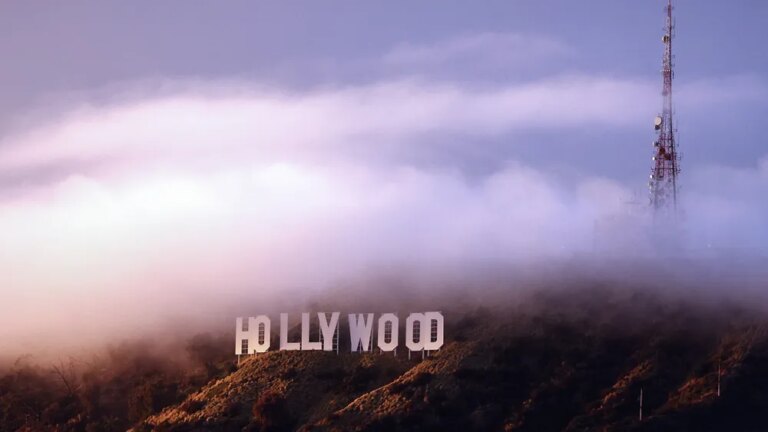
Despite California‘s ambitious $750 million investment aimed at revitalizing the film and television industry, recent data from FilmLA indicates a continued decline in production levels. The state’s efforts to stimulate growth have yet to show the desired impact, with overall production falling by 3.7% in the third quarter of 2026.
State Subsidies on the Rise, Productions Still Lagging
While the portion of projects receiving state subsidies has seen an increase, location shoots remain significantly lower than the five-year average. City officials had hoped that the substantial expansion of California’s film and TV tax credit would yield more favorable results by this time. Following a promising start in early 2026, Los Angeles Mayor Karen Bass expressed optimism that the industry was “turning a corner.” However, the decline in shoot days persisted in subsequent quarters, which raises questions about the tax credit’s effectiveness amid ongoing challenges facing the industry.
Encouraging Developments Amidst Challenges
Despite the overall decline, Mayor Bass highlighted the “encouraging signs of progress” regarding state subsidies for scripted projects, which have nearly doubled compared to last year. “These gains show that incentives work, but we must do more,” she stated, reaffirming her support for an unlimited state incentive. However, her opponent in the upcoming mayoral election, Nithya Raman, criticized her for not doing enough to aid the industry and called for the elimination of the cap on state subsidies.
Impact of the Tax Credit Expansion
In 2025, Governor Gavin Newsom advocated for a significant increase in the state’s film and TV incentive from $330 million annually to $750 million. The California Film Commission noted a surge in applications following the implementation of this increase on July 1, 2025, with expectations for these projects to begin production in early 2026. Although the expansion has not effectively reversed the general trend, the share of Los Angeles shows receiving tax credits has risen substantially. According to FilmLA, 40.2% of scripted shows filming in the last quarter received the state tax credit, nearly double the figure from a year ago.
Mixed Outcomes in Key Genres
The increase in credit distribution has been particularly notable in specific genres: 62% of TV comedies received the credit—up from 19% in 2025—while TV dramas saw an increase from 21% to 49%. In a notable development, TV comedy experienced its best quarter since the 2023 strikes by the Writers Guild of America and SAG-AFTRA, achieving 192 shoot days, up from just 57 in the previous quarter. However, this positive trend was countered by a decline in shoot days for TV dramas, dropping from 732 to 494. Reality television also continues to face significant challenges, with shoot days at 630, reflecting a drop of 66% from the five-year average.
Industry Leaders Express Concern
Philip Sokoloski, VP at FilmLA, expressed disappointment over the overall decline in production. “The fact remains that work that does not receive incentive support is increasingly likely to leave California for places that are more affordable,” he remarked. A rare large-scale project to shoot in Los Angeles, the upcoming Netflix film “The Further Mis-Adventures of Cliff Booth,” is taking advantage of $20 million in state tax credits, highlighting the importance of incentives in attracting major productions.
“I hope that it comes back to this city, because it’s what the city feels like it’s for,” said Elizabeth Debicki, one of the film’s co-stars, emphasizing the desire for local crews and residents to contribute to productions in their hometown.
Marc Malkin contributed to this story.