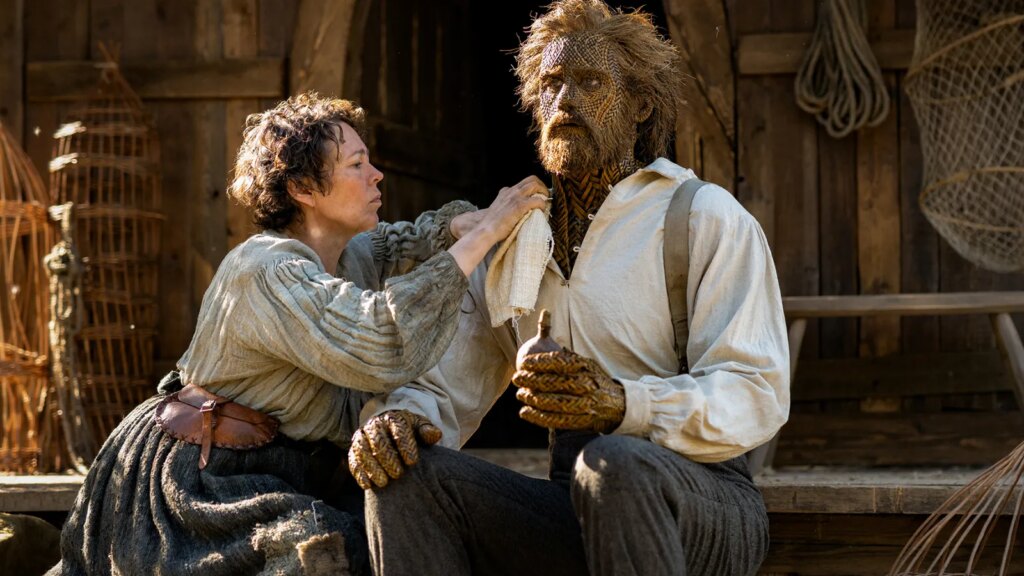
In a surprising twist, Hollywood’s latest heartthrob isn’t a human but rather a meticulously crafted character brought to life by actor Alexander Skarsgård in the romantic comedy *Wicker*. Skarsgård plays the Wicker Husband, a character that has ignited a flurry of excitement and curiosity across social media platforms. Comments like “Never looking at my patio furniture the same again” have flooded Instagram, highlighting the character’s undeniable charm and the ensuing craze.
Ikea even joined the conversation, humorously dubbing their wicker furniture as “husband material,” tapping into the film’s quirky premise. However, not everyone is thrilled by this wicker romance. The basketweaving community has voiced its concerns, particularly about the artistic direction taken in the film. Critics point out that the Wicker Husband is not made from traditional willow, and its construction appears more plaited than woven, triggering a debate on authenticity.
Authenticity in Wicker Craft
Deborah Needleman, former editor of the *New York Times*’s T magazine and now a basket maker herself, expressed her mixed feelings on Instagram. She wrote, “I’m excited that the basketweaving community now has our own hot, woven leading man, but I’ve also got issues. Why is a dude woven in an English fishing village not made of willow – or even rush?!” Her comments have prompted responses from over 100 fellow basket makers, contributing to a lively discussion on the nature of wicker.
The Oxford English Dictionary defines wicker as “thin sticks of wood twisted together to make baskets, furniture, etc.” Eleanor Morgan, a trade advisor to the Worshipful Company of Basketmakers in London, noted that while willow is commonly associated with wicker, historically, it could refer to any pliant twig or osier.
Creating a Sentient Wicker Character
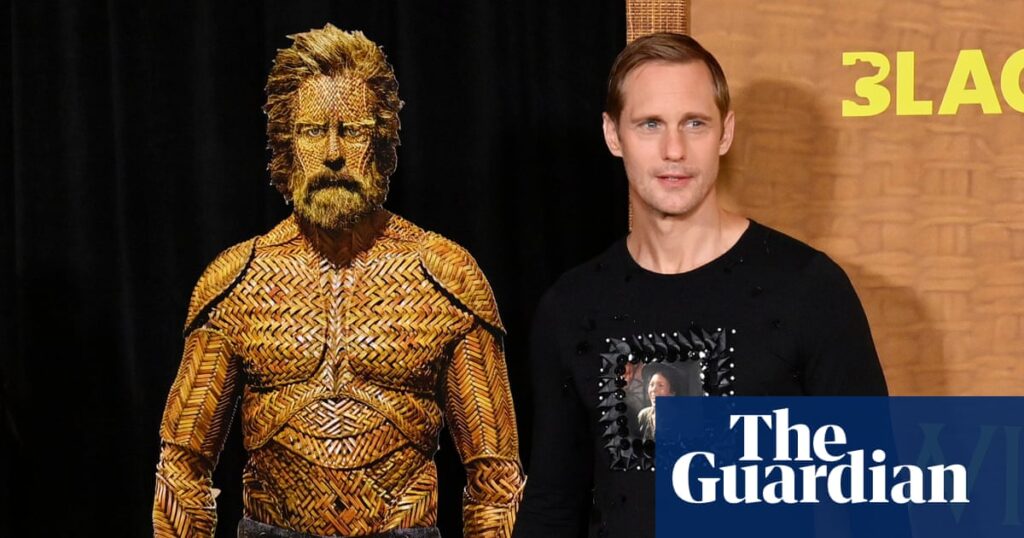
Joe Dunckley, a prosthetic designer at Wētā Workshop in New Zealand, explained the challenges faced in designing a character made entirely of wicker. “Most prosthetic materials are soft to mimic skin. But he’s not flesh and bone,” he said. To create the wicker effect, Dunckley and a team of 80 specialists crafted 50 interlocking body pieces that Skarsgård wears. Using a rubber-like thermoplastic elastomer, the team was able to 3D print a bespoke weave, ultimately attaching it to a spandex suit. Their extensive design process lasted 18 months and involved developing 10 facial appliances as well.
Dunckley clarified that using willow wasn’t feasible for their needs: “It’s similar to why, in film, we don’t make armor out of actual steel or use real swords. This is a fantasy film.” Lewis Prosser, a Cardiff-based basket maker, noted that while he would have approached the task differently, he respects the unique perspective in the film. He added that his understanding of wicker is that it denotes an object that is woven but not specifically a textile, aligning with views shared by others in the craft.
Cinematic Challenges and Cultural Depictions
Despite the film’s British dialects, *Wicker* is not set in England, which frames its unique narrative on basket making. Dunckley suggested the basket maker character, played by Peter Dinklage, has traveled globally to learn various weaving skills. Prosser emphasized that authentic costumes should reflect the local flora, suggesting that if the film had been set in a specific region, it would be more appropriate to use locally sourced materials like willow in the UK or Esparto grass in Spain.
To ensure the character’s recognizable features, Dunckley and his team created a 3D cast of Skarsgård, carefully capturing his signature “Skarsgård smoulder.” The team ensured that the design allowed for expressive nuances, with his hair, beard, and lashes crafted from muka, fibers derived from New Zealand flax.
The Future of Basket Making
Dunckley regards the interest and critiques from the weaving community as “really cool,” acknowledging the dedication and artistry involved in traditional basket making. Although purists may note inconsistencies, Morgan mentioned that the film offers plenty of “osier-related eye candy,” with numerous scenes dedicated to basketry.
Prosser expressed enthusiasm about the film’s ability to spotlight basket making, especially considering that many traditional skills are facing extinction. TikTok has even become a hub for wicker costume-making tutorials, sparking creativity in the craft community. Skarsgård himself humorously referred to his bespoke costume, including unique design features, as “extraordinary craftsmanship.”
As *Wicker* continues to capture the imaginations of viewers, the dialogue surrounding the craftsmanship and artistic choices serves to highlight both the enduring appeal and evolving nature of wicker art in pop culture.