In an era marked by political turbulence and public discontent with traditional structures, the question arises: Can Democratic Socialists seize the moment? With recent victories in local elections and a growing presence on the national stage, the Democratic Socialists of America (DSA) are poised at a pivotal crossroads. The group is grappling with both internal dynamics and external opportunities to redefine the political landscape. As public frustration mounts, Democratic Socialists are increasingly viewed as a viable alternative, advocating for redistributive policies and challenging the status quo. This article explores their potential to harness this momentum, examining key victories and the challenges ahead.
Local Victories and Growing Influence
Recently, Alex Brower, a substitute teacher and union organizer, stunned Milwaukee City Hall by winning a special city council election as a Democratic Socialist. His success, built on addressing specific local issues like lowering utility bills, reflects a broader strategy by Democratic Socialists to focus on tangible community improvements. Brower, a delegate at the DSA’s biennial convention, emphasized the need for practical solutions and grassroots engagement over mere social media tactics, asserting, “People are very angry with the system right now.” Democratic Socialists are capitalizing on this dissatisfaction, offering alternative solutions grounded in local and material concerns.
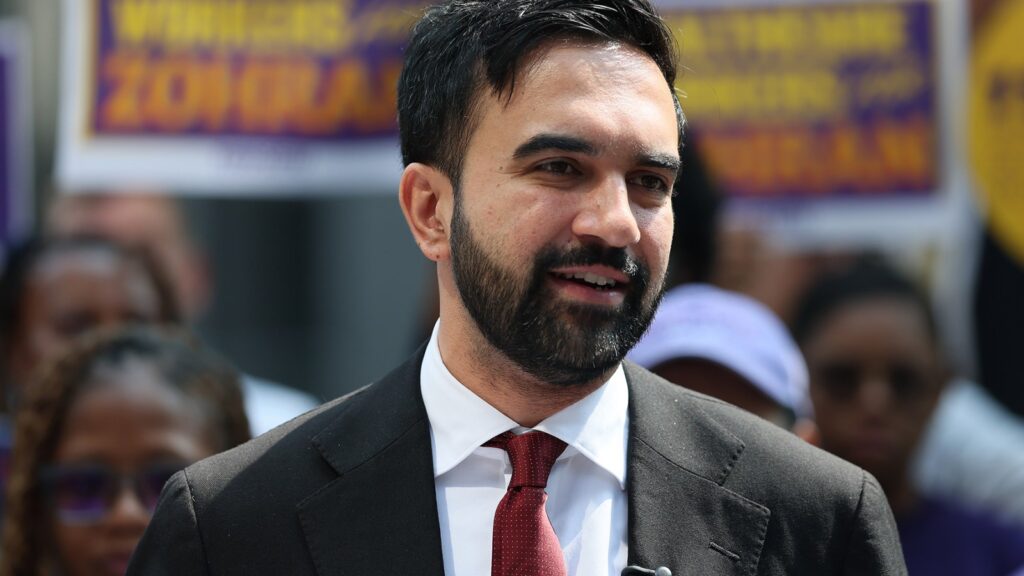
This year’s DSA convention took place amid a climate of significant political change, as exemplified by Zohran Mamdani‘s surprising win in New York City’s Democratic mayoral primary. The convention, with its nearly 2,000 delegates, served as a platform to address internal debates on how best to capitalize on this momentum. Regardless of differing opinions, a shared sentiment prevailed among attendees: This moment is theirs to seize.
Political Landscape and Challenges
The stakes have never been higher for Democratic Socialists. Amid President Donald Trump’s policies favoring corporate interests and tilting towards authoritarianism, the upcoming midterms present a crucial opportunity. With the Democratic Party’s approval ratings at historic lows, Democratic Socialists see an opening to offer an alternative political path. As they navigate their way through internal disagreements, these activists are united by the urgency of the present moment.
At the convention, there was vigorous debate about how inclusive the organization should be. While some argued for a broader tent approach to attract more members, others stressed the importance of maintaining strict ideological standards. This tension reflects a broader debate within the Democratic Socialists about the balance between expansion and maintaining ideological purity.
Internal Dynamics and Future Prospects
Internal disagreements have long been a characteristic of leftist movements, but many in the DSA view this as a strength rather than a weakness. Former National Political Committee member Kristian Hernandez likened the organization to a passionate family where political arguments are common. Despite criticism from outside the organization about internal conflicts, DSA leaders emphasize their commitment to building a democratic and inclusive movement.
Moreover, recent shifts in public opinion show increasing sympathy for policies advocated by Democratic Socialists, such as support for Palestine, which aligns with the changing preferences of Democratic voters. Figures like Mamdani demonstrate that standing firm on controversial issues can resonate with a substantial portion of the electorate, countering traditional political assumptions.
The Path Forward
The Democratic Socialists’ goal is clear: translate grassroots momentum into political power. As more members run for office at local and state levels, their strategy centers on building broad coalitions and advancing an agenda that emphasizes social justice and economic reform. Figures like Brower and Mamdani exemplify this approach, and their success signals a potential shift in American politics.
At the core of this movement is a belief in the power of collective action. Delegates at the convention expressed optimism that, despite internal challenges, the movement is gaining traction. With their eyes set on future elections and a commitment to addressing systemic issues, Democratic Socialists are poised to redefine the political landscape, offering a hopeful alternative to disillusioned voters seeking change.