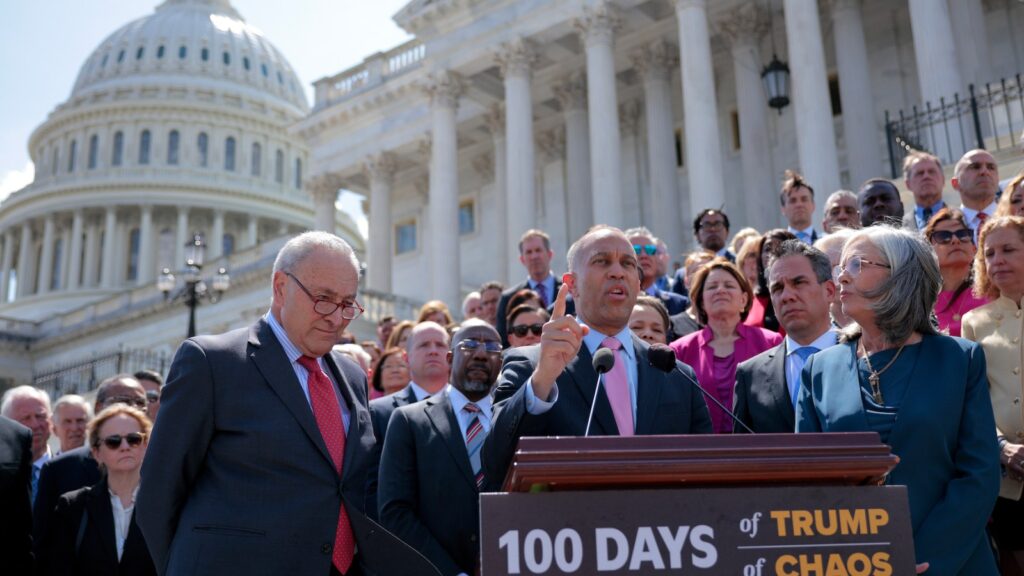
The Democratic Party finds itself grappling with a significant challenge, as reflected in recent data indicating a decline in their public image. According to a Wall Street Journal poll, the party’s favorability has plummeted to unprecedented lows over the past three decades. With faith in the Democrats waning, the notion that the Democratic Party’s brand is cooked gains traction, particularly as voters perceive Republicans as more competent on pressing issues. This dynamic poses critical questions about the future direction of the party and its ability to reclaim voter trust.
Declining Favorability
Recent polling highlights the Democratic Party’s struggles, with 63% of voters expressing an unfavorable opinion, while only 33% view them favorably. This sentiment reflects the lowest level of popularity for Democrats since the Wall Street Journal began its surveys in 1990. Despite anticipation for a robust response in the 2026 midterms, hinged on widespread discontent with former President Trump’s policies, the Democrats’ overall approval has continued to erode since his administration began.
Challenges in Perception
John Anzalone, a prominent Democratic pollster, emphasized the need for the party to re-engage with the electorate. “The Democratic brand is so bad that they don’t have the credibility to be a critic of Trump or the Republican Party,” he stated. There is a pressing need for Democrats to reconnect with working-class voters and clarify their economic stance if they hope to overcome the perception that the Democratic Party’s brand is cooked.
Comparative Performance
The survey indicates that voters rate Republicans more highly on issues such as the economy, immigration, and foreign policy. On the matter of “illegal” immigration, Republicans were favored by 48%, compared to 24% for Democrats. While Democrats performed better concerning health care and vaccine policy, both parties tied at a meager 37% for policies concerning middle-class families.
Internal Reflections and Future Directions
Tré Easton, a Democratic operative, expressed his views on the prevailing issues within the party on social media, highlighting the necessity for serious introspection. The sentiment of the Democratic Party’s brand being cooked persists among its members and appears in other polls, such as the Quinnipiac survey, where approval of congressional Democrats hit a new low.
Despite these challenges, the Republican Party is not overwhelmingly favored either, with 54% of voters holding an unfavorable view. This indicates a broader dissatisfaction with political leadership, suggesting a complex political landscape where both parties must reevaluate strategy and engagement to meet voter expectations.