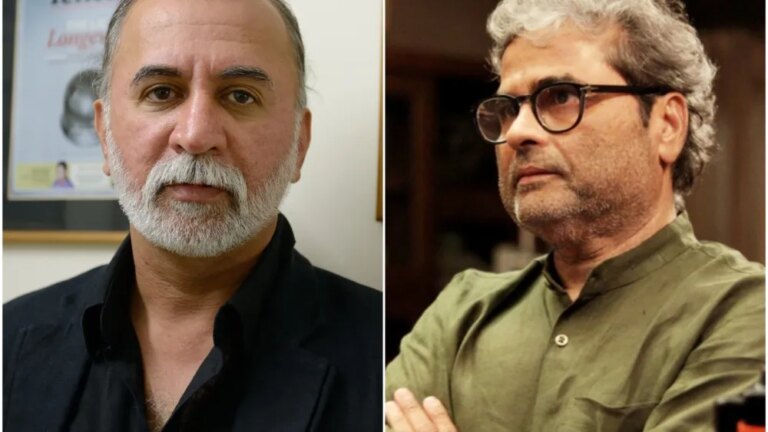
Renowned Indian filmmaker Vishal Bhardwaj is embarking on a provocative cinematic project inspired by the controversial Tarun Tejpal rape case. This announcement emerged shortly after the Bombay High Court overturned a previous acquittal, convicting the former Tehelka editor of rape and sentencing him to ten years of rigorous imprisonment. The court’s decision, delivered on August 6, has reignited discussions surrounding the case, which has drawn considerable public and media attention since its inception in 2013.
Bhardwaj’s Creative Vision
Bhardwaj, famous for his Shakespearean adaptations like “Maqbool,” “Omkara,” and “Haider,” expressed a keen interest in the complexities revealed in the Goa trial court’s extensive 527-page judgment. He was present in Goa for the verdict and has meticulously studied the legal documentation multiple times. “The contradiction between the two judgments makes it a perfect case for a ‘Rashomon’-style narrative,” he explained, indicating his intention to explore the various perspectives that surround the case. He believes that there are numerous unknown facts that audiences will find both surprising and enlightening when depicted on screen.
Understanding the Complexity
Bhardwaj delves deeply into the dense legal record, stating, “As they say, the devil lies in the detail. How do you expect people to go through the tiring, dry legal language of a 500-plus-page court judgment? I have gone through the minutest details. I have read the judgment many times and am still grappling with it. It’s a very important case for society.” This statement underscores his commitment to accurately reflecting the intricacies of the legal proceedings.
A Balanced Approach
Emphasizing an objective viewpoint, Bhardwaj noted that he has yet to finalize his perspective on the film. “It’s too early for me to make up my mind on what the film is about, but I’m very clear that the approach must be that of a dispassionate observer, like a true film journalist,” he stated. He aims to present the story without biases or preconceived notions, a crucial factor in portraying a narrative with multiple viewpoints. “Any crime of this nature, one with many points of view beyond reasonable doubt, must be approached without preconceived ideas or a biased starting point,” he elaborated. “No story is complete without all the different points of view, especially in a ‘Rashomon’ structure, because half a glass of water is also half empty at the same time – the only difference is perspective.”
Innovative Casting Approach
When it comes to casting, Bhardwaj has set a unique requirement: he wants the actors to approach their roles as if it were purely fictional, devoid of any pre-existing judgments about the case. “I want the actor to be unaware of the crime, if possible, and to set the judgments aside,” he remarked, showcasing his desire for authenticity and emotional depth in the performances.
Production and Philosophical Insights
The project will be produced in partnership with a major Bollywood studio, although Bhardwaj refrained from naming the collaborator. With characteristic humility, he downplayed his status as an authority on Shakespearean adaptations: “I’m blessed by the almighty himself, otherwise how could an average student from a small town become an authority on Shakespearean adaptations?”
In discussing the film’s ultimate significance, he articulated its broader implications: “It’s not about India in 2026. It’s about the truth, which must come out at any cost, at any 26th year of any century.” His focus on truth underscores the film’s potential to contribute meaningfully to ongoing societal dialogues.
A Prolonged Legal Battle
The Tejpal case is notable for its protracted legal journey. Tejpal was first arrested in 2013 after a junior colleague accused him of sexual assault. Later, a Goa sessions court acquitted him in 2021 — a ruling that was contested by the state. The recent decision by the Bombay High Court categorically deemed the trial court’s judgment as “perverse,” citing evidence including the testimony of the complainant, CCTV footage, and Tejpal’s own emails as factors in establishing guilt. Tejpal has announced intentions to appeal the ruling in the Supreme Court.