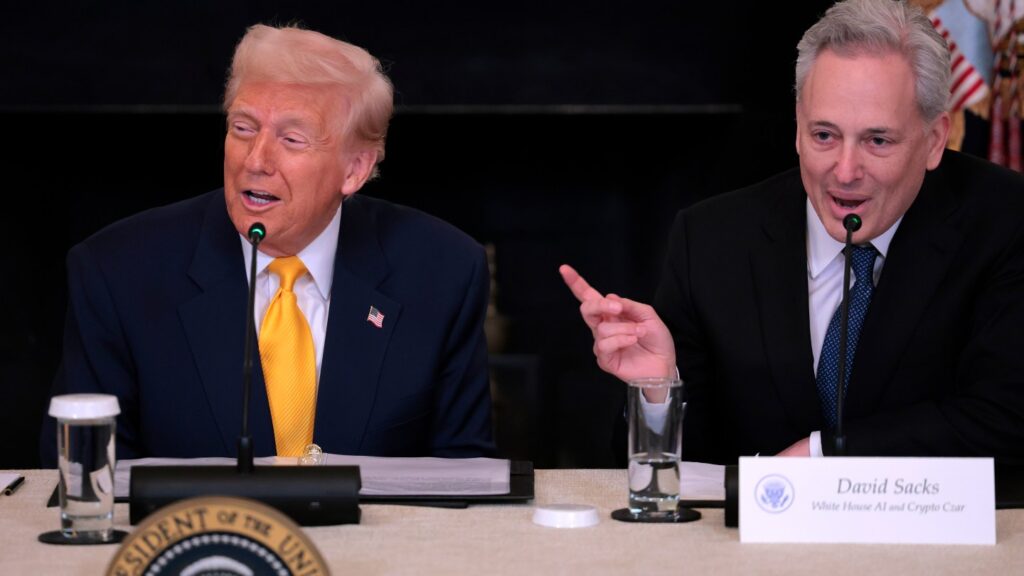
Donald Trump’s newly announced “AI Action Plan” marks a significant shift in the approach to artificial intelligence regulation in the United States. As President, Trump has replaced previous frameworks with a strategy that emphasizes competition and deregulation. This action plan has sparked varied reactions from technology experts, government officials, and industry leaders. Understanding its implications requires diving into the key aspects of this document.
Trump’s AI Action Plan Scraps Biden’s Framework
President Trump’s AI Action Plan effectively dismantles his predecessor Joe Biden’s regulations. Biden’s executive order was limited in power but attempted to introduce transparency by having tech companies share information about AI models with the government. This was a move to maintain oversight over potentially risky AI deployments. However, Trump’s plan does away with these requirements, shifting the focus away from checks and balances.
Emphasis on Competition, Not Regulation
The AI Action Plan leans heavily towards promoting competition over imposing new regulations. The plan characterizes regulation as “onerous” and “unnecessary,” suggesting a hands-off approach that favors innovation and market freedom. This laissez-faire stance aligns with tech giants’ interests and has been well-received by industry leaders hoping for minimal government intervention.
AI and International Dynamics: The China Factor
The plan positions China as both a threat and an opportunity. It argues for technological dominance by reducing regulatory constraints to compete with China. Yet, it simultaneously opens doors for trade with Chinese companies, as evidenced by the decision to lift certain bans, like those on Nvidia chips. The document underscores the tension between maintaining national security and fostering international trade relationships.
Concerns Over Ideological Bias and “Wokeness”
One unexpected element in the plan is the focus on defending free speech in AI applications. While the importance of preventing bias and misinformation is universally acknowledged, the action plan specifically targets “ideological bias.” This reveals a political concern over potential censorship, though experts argue that current AI systems are far from imposing stringent restrictions on free expression.
Potential Roadblocks and Future Resistance
While Trump’s AI Action Plan has made waves, it is not without opposition. There are tech-populist figures and state governments who might challenge its implementation. Lawsuits, like the one involving Disney and Midjourney, illustrate ongoing legal battles over AI’s scope and influence. These challenges may shape how AI regulation evolves in the future, possibly swaying the federal government’s current stance towards increased oversight.
The “AI Action Plan” represents a bold shift towards deregulation, focusing on competition and international trade. It aligns with Trump’s broader economic strategies but invites debate on the balance between innovation and regulation in safeguarding public interest.