In Anke Blondé’s intriguing film, “Dust,” viewers are drawn into a stylish saga of friendship and fraud, where themes of trust and betrayal unfold amidst a backdrop of corporate intrigue. From its promising start, the film captures attention with a unique narrative flair, yet eventually, the momentum slows, leaving audiences pondering its deeper substance. This “stylish saga” keeps you engaged, yet struggles to maintain its initial allure throughout.
A Captivating Opening
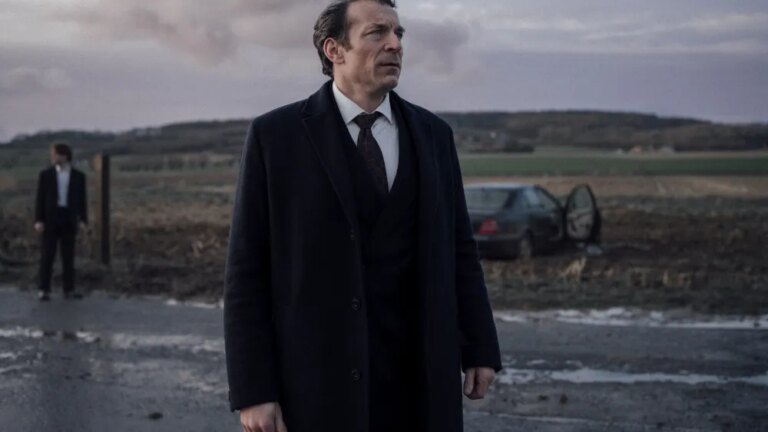
The film opens with an enigmatic scene of dust particles floating, evoking a sense of mystery and anticipation. Set in 1999, “Dust” introduces Belgian executive Geert (Arieh Worthalter) and tech head Luc (Jan Hammenecker), who find themselves on the brink of a technological breakthrough reminiscent of today’s A.I. innovations. Quickly, the film establishes tension as it hints at underlying deception and the looming consequences of their actions. This sets the stage for a tale that explores the complexities of loyalty and ambition within a corporate landscape.
Intriguing Narrative Style
Blondé crafts a film rich in atmosphere, utilizing a gloomy palette and somber musical notes to create a ghostly, surreal quality. The story, although inspired by the Lernout & Hauspie scandal, diverges from real events to present an almost fable-like narrative. Its elliptical editing style seamlessly weaves between timeframes, enhancing the fluidity and ethereal nature of the tale. This editing technique keeps viewers engaged, as they navigate through the ambiguities of Geert and Luc’s journey.
Exploration of Moral Dilemmas
As “Dust” unfolds, it becomes clear that the central narrative revolves around the moral quandaries faced by the protagonists. Geert and Luc are caught in a web of impending legal trouble, forced to contemplate escape or confession. This tension, underscored by moments of personal reflection, adds depth to the story. While Luc confides in his wife, Geert seeks solace with his driver, highlighting the differing paths each character might take as they confront their impending downfall.
A Stylish Yet Incomplete Tale
Despite its compelling start, “Dust” gradually loses its narrative momentum. As the story progresses, it becomes more mechanical, focusing on the functional rather than the poetic. The film’s strong visual style eventually overshadows the narrative depth, leaving characters seemingly disconnected from their plight. Although the lead actors deliver captivating performances, the story’s progression veers into a noncommittal conclusion, lacking the catharsis or irony that might have solidified its impact.
“Dust” is a film that impresses with its aesthetic and thematic ambitions. However, it struggles to sustain the intrigue it initially promises, leaving an impression of what could have been. While it invites reflection on trust and ambition, the stylish saga ultimately plateaus, making one wish for a more fulfilling narrative resolution.