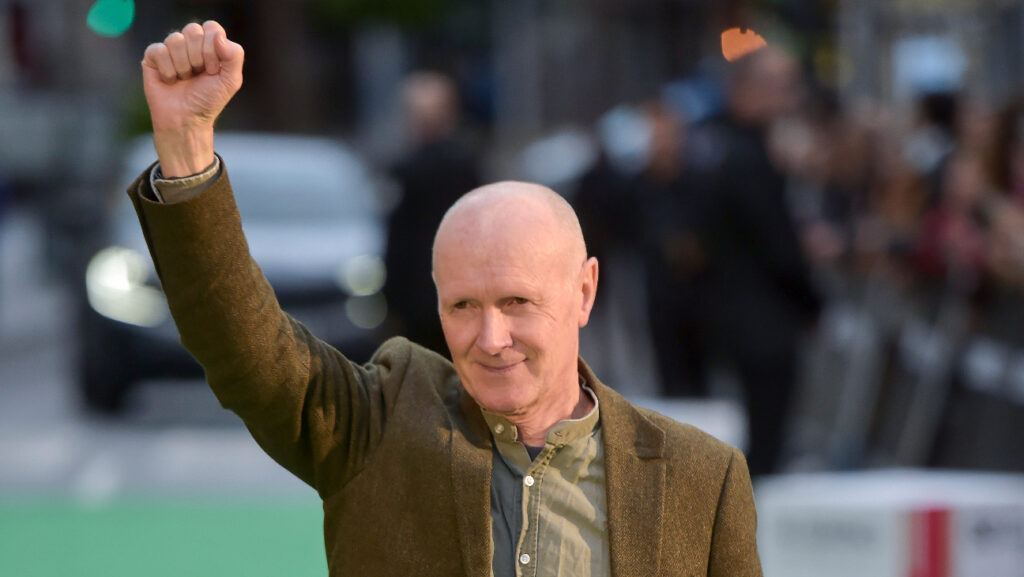
In a recent turn of events, Ken Loach’s screenwriter, Paul Laverty, found himself at the center of attention after being arrested during a pro-Palestine protest in Edinburgh. This has sparked discussions around the actions taken during the demonstration and the implications of supporting proscribed organizations. As the story unfolds, it sheds light on the complexities surrounding freedom of expression and political activism.
Protest Leads to Controversial Arrest
Paul Laverty was taken into custody by police in Edinburgh, Scotland, during a demonstration expressing solidarity with Palestine. According to The Guardian, he faced charges for “showing support for a proscribed organization.” The arrest occurred after Laverty was seen wearing a t-shirt that read, “Genocide in Palestine, time to take Action” in support of Palestine Action.
The British government recently designated Palestine Action as a terrorist group, a move that has stirred significant controversy. This classification, effective from July 5, is part of the broader application of the U.K.’s Terrorism Act.
Response and Release
Later on Monday, Laverty was released, with a court appearance scheduled for a future date. Outside the police station, Laverty addressed the media, emphasizing the importance of public opinion. “The most important court in the world is the court of public opinion. Ordinary people are appalled to see starvation and genocide, and selling of arms to the apartheid State of Israel,” he stated. Laverty expressed his commitment to standing by those who refuse to silence their conscience, urging an end to what he termed genocide in Palestine.
A Distinguished Career
Paul Laverty is known for his longstanding collaboration with filmmaker Ken Loach. Together, they have produced a series of critically acclaimed films, including Carla’s Song (1996), My Name is Joe (1998), Bread and Roses (2000), Sweet Sixteen (2002), Ae Fond Kiss… (2004), The Wind That Shakes the Barley (2006), It’s a Free World… (2007), Looking for Eric (2009), Route Irish (2010), The Angel’s Share (2012), Jimmy’s Hall (2014), I, Daniel Blake (2016), and Sorry We Missed You (2019). His latest work, The Old Oak (2023), continues his tradition of impactful storytelling.
Laverty’s exceptional writing was recognized when Sweet Sixteen won the best screenplay award at the 2002 Cannes Film Festival. Additionally, The Wind That Shakes the Barley and I, Daniel Blake both secured the prestigious Palme d’Or.
This incident with Paul Laverty not only highlights the tensions involved in political activism but also sparks broader conversations about the limits of expression and the role of art in political discourse.