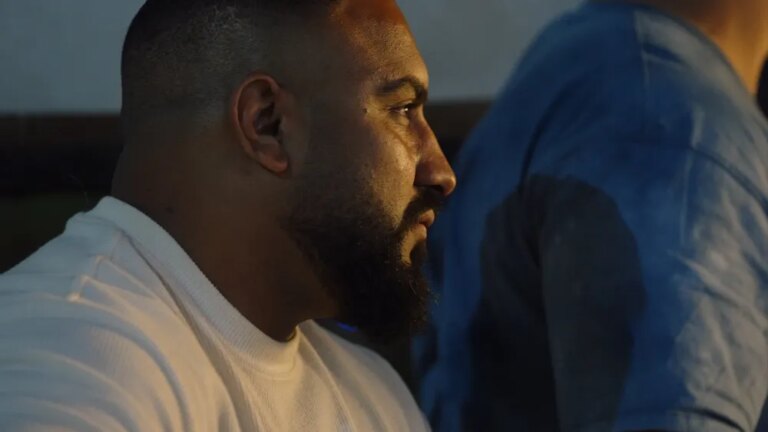
In an exploration of masculinity that transcends national boundaries, Egyptian filmmaker Muhammad Mustapha’s documentary, “Big Boys Don’t Cry,” takes an intimate look at the lives of Cairo’s bodybuilders and nightclub bouncers. The film presents a complex narrative of how these men understand and embody masculinity, framed by Mustapha’s own journey of self-discovery.
Curiosity and Masculinity: A Personal Journey
Premiering in the Feature Documentary Competition at the El Gouna Film Festival, Mustapha’s work is rooted in a quest to understand the very fabric of masculinity. “I’m a feminist. I’m intellectual. I find myself very drawn to this hyper-masculine performance,” he shared with Variety. His revelations prompted an introspection: “I should know better, right? And so this was the question: Why am I so intrigued?”
Starting in 2016, Mustapha viewed his project as an anthropological study rather than a moral indictment. His upbringing in a “local” Cairo neighborhood surrounded by distinct masculine codes gave him unique insights. As a self-identified “nerd,” his behavior was sometimes deemed less masculine; however, in dental school, it translated to a perception of loudness or vulgarity, showcasing the fluidity of masculinity based on context.
A Lens on Masculinity’s Many Facets
Mustapha observed that “how they perform their masculinity on stage is different than in front of the pub, is different than when he is addressing a problem, different than when he is with his family.” Over approximately three years, as he deepened his relationships with the men he filmed, his own understandings of masculinity evolved.
The collaborative nature of the filmmaking process was a significant aspect; Mustapha asserted that he did not create the film in isolation. “I made it with the characters. We made it together.” One key figure in the documentary is Abdallah, with whom Mustapha fostered a year-long friendship before filming commenced. Initially anticipating a film driven by themes of masculinity, he found during editing that their bond became the emotional core of the narrative.
Trust, Control, and Representation
Developing trust was essential in the process. Participants were allowed to control what they shared, ensuring they could request the removal of material throughout the production, including during the final edit. “I earned their trust. It was not given to me,” he emphasized, underscoring the depth of engagement required in documentary filmmaking.
Mustapha consciously chose to exclude women from the film, likening the environment to a gym locker room where men might feel freer to express themselves. He believed that introducing women could alter the dynamics, preventing an authentic examination of male experience. “I thought there was no emotional arc in the film. It was very theme-driven, and it was very intellectual,” he recalled. Ultimately, he discovered that the real emotional journey was encompassed in his friendship with the subjects.
Universal Themes of Emotional Suppression
Beyond Egypt, Mustapha argues that the issues explored in “Big Boys Don’t Cry” resonate on a universal scale, observing that societal restrictions on men’s emotional expression are a shared struggle. “The only emotion men are allowed to express is anger,” he stated. “Imagine how distorted the male psyche is because of all this suppression of emotions.”
As the premiere at El Gouna marks a significant milestone in the film’s journey, Mustapha reflects on its evolution, acknowledging the support he received from various organizations, including the Doha Film Institute, the Red Sea Film Fund, and Germany’s Robert Bosch Foundation. “It’s a full circle moment,” he expressed, albeit with a touch of nervousness about its reception in Egypt.
Encouraging Artistic Risk in Independent Cinema
The decade-long development of the film has also led Mustapha to consider the broader landscape of independent cinema in Egypt and the Middle East. He advocates for filmmakers to take more artistic risks and shift focus back to local audiences rather than conforming to the expectations of international festivals. “We need to work with less budget, with less financial risk, and more artistic risks,” he concluded, emphasizing the importance of telling authentic stories that resonate with local viewers.