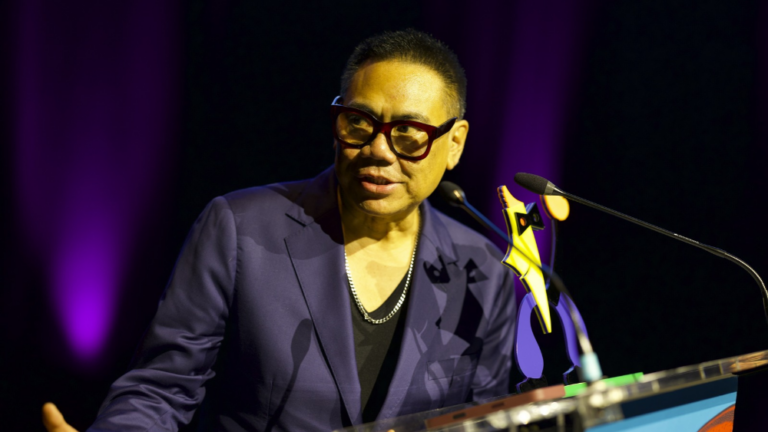
When world-renowned cinematographer Matthew Libatique stepped out of the Mallorca airport, the natural beauty of the island momentarily captured his attention, illustrating his deep connection to light and its power in storytelling. As the autumn sun bathed the pastel buildings in a warm glow, it set a fitting backdrop for his appearance at Evolution Mallorca, the island’s premier film festival, where he was celebrated with the Cinematography Icon Award.
Libatique’s Response to AI in Filmmaking
A seasoned filmmaker known for his collaborations with acclaimed director Darren Aronofsky, Libatique wasn’t shy about discussing the impact of artificial intelligence on the art of cinematography. Aronofsky, who has recently launched AI studio Primordial Soup with Google DeepMind, is fervently exploring how AI can influence the future of cinema. “We’ve discussed it,” Libatique shared during an interview with Variety. “We’re doing a test soon. I have a belief that the more you give to the system, the more it’s gonna have what you’re looking for. He wants to see how little you can do; we both want to learn more about it.”
Despite the rapid advancements in AI, Libatique is firm in his belief that AI “won’t replace cinema.” He posited that while AI technologies could transform how blockbuster studios like Marvel and DC produce films—primarily driven by the costs associated with visual effects—AI actors are not on the horizon. “I don’t think there’s going to be a Tilly Norwood Batwoman or Black Widow. You can’t tell me you’re going to make an AI character that can do what Robert Pattinson does,” he stated, emphasizing the unique qualities that human actors bring to their roles.
The Role of Human Emotion in Cinema
Libatique reflected on how films like Zach Snyder’s “300,” which utilized extensive digital manipulation, could be easily replicated with today’s AI technologies. However, he cautioned against losing the human connection that makes cinema valuable. “How do we connect [to it] as humans? The audience for some of these films is really limited. It’s limited by age, gender, and also by social interaction,” he noted. He firmly asserted, “Nobody’s going to make ‘Sentimental Value’ with AI,” stressing that cinema’s essence lies in human storytelling.
While discussing his work with Aronofsky, Libatique maintained that their upcoming project would remain deeply human-centric, despite the exploration of AI. “We’re gonna make it like a movie. We’re gonna stand on set. Darren is gonna get on his knees, and he’s gonna move everything around with his fingers, and he’ll do what he usually does.” He also highlighted the importance of utilizing AI as a tool rather than a substitute for traditional filmmaking techniques.
AI’s Dual Impact on the Industry
Libatique expressed mixed feelings about AI’s evolving role in filmmaking. He acknowledged its potential benefits, saying that he has used AI in post-production for tasks like glare correction, which he found useful. “The machine learning how to do that is helpful to me,” he mentioned, although he was keenly aware of the implications for post-production jobs. “It’s insensitive for me to revel in the fact that I can do some of the things in a room that we can do now because it definitely took some work away.”
He noted how AI could provide an efficient way to handle some tasks that have historically been outsourced to low-cost labor in other countries. Yet, he raised legitimate concerns about job displacement within the industry. “When does it start really replacing people? It’s a mental exercise to try to figure that out,” he reflected, striking a balance between the advantages and ethical dilemmas AI presents.
Creative Ownership and Artistic Integrity
Libatique recently encountered the integration of AI in a project titled “Goodbye Lamby,” directed by Dustin Yellin, where AI was used creatively to visualize concepts. He shared a revealing experience where the AI prompting required his physical lighting to achieve a desired effect. “It was easier to place a light in the hole in the roof than it is for her to try to convince [the machine] to do what she wants,” he noted, signaling the ongoing need for human input in AI-driven projects.
Additionally, Libatique voiced concerns about creative ownership, describing situations where his unique style was replicated by AI. “How come everything I do is out for grabs? That’s absolutely offensive,” he lamented, stressing the importance of artistic integrity and individual input in filmmaking. “To take everything I’ve done and distill it into a style that is uniquely mine is completely incorrect.”
Ultimately, he believes that the irreplaceable human element is what differentiates great films. “Who has taste? The human element is what makes all films different,” he concluded, highlighting a critical perspective on AI’s capabilities in an industry where storytelling and emotion reign supreme. As the film world navigates the complexities of AI integration, Libatique stands as a testament to the enduring need for human creativity and connection in the art of cinema.