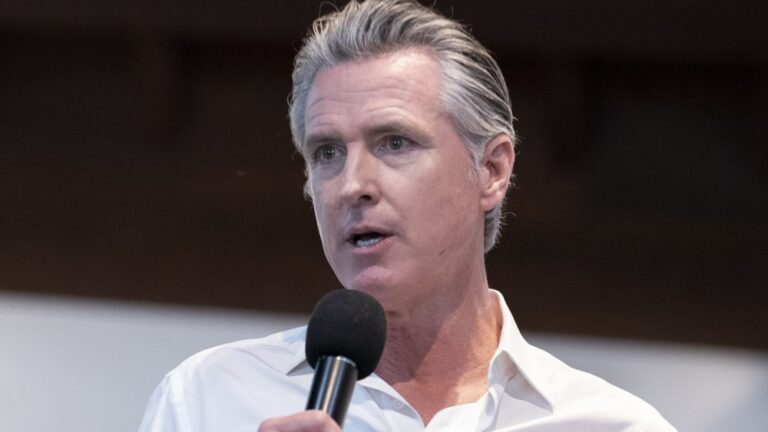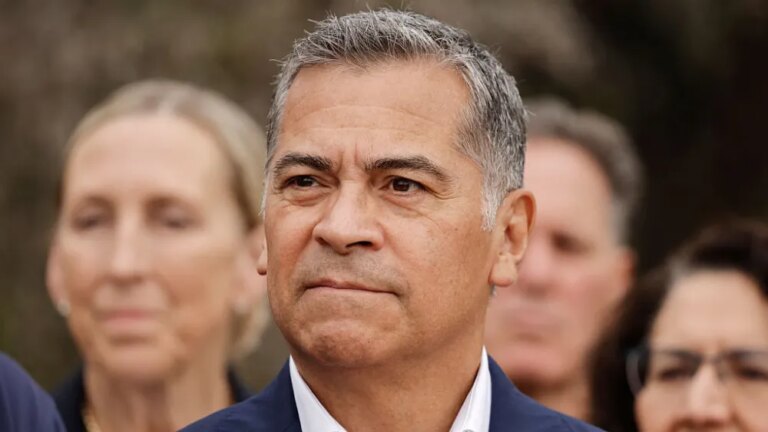
As the California gubernatorial election approaches, Xavier Becerra, the current attorney general, is facing scrutiny regarding his film policy statement. His campaign website features a 1,600-word declaration proclaiming California as the “Home of Film and TV,” yet many have criticized it for its lack of concrete commitments.
AI Detection Claims and Denials
Adding to the controversy, Pangram, a popular AI detection tool, claims that “100% of this text is AI,” although Becerra’s campaign has firmly denied this assertion. Jonathan Underland, Becerra’s spokesman, argued that such AI assessors often produce inaccurate results, stating, “These AI assessors are notoriously inaccurate.”
Campaign Strategy and Polling Success
Despite facing queries about his lack of firm commitments on policy issues, such as artificial intelligence and housing, Becerra enjoys a significant lead in the polls, currently at 20 points, with a 96% chance of victory in prediction markets. His approach seems to embrace ambiguity, as he stated during a campaign stop in Glendale, “It’s easy when you’re a candidate to make all sorts of promises. It’s harder to prove you can deliver.” His campaign promotes the idea of being a candidate who “underpromises and overdelivers,” as echoed by Assemblyman John Harabedian in his introduction of Becerra.
Immediate Pressures on Film Policy
Should Becerra be elected, he will likely be urged to enhance California’s film and TV production incentives, which are currently capped at $750 million annually. Some state legislators are advocating for the cap’s elimination altogether, arguing that California needs to take further steps to attract film jobs, especially if federal incentives pass. Rick Chavez Zbur, a Burbank Assemblyman, emphasized the necessity of acting quickly to strengthen these incentives: “We do need to, early next year, take steps to strengthen it.”
Proposals and Fiscal Concerns
Proposals have circulated that would expand the existing program to cover “above the line” salaries, which include actors and directors, though implementation would require careful consideration of the state’s financial responsibilities. When pressed for specifics at a recent event, Becerra reiterated his intention to support anything that would help retain Hollywood’s influence, asserting, “We have to fight for this industry,” yet remained vague on whether he would back removing the cap or including additional costs in the incentives.
Comparative Policies and AI Involvement
Becerra’s Republican challenger, Steve Hilton, has committed to eliminating the current cap and extending inclusion to above-the-line costs. Interestingly, Hilton’s campaign also reportedly used AI to generate parts of his film policy, though it remains difficult to analyze due to its less complex structure. Hilton’s campaign has been quiet on the AI-generated nature of his policy statement.
Clarification on AI Usage
Becerra’s film platform features typical traits associated with AI writing, including certain phrasing that raises eyebrows. Ironically, it includes a proposal for state-mandated AI disclosure for productions. Underland has insisted that AI was not involved in crafting Becerra’s policy statement, stating, “We don’t talk to AI about policy. We talk to people about policy.”
AI’s Rising Influence in Politics
Pangram, which claims a minimal false positive rate, has found increasing instances of AI use within political discourse. Recent analyses suggest that a significant percentage of speeches in various parliaments were authored with AI assistance, leading to reactions of “surprise and denial” when questioned.
In contrast, Hilton’s campaign has openly used AI to create campaign ads, complying with state disclosure requirements. One such ad features an AI-generated portrayal of Becerra humorously endorsing vague policy statements. Becerra’s campaign has criticized these ads, labeling them “AI slop,” while denying the use of AI in their own video content.
Final Denials on AI Involvement
At a recent campaign event, Becerra firmly rejected allegations that his policy statement was drafted by AI. “No,” he stated emphatically, “that’s absolutely incorrect.”