Hollywood’s approach to generative AI (GenAI) has undergone a remarkable transformation, moving from outright bans to the expectation of AI strategies from visual effects vendors. This shift was highlighted by Daniel Seah, CEO of Weta FX, the esteemed VFX house known for its work on monumental films like “The Lord of the Rings” and “Avatar.”
The Evolution of GenAI Acceptance
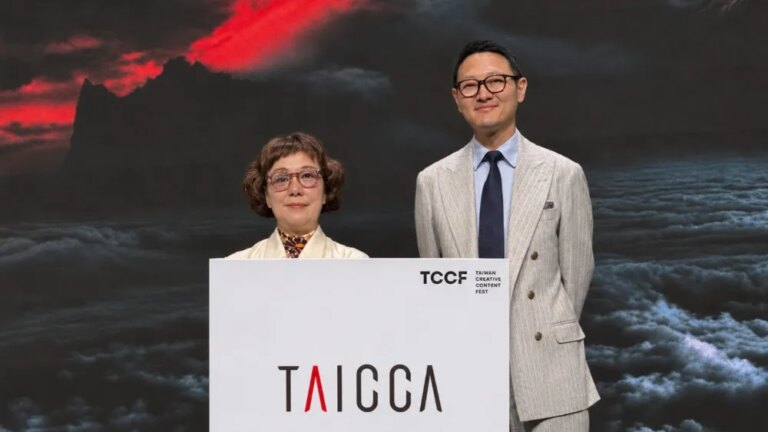
Speaking in Taipei following Weta FX’s partnership with the Taiwan Creative Content Agency (TAICCA) at the Taiwan Creative Content Fest (TCCF), Seah reflected on the changing landscape. Initially, major studios communicated strict guidelines against the use of GenAI in their projects. “We also got the memo from each of the studios, especially from their legal departments, saying that there is no such scenario that you can use any of GenAI for any of our work,” Seah noted, recalling the early days of last year. However, by mid-year, several project clients began exploring the potential for GenAI, provided Weta secured pre-approval and collaborated with a limited number of companies.
Seah stated, “It’s, ‘If you don’t have an AI strategy, don’t bother to work with us,’” summarizing the stance of studios since the third quarter of this year.
Partnering for Progress
Responding to this industry-wide evolution, Weta sought out a partnership that could accelerate its efforts in generative AI. It found a suitable ally in Moonshine Studio, a Taiwanese animation and VFX company with fewer client restrictions. Seah emphasized how Taiwan’s robust semiconductor industry has made AI a national strategy, enabling Moonshine to progress swiftly.
Assuring that AI will not replace artists or employees, Seah described the technology as a tool to enhance and increase workflow. “It’s more like to enhance and increase more workflow for us,” he explained.
Innovative Approaches and AI Integration
Weta’s Chief Technology Officer, Kimball Thurston, revealed that the studio has been developing its own AI models tailored for modifying and recreating complex worlds, distinct from models like ChatGPT. The collaboration with Moonshine is anticipated to center on refining artistic processes—creating a tool that enables narrative development over extensive timelines instead of brief clips.
Thurston added that Weta engages external video models such as Kling AI and ByteDance’s Seedance, where permitted by clients. He noted, “It’s not every studio that allows us to, but they also came onto the scene and killed a bunch of competition.” He also highlighted the security implications, stressing that models must be hosted outside of China, a feasible task given ByteDance’s global operations.
Fostering New Talent and Exploring Asia
As part of the newly forged partnership, TAICCA and Taiwan’s Ministry of Culture will identify promising young talent and introduce them to Weta FX, potentially offering internships at its offices in Wellington, Melbourne, and Vancouver. Seah mentioned plans to establish a representative office in London as well, showcasing Weta’s commitment to broadening its influence.
“There’s a Taiwan contingent at Weta in Wellington already,” Thurston noted, asserting that these artists have been integral to their projects long before the partnership.
With no current footprint in Taiwan, Seah identified the island as an optimal location for exploring opportunities in Asia, highlighting short flight times to Southeast Asia, Japan, and Korea, favorable government support, and an available pool of engineers and storytellers. Thurston also mentioned conversations with potential partners in Thailand and Korea, along with the burgeoning immersive experience market in Asia, particularly in Singapore.
Advancing Technology Sustainably
“It’s more about market enablement than it is about any particular location,” Thurston remarked, reflecting on Weta’s strategy. Moreover, TAICCA chair Sue Wang emphasized the importance of this deal, labeling it as the largest agreement Taiwan has made in the content industry to date.
Thurston also shared insights on Weta’s open-source project that began 18 months ago, the Rongotai Model Train Club, focused on refining processes and documenting the usage of various datasets. The project aligns with collaborative efforts at the Visual Effects Society’s Technology Committee and MovieLabs.
In the past year, Weta garnered a prestigious award for its innovative data center design, recognized for a waterless, energy-efficient cooling system. Critiquing the industry, Thurston expressed concern over companies resorting to gas turbines to power data centers, calling it “bad engineering” from a computer scientist’s perspective.
Maintaining Creative Control
Weta VFX supervisor Sheldon Stopsack underscored the importance of integrating new tools into the existing workflow, especially concerning motion capture. “We want to be able to kind of shape the world the way the filmmaker envisioned it, we envisioned it, and, you know, have this creative control ultimately at the end of the day with any of these technologies,” he noted.
While embracing technological innovations, Thurston acknowledged the enduring appeal of human performance, stating, “People still want to see the big star performing,” whether that be as an ape, a Na’vi, or an entirely different creature crafted through advanced techniques.