The retro-futuristic design of “Fantastic Four: The First Steps” draws inspiration from iconic works of the past, creating a unique visual style reminiscent of future visions from decades ago. This distinct aesthetic is largely influenced by Stanley Kubrick’s legendary film “2001: A Space Odyssey.” By merging elements of mid-century design with futuristic imagination, the film transports audiences to an alternate Marvel timeline on Earth-828, offering a fresh yet nostalgically optimistic view of New York and its iconic locations.
Setting the Scene in an Alternate Manhattan
Set in an alternate timeline, the film features Pedro Pascal as Mr. Fantastic, Vanessa Kirby as the Invisible Woman, Joseph Quinn as the Human Torch, and Ebon Moss-Bachrach as the Thing. Director Matt Shakman embraced the idea of an optimistic future, a vision that production designer Kasra Farahani brought to life by transforming Pinewood Studios into a retro-futuristic Manhattan. Inspired by “2001: A Space Odyssey” and architects like Eero Saarinen and Oscar Niemeyer, Farahani reimagined the city’s skyline.
A Dive into Times Square
The Times Square set, with its 15-week construction period, showcases a combination of historical buildings and futuristic elements. “We figured about two-thirds of New York and Times Square would look like historical pictures from the ‘60s, but about a third would be different,” says Farahani. Familiar sites like the Forum, RKO Palace, and Embassy Theater were resurrected alongside innovative structures such as a monorail system, inspired by Saarinen’s distinctive designs.
Farahani’s vision also incorporated a unique blend of vehicles. “We have all these Checker cabs… mixed in with retro futuristic cars that we built,” he explains, enhancing the authentic 1960s feel while adding a layer of imaginative design.
The Vision Behind the Baxter Building
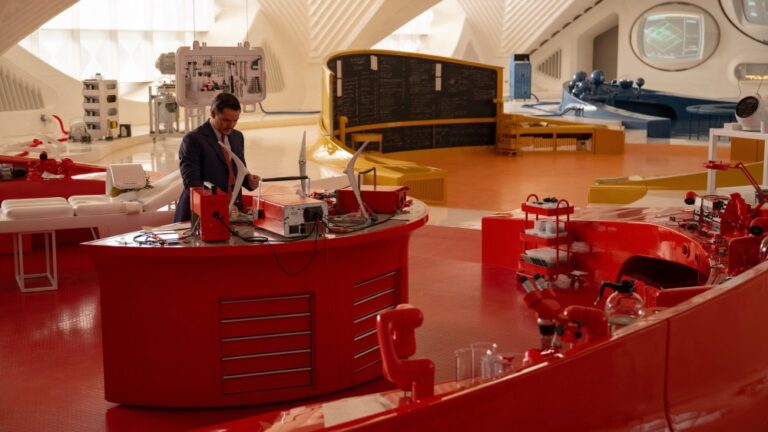
The Baxter Building and Reed Richards’ lab are prime examples of retro-futuristic design, influenced by both Saarinen and Niemeyer. “Their work is undeniably futurist and optimistic,” Farahani notes. The lab echoes the aesthetic of “2001: A Space Odyssey,” with elegant yet simplistic elements like vaulted ceilings and color-coded zones for different functions.
Incorporating practical and imaginative features, the design remains grounded in a plausible world while echoing the aspirational nature seen in Kubrick’s work. Each area within the lab serves a purpose, from prototype building to a sophisticated mission control center.
Designing a Home for the Future
As Reed and Sue discover they’re expecting a baby, Farahani’s own experiences influenced the creation of their living space. “Being in that headspace of having a newborn helped in designing the Baxter apartment and nursery,” he shares. The vibrant wallpaper, featuring rockets and planets in a warm Eames palette, adds whimsy and warmth to the home.
With natural materials, the apartment reflects mid-century modern living while exuding warmth and humanity, contrasting with the sterile atmosphere of a skyscraper. “We brought in a lot of natural materials…making it feel warm and human,” Farahani adds, encapsulating the essence of their cozy nest in an expansive New York penthouse.