Dane Komljen’s “Desire Lines,” which premiered in Locarno’s International Competition, captivates with its ethereal exploration of utopian themes. The film, known for its haunting visuals and contemplative pace, intricately weaves themes of belonging and transformation. In this feature, the Serbian filmmaker, now based in Berlin, delves into the nuanced interplay between urban restlessness and rural tranquility.
The Genesis of a Visionary Film
Komljen first garnered attention with his 2010 short film, “I Already Am Everything I Want to Have,” which earned accolades at Cannes’ Cinefondation competition. Over the years, his unique style has been showcased at numerous prestigious festivals. Returning to Locarno for the fifth time with “Desire Lines,” Komljen continues to push cinematic boundaries.
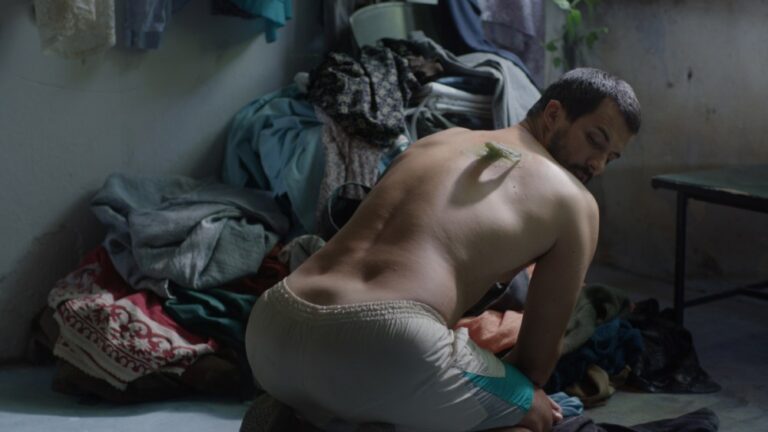
The film follows Branko, portrayed by Ivan Čuić, an insomniac who roams Belgrade, haunted by an obsession with his younger brother. His nocturnal wanderings lead him to surreal encounters, ultimately finding solace among a serene community in the woods, far from urban chaos.
A Harmony of Nature and Humanity
In the idyllic forest setting, Komljen contrasts the bustle of city life with the peacefulness of nature, allowing Branko to become one with his surroundings. This utopia serves as a refuge for those marginalized by urban society, where they engage in simple, harmonious activities.
Komljen challenges preconceived notions of nature versus queerness, stating, “Queers are often told that how we live and how we love is not natural.” In this world, communication transcends verbal exchange, resonating with a lyrical quality reminiscent of Komljen’s “Afterwater” (2022).
Visual Poetry and Cinematic Innovations
The film employs inventive visuals, including thermal imagery and stroboscopic effects, echoing themes of transformation and fluidity. The striking cinematography by Ivan Marković and Jenny Lou Ziegel captures the contrasting landscapes of Belgrade and the rural regions of Bosnia and Herzegovina, emphasizing the dichotomy between urban and rural experiences.
Komljen’s work defies traditional storytelling, delicately weaving political nuances throughout. He emphasizes, “I’m not a politician, I’m a filmmaker,” yet the film subtly reflects the complex history of the Serbian capital. The film’s ability to balance fantasy and realism reflects a profound sensitivity and world-building prowess.
An Exploration of Imagination and Reality
In “Desire Lines,” Branko’s passive crossing of a border as a ghost presents a utopian ideal, underscoring the film’s overarching themes. Komljen’s dedication to exploring these boundaries positions the film as a powerful exploration of the human spirit and imagination. “I’m not sure that cinema functions as a window anymore,” Komljen reflects. “I’m more interested in the power of imagination and world building.”