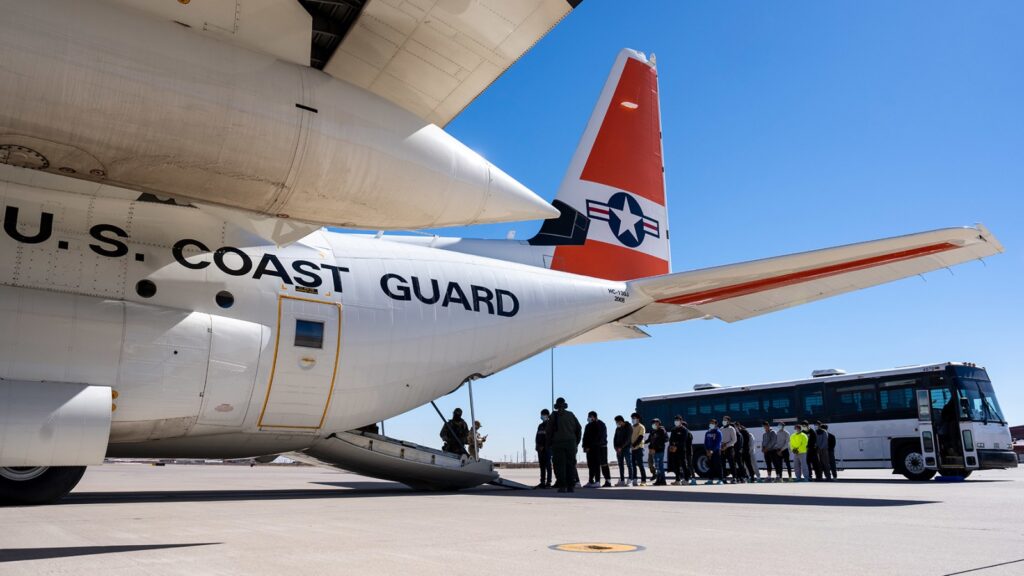
In recent developments, Immigration and Customs Enforcement (ICE) has significantly relied on Coast Guard planes to transport immigrants across the United States. This strategy utilizes federal resources in a manner not typically associated with the Coast Guard’s primary duties, raising questions about resource allocation and transparency within immigration enforcement activities.
ICE’s Utilization of Coast Guard Planes
Flight data and observations reveal a marked increase in ICE’s use of Coast Guard aircraft, particularly the C-27J Spartan fleet, for moving immigrants since late June. More than 263 flights have likely been conducted for ICE, transferring individuals between key detention centers located in Louisiana, Texas, and Florida. Notably, Rolling Stone documented instances where shackled immigrants were loaded onto these planes in Baltimore.
Additionally, larger Coast Guard HC-130H Hercules planes have also been used for transporting immigrants, albeit on a smaller scale. This trend reflects the Trump administration’s broader strategy of deploying federal resources toward immigration enforcement.
Operational Patterns and Observations
Coast Guard planes used by ICE depart from locations like Clearwater, Florida, and Sacramento, California, primarily heading to detention hubs. They often undertake multiple round trips to various midsize cities such as Baltimore and Cincinnati, where ICE activities are prevalent. By early indications, almost all operational Coast Guard C-27s have been earmarked for such flights.
This increased activity raises concerns about the appropriation of Coast Guard assets, which traditionally focus on maritime duties such as search-and-rescue missions and drug interdiction. The redirection of these resources has sparked debate over their suitability for immigration transport tasks.
Concerns and Reactions
Activists and observers have expressed unease over the frequent and undisclosed use of Coast Guard planes for immigration transport. Transparency is notably lacking, with neither DHS nor ICE providing detailed responses to inquiries about these operations. The clandestine nature of these activities fuels ongoing debates about government transparency and the ethical use of federal assets.
As ICE continues to widen its air operations, questions about detainee welfare, safety conditions during transit, and the overall impact on immigrant families remain. Several reports have pointed out the hardships faced by those in ICE custody, including harsh detention conditions and frequent relocations that distance them from legal and familial support.
Implications and Future Considerations
These resource allocations highlight broader concerns about immigrant rights and the legal mechanisms available to those in detention. The continued use of Coast Guard planes for ICE flights underscores the complex intersections of federal priorities and civil liberties. Monitoring organizations and activists are tasked with holding these agencies accountable while advocating for the humane treatment of immigrants.
The evolving nature of these operations warrants further scrutiny and dialogue about immigration policies and resource distribution across federal agencies. Transparency and public awareness are crucial for ensuring that enforcement measures align with national values and human rights standards.