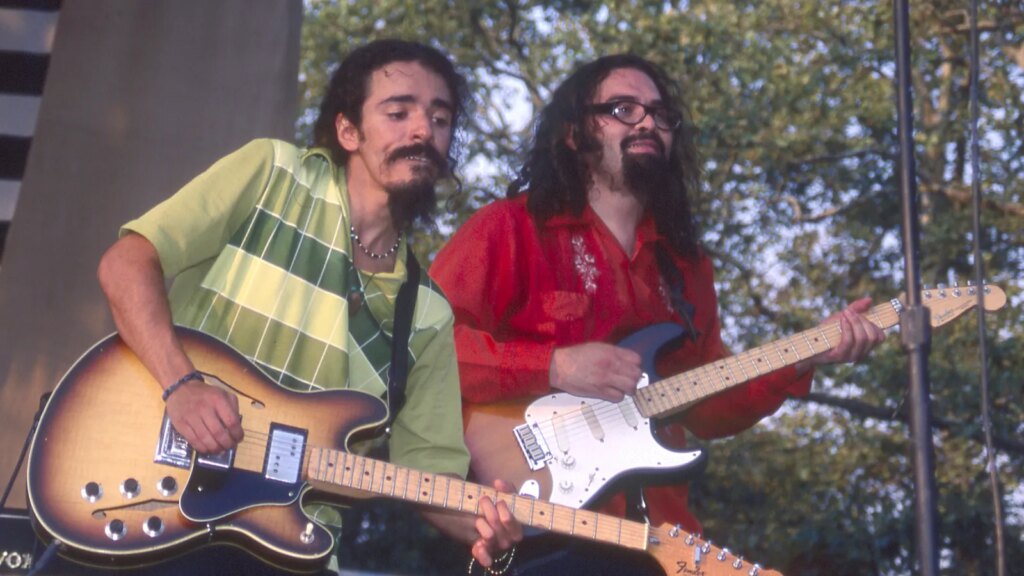
Thirty years on from its release, Avalancha de Éxitos stands out as a transformative moment for the Mexican band Café Tacvba. At the time, the group, consisting of four members from Mexico City, found itself in a creative bind after the extensive touring of their critically acclaimed sophomore album, Re. The weight of expectation loomed heavily as their label awaited new material, but the demos the band had produced were far from ready to be released as an album. This period of exhaustion and uncertainty heightened tensions within the group.
Producer Gustavo Santaolalla, an important figure in Tacvba’s career, witnessed this struggle firsthand at the Viña del Mar festival in Chile. He suggested the band take a break from their original content and focus on something different—a cover EP. “He had the right perspective, and pointed us to a path of healing,” recalls keyboardist Meme del Real. This advice led to the creation of Avalancha de Éxitos, released on November 5, 1996.
The mini-album, featuring radically reimagined covers, was a resounding commercial success, with five of its eight tracks released as singles. Importantly, it helped propel Café Tacvba into new markets, especially in Argentina, where Mexican rock had previously struggled to gain traction. The brisk, lively record presents Latin American culture as a complex and vibrant tapestry, showcasing diverse styles, from the nostalgic bolero “No Me Comprendes” to the transformative social commentary of Juan Luis Guerra’s “Ojalá Que Llueva Café.”
The infusion of Tacvba’s signature humor transformed songs like “Chilanga Banda” and “Alármala De Tos,” as well. Guest appearance by David Byrne on “No Controles” showcases their playful approach to music and subversion of original compositions. “I remember that record with so much affection,” says vocalist Rubén Albarrán, reflecting on how the creative process took them into the heart of Latin America and prompted them to challenge their identities.
The spirit of irreverence that permeated Tacvba’s original songs also influenced the arrangements on Avalancha. Albarrán notes, “We had the impudence not to give a damn about what the composers of the original songs may think… That was a big part of the fun.” Del Real adds, “It was more like, ‘What would happen if we grab these songs and push them to the limit?’” This adventurous technique led them to create an album that was not merely a collection of covers, but a redefinition of each piece.
Editor’s picks
According to Enrique Blanc, a music journalist and author of Café Tacvba — Bailando por nuestra cuenta, creating an album as formidable as Re placed the band in a challenging position for their next move. He describes Avalancha as a refreshing “recess,” echoing the band’s roots as a cover band. Initially, they had even planned to record Duran Duran’s “Planet Earth,” but ultimately, the focus remained on Latin American compositions, reinforcing their cultural narrative.
Albarrán explains, “We need to talk about other things that are more important to us and the people we share our lives with.” This conviction drove the band to manifest a unique blend of influences while maintaining an emotional authenticity distinct from the Anglo mainstream. One of the album’s standout tracks is “No Me Comprendes,” which presents a haunting juxtaposition of styles, culminating in a bossa nova passage that suggests a triumph of beauty and depth over chaos.
This juxtaposition is further mirrored in their rendition of “Cómo Te Extraño Mi Amor,” which became the album’s biggest hit, reimagined with a youthful exuberance that defied the original’s fragility. Albarrán attributes this magical transformation to Santaolalla’s distinct production style, capturing the essence of their joy and youth. “It was life itself” infused into their music, as the upbeat cover exudes an infectious energy.
Upon its release, Avalancha de Éxitos was hailed by critics and fans alike, marking a cultural moment that resonated long into 1996 and beyond. Following this successful project, Café Tacvba returned to their original material, culminating in the breathtaking double album Revés/Yosoy in 1999. Yet, even decades later, Avalancha retains its status as perhaps the finest Latin covers album ever produced.
Related Content
Meme del Real reflects proudly on the album’s impact: “Avalancha helped us realize how vulnerable we could be as a band. It defined our identity.” Albarrán adds that it was part of a larger movement in Latin America, alongside other groups like Maldita Vecindad and Santa Sabina, all of whom were reformulating their roots through music. “Music was our medicine and refuge; the one place where we could find an answer for everything.”