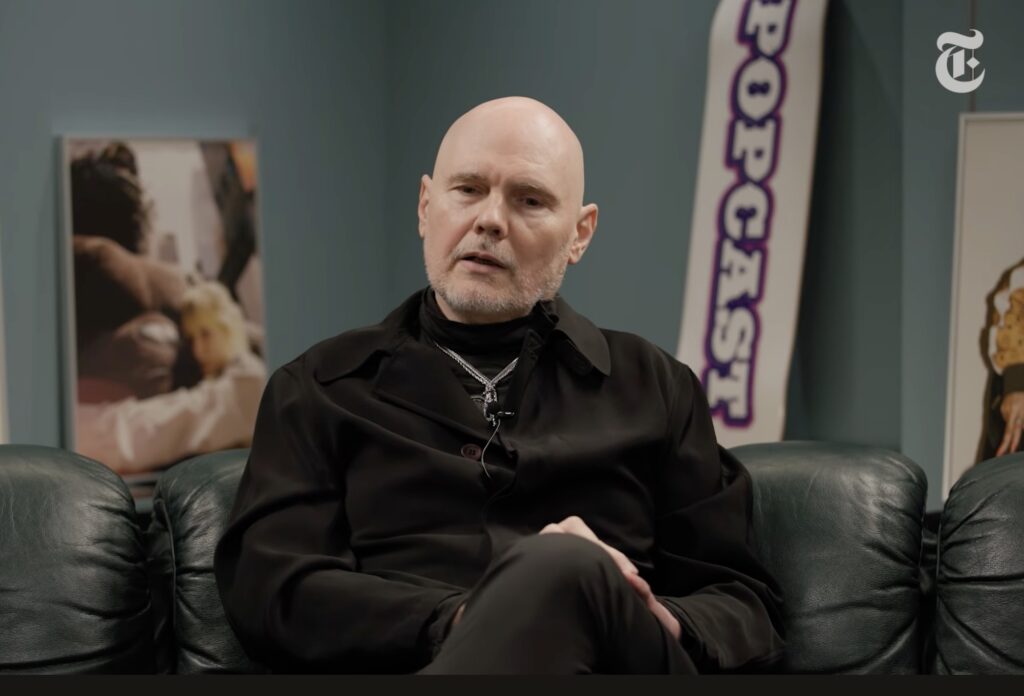
In a recent episode of the New York Times Popcast, Billy Corgan, the frontman of the Smashing Pumpkins, engaged in a thought-provoking and at times combative discussion that touched on artistic integrity, critical reception, and personal relationships within the music industry. With the band celebrating the 30th anniversary of their iconic album Mellon Collie And The Infinite Sadness and reconnecting with their roots by working with producer Butch Vig on a new track for the upcoming Hunger Games soundtrack, Corgan’s perspectives have gained renewed attention. This resurgence is further fueled by the popularity of the Pumpkins’ ’90s hits on platforms like TikTok and their high-profile collaborations, including a recent performance with Olivia Rodrigo at Lollapalooza.
Corgan’s Unflinching View on Critical Assessment
During the interview, Corgan seized the opportunity to challenge music critic Jon Caramanica on what he perceives as an unfair assessment of his work. Corgan raised the provocative question, “Has my work been fairly assessed by your critical class?” This inquiry led to a broader dialogue about the shifting landscape of music criticism, particularly regarding his views on the so-called “Pitchfork generation,” which he criticized for abandoning the rawness of alternative music in favor of mainstream pop artists.
Friendship Amid Controversy: Marilyn Manson
The conversation also delved into Corgan’s enduring friendship with Marilyn Manson, who has faced numerous allegations of sexual assault. Despite this backdrop, Corgan asserted his support for Manson, emphasizing the closeness of their relationship and the complexities involved. “As a Christian person, you have to stand by your friends,” he explained, while also acknowledging the gravity of the accusations against Manson. He cited the fact that a district attorney did not pursue charges after years of investigation as part of his reasoning for standing by Manson. “If he’s guilty, or if anyone in that situation is guilty, they should go to jail,” Corgan concluded, making it clear he does not condone wrongdoing, yet values personal connections.
Reflections on Kanye West and Artistic Intent
Transitioning to another polarizing figure, Corgan compared himself to Kanye West, noting that he had been paving the way in the industry long before West’s rise. “Isn’t it the other way around? I did come first,” he contended. This comment reflects an ongoing theme in the interview: the notion that modern artists often mimic tactics he pioneered to create a buzz around their work. Corgan described both artists’ strategies as a kind of “cognitive dissonance game,” where controversy forces audiences to grapple with an artist’s value and genius.
Critique of Modern Music Journalism
Throughout the discussion, Corgan expressed deep-seated frustrations with the state of music criticism, particularly calling out the hypocrisy of the music critic “class.” He lamented how critics had seemingly abandoned the authentic ethos of alternative music—characterized by imperfections and raw emotion—in favor of polished pop that is more commercially viable. Corgan noted, “Generally speaking, your classes are fucking hypocrites,” arguing that the genuine artistic value stemming from an artist’s grassroots experiences is often overlooked by those creating the narratives surrounding music.
This interview serves as a platform for Corgan not only to defend his legacy but also to spotlight the evolving definitions of authenticity in music and how they are shaped by critics who may not truly understand the struggles faced by artists like him. The full interview can be accessed through the New York Times, where viewers can delve deeper into Corgan’s perspectives on these pressing issues.