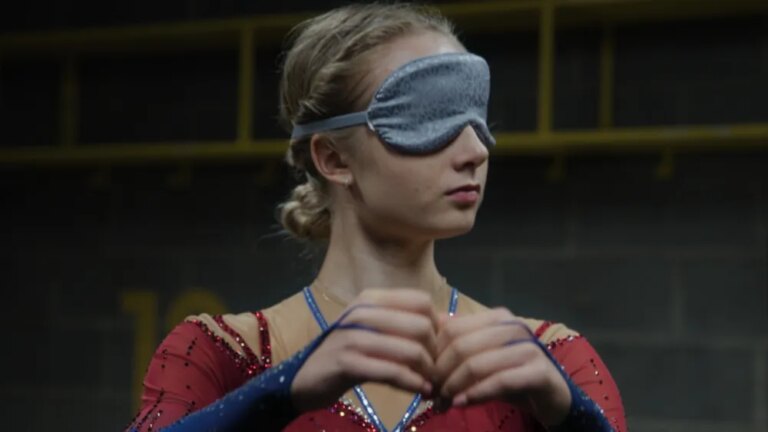
The world premiere of “Up Again,” an immersive Czech film, is captivating audiences at the Ji.hlava docu fest. The film opens in darkness, amplified by the sharp sound of ice skates slicing through the ice at high velocity, immediately setting the tone for its exploration of the intense world of figure skating.
A Journey with Barbora Vrankova
Director Eliska Cilkova Andrsova intricately chronicles the journey of teenage figure skating sensation Barbora Vrankova over three years. With a background as a former competitive skater, Cilkova Andrsova has a unique understanding of the rigors of the sport. “Thanks to my own experience on the ice,” she explains, “I understand the scoring system and the technical language of figure skating.” This rapport facilitated a deep connection with the reigning Czech national champion at the time of their initial meeting.
Behind the Scenes of Elite Training
As the film unfolds, audiences witness Barbora’s evolution from a 15-year-old taking on increasingly challenging competitions to her experiences at prestigious skating institutions in Italy and the United States. The growing pressures are palpable — not just for Barbora but for her family as well. Cilkova Andrsova underscores this reality: “A triple jump on ice skates lasts just a few seconds but requires years of physical training and mental isolation.” With a demanding training schedule, Barbora’s typical day consists of online classes, physiotherapy, and rigorous practice sessions, leaving little room for a conventional school experience.
Sound Design: A Critical Element
Cilkova Andrsova’s meticulous attention to sound is a significant aspect of “Up Again.” She states, “Sound is not for background in my work – instead, it’s a path to the themes the film explores: performance, expectations and the search for one’s own place in a world that constantly judges people by their results.” The film’s soundscape accentuates the urgency and intensity of training, with the scraping of blades echoing throughout, enhancing the viewer’s immersion.
Cinematography and Technical Challenges
The cinematography seeks to depict the physical reality of figure skating closely, with remarkable camera work that follows Barbora’s movements at breathtaking speeds. Cilkova Andrsova’s experience as a skater informed the filming approach, allowing her team to capture the essence of the sport without the constraints typical of traditional sports documentaries. Some sequences were filmed from the ice alongside Barbora, adding a unique perspective to the storytelling. “I wanted the audience to experience the physical reality of skating from very close,” she says.
Despite detailed planning, unforeseen challenges arose, particularly during intense training sessions filled with simultaneous activity and loud distractions. “Imagine 20 figure skaters jumping simultaneously, loud pop music playing almost constantly, and coaches shouting across the ice rink,” she notes. The absence of microphones for the skaters made capturing sound even more complex. Yet, these challenges became part of the film’s creative journey, allowing the director to add a richer, nuanced layer to the narrative through sound design.
The Impact of Trust and Vulnerability
The director’s approach was also informed by a commitment to respecting Barbora’s well-being. At one point, she paused filming as Barbora struggled with multiple falls, only to have Barbora later express the importance of capturing those moments as a natural part of the sport. This shift in perspective highlighted the deepening trust between them, pivotal for the documentary’s authenticity.
Unexpected Twists and Deeper Themes
As the filming progressed, one unexpected event significantly altered the film’s trajectory: Barbora’s withdrawal from the European Championships, a monumental event for any competitive skater. Cilkova Andrsova reflects, “The biggest surprise came when Barbora withdrew from the European Championships. I hadn’t expected that.” This pivotal moment shifted the focus of the film, raising essential questions about identity and self-worth beyond achievements: “Who are we when we are no longer defined by our achievements?”
Through the lens of Barbora Vrankova’s story, “Up Again” delves into the complexities of youth, competition, and self-discovery in the demanding world of elite figure skating.