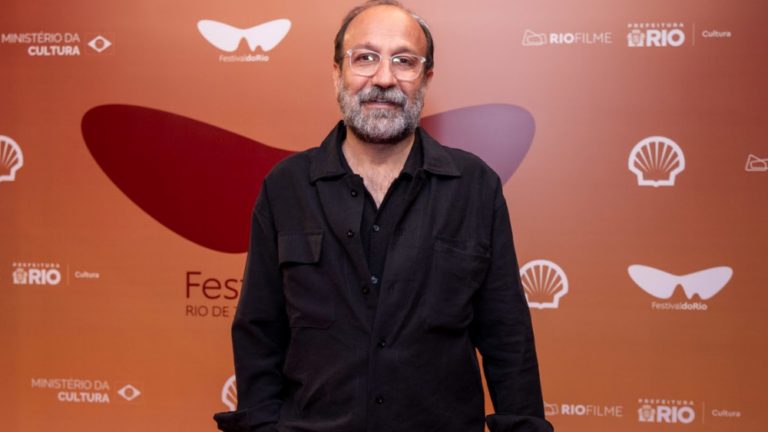
At the Rio Film Festival, acclaimed filmmaker Asghar Farhadi delved into Hollywood’s portrayal of foreign cultures, particularly critiquing the film “Argo,” which he perceives as emblematic of a broader American cinema trend that promotes a “white savior” narrative. Farhadi, a two-time Oscar winner, discussed his views during his presentation of “Parallel Tales,” highlighting the limitations of American films in representing global realities.
Hollywood’s Perspective on Foreign Cultures
During a discussion, Farhadi reflected on “Argo” winning Best Picture just a year after his own “A Separation” took home the Oscar for Best International Film. He recalled watching the Affleck-directed film and noted: “It’s a Hollywood thing.” Farhadi criticized the film’s depiction of Iran, which he described as portraying the country as a hellish landscape. “The problem with these kinds of films in Hollywood is they look at the world from up to down,” he remarked. He also questioned the American attitude of superiority, asking, “Why do you feel you’re up and we’re down?”
The Illusion of American Democracy
Farhadi continued his critique by challenging the assertion of American democracy, labeling it a “lie.” He recounted his experiences during a trip to the U.S. a few years ago, where he spoke with incarcerated individuals and felt that the true essence of America was often overlooked. “The real America was there,” he recounted, emphasizing that it is a perspective not typically portrayed in mainstream media.
The Limitations of the “Savior” Narrative
Expanding on his critique of “Argo,” Farhadi expressed frustration with the recurring theme of Americans rescuing others in films. “Why does an American go to Cuba or Iran to save people?” he questioned. “People understand they can save themselves. Who asked you to come and save us?” This critique underscores his belief that such narratives diminish the agency of the people being portrayed.
The Intersection of Politics and Cinema
When asked about the political elements in his work, Farhadi stated that discussing society inevitably touches on politics. “Even when you talk about family life, you are indirectly talking about politics,” he explained, asserting that his films provide audiences with an opportunity to discover deeper truths about themselves without overtly addressing political themes.
Empathy Through Cinema
Farhadi referenced Abbas Kiarostami’s documentary, “Fellow Citizen,” as an example of a film rich in political context through its portrayal of daily life. He articulated a fundamental belief that media often fails to capture the full spectrum of ordinary life, stating, “Media and cinema don’t give you a complete image of people’s ordinary life.” He believes that empathy is a universal trait, transcending borders and cultures, echoing the idea that love and hate are common themes worldwide.
The Challenge of Genuine Representation
When watching international films, Farhadi expressed feelings of familiarity and connection, stating, “I feel it is a film about us as people.” He argued that true understanding comes from personal interactions rather than media portrayals, emphasizing the importance of genuine human connections over simplified representations often propagated through media.
Influences on Farhadi’s Recent Work
Farhadi discussed how social media has impacted how stories are told, particularly in his recent works “A Hero” and “Parallel Tales.” He warned viewers to approach media narratives critically, particularly regarding representation of places like Iran, which are often painted with oversimplified strokes. He underscored the need for a broader understanding, stating that powerful media often perpetuates singular, damaging narratives.
Upcoming Projects
Despite brief mention of his next project, Farhadi confirmed it would be shot in Farsi, although it won’t directly address current political conflicts. He recalled that while “Parallel Tales” was initially set to be filmed in the U.S., he felt disconnected and eventually decided to relocate production to France, noting, “The DNA of this film is more European than American.”
A Collaborative Spirit
Farhadi expressed gratitude for his collaborators on “Parallel Tales,” which features prominent actors like Isabelle Huppert, Virginie Efira, and Vincent Cassel. He emphasized his egalitarian approach, stating, “All of them are my team, my family, my actors,” highlighting his belief that the success of a film lies in the collective effort of all involved, regardless of individual fame.
The Rio Film Festival runs from October 1-11.