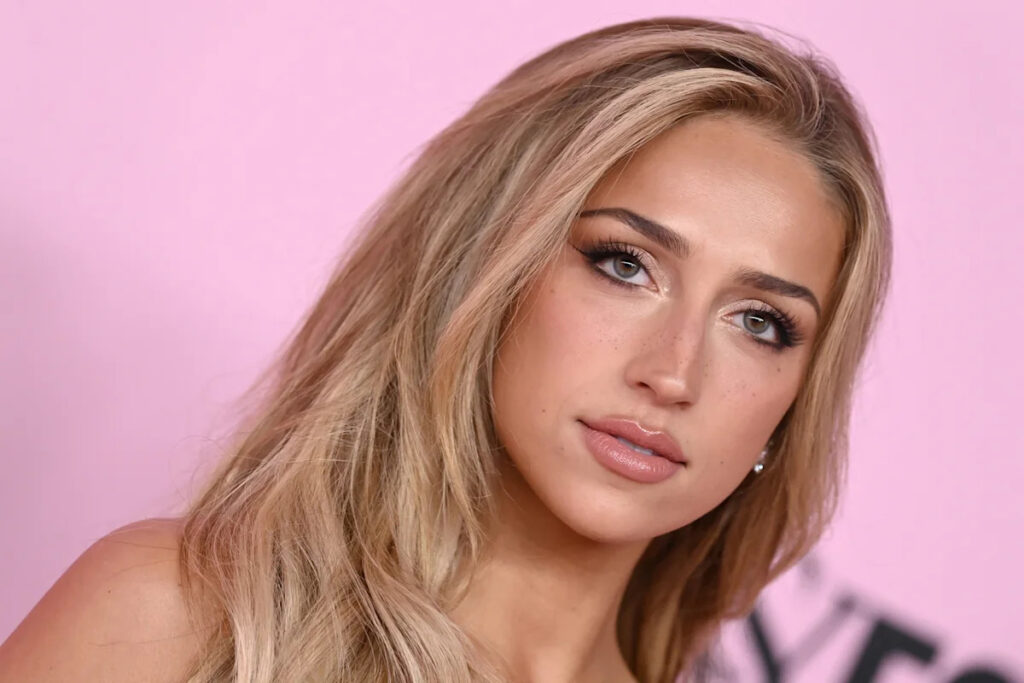
Tate McRae’s latest pop hit, “Housewife,” has quickly gained traction since its release on October 18, climbing to the Number Two slot on the Billboard Hot 100. In this catchy track, McRae expresses a desire to be her own “housewife” while also hinting at her ambition to achieve financial independence. However, the irony lies in the song’s rising popularity within a TikTok trend that celebrates traditional gender roles, often misinterpreting the song’s empowered message.
Empowerment in a Misinterpreted Trend
While “Housewife” is intended to convey a message of autonomy, many TikTok creators are using the song to promote a more conventional view of marriage and homemaking. Some users have altered the lyrics to reflect their own experiences, such as adapting McRae’s hook to “Be my man’s housewife,” which aligns with a vision of traditional domesticity.
For instance, a popular TikTok video featured a woman dancing in front of a mirror while the original lyrics scrolled overhead, accompanied by a clarifying parenthesis that stated, “I just wanna be a stay-at-home mom, raise godly kids & serve my husband.” Another creator, identifying herself as Sadie, shared a clip with a revised message: “I just want to spend all of his money be his cute housewife,” which garnered nearly 300,000 views.
A Mixed Response from The TikTok Community
The varying interpretations of “Housewife” have sparked debate within the TikTok community. One creator defended her use of the song amid criticism, explaining, “To all the haters coming for me over this song choice, please understand I’m making a little joke and a fun twist on a great song! … my dream has always been to live the classic housewife life.” This highlights a trend of embracing traditional gender roles, despite McRae’s apparent emphasis on independence.
As the “trad wife” trend has proliferated, many videos have arisen that criticize the notion of co-opting McRae’s feminist message. One TikTok user sarcastically suggested, “so who’s gonna tell the tradwives this song they’re lip-syncing to by Tate McRae means the exact opposite of what they think.” This commentary reflects a broader concern that the original intent of the song is being overshadowed.
Celebrating Individual Dreams and Achievements
Conversely, many creators have embraced the song’s original message, showcasing their individual accomplishments. Gymnast and model Olivia Dunne, for example, posted a video celebrating her achievements with the caption: “I love this song & standing on business.” Another video featured a creator in the trades who remarked, “Tate made this for the tradie ladies,” emphasizing that the song resonates with women across different experiences and lifestyles.
In a particularly humorous take, one creator showed her wedding dress with the message, “How this song feels getting married and not posting a single thing with my husband from our wedding,” revealing a playful reimagining of the song’s themes.
A Call for Understanding
As the conversation around “Housewife” continues, it’s clear that while many are celebrating traditional roles, they may be missing McRae’s underlying message of empowerment and independence. In a video that resonated with over a million viewers, one user pointed out, “She’s talking about not being dependent on a man…the album cover is literally a picture of her pushing around a baby stroller full of cash. What about that is screaming trad wife?” This illustrates a profound misunderstanding of the song’s intended message amidst a swirl of TikTok trends.
Ultimately, McRae’s “Housewife” is more than just a catchy tune; it’s a nuanced exploration of autonomy and choice. Whether it’s used to celebrate traditional roles or assert independence, the widespread discourse surrounding the song serves as a reminder: every woman deserves the right to define her own path.