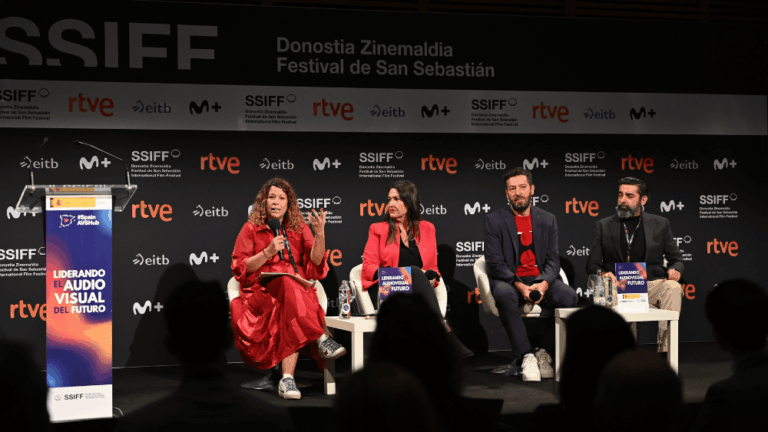
At the heart of Europe‘s audiovisual landscape lies a complex interplay between innovation and regulation. The recent European conference in San Sebastián, titled “Leading the Audiovisual of the Future,” delved into critical discussions surrounding IP regulation in Spain and AI’s potential as a job-creating force. As industry leaders and policymakers gathered, five key takeaways emerged from this pivotal gathering, shedding light on Spain’s positioning within the European market and exploring pathways to navigate the rapidly evolving media space.
The Role of AI in Job Creation
During the San Sebastián conference, a significant focus was placed on artificial intelligence and its potential to revolutionize job markets within the audiovisual industry. Carlos Fernández de Vigo, CEO of Professor Octopus AI Laboratory, highlighted how AI technologies have transformed business models, making previously unviable projects now possible. “Thanks to AI, we have projects that are viable now that were not viable just a few years ago,” he noted, emphasizing the creation of new job opportunities.
Nathalie Martínez, president of the Spanish Federation of Animation and Visual Effects Producers Associations, reinforced this positive outlook, asserting AI’s role as a crucial tool rather than a replacer of human talent. Her message was clear: technology augments creativity and productivity, fostering an environment where new roles can thrive.
Guarding Against Cultural Homogenization
Another major theme was the preservation of cultural identity amidst global influences. Spearheading this concern, Nathalie Martínez warned against cultural homogenization prompted by international AI technologies. “What we create should represent us,” she remarked, stressing the importance of original storytelling that embodies local culture.
Lucía Recalde from the European Commission echoed these sentiments, pointing to the dominance of U.S. streaming services in European markets. She highlighted the urgent need for content that resonates with European audiences rather than being overshadowed by non-European platforms.
Strengthening IP Regulation in Spain
A particularly passionate discussion centered on the need for robust IP regulation in Spain. Alfonso Blanco, president of the Galician Audiovisual Cluster, emphasized the necessity of retaining creative rights within the Spanish industry. “We need a law that protects the creator and the product,” he asserted, calling for legislation that mirrors the protective frameworks found in countries like France and the UK.
Echoing this, Alfonso del Río from Culture CAP7 highlighted the challenges of rights retention, especially when dealing with international co-productions. He stressed that legislative protection is essential to ensure Spanish IP remains intact and beneficial to local creators.
Distribution and International Reach
Effective distribution both domestically and internationally was another critical issue addressed. José Antonio de Luna, co-founder of Filmin, cautioned against focusing solely on creation while neglecting the importance of distribution. “If we don’t get the content to an audience, it doesn’t matter how much talent we have,” he warned.
Data presented during the conference highlighted the limited reach of European films beyond their borders. With only 44% traveling internationally, the challenge remains to expand the visibility of European, and specifically Spanish, productions.
Challenges of Co-production in Europe
The intricacies of co-producing with other European countries were also discussed, with participants acknowledging the hurdles that varying legal frameworks present. Helena Suárez Jaqueti, of ECIJA, pointed out these complexities, noting the lack of a unified European model that facilitates seamless co-productions across different nations.
Despite these challenges, the conference illuminated pathways for Spain to enhance its standing within the European audiovisual realm, emphasizing the importance of robust IP regulation in Spain and the expansive potential of AI as a job creator. By addressing these core issues, the industry aims to foster a more dynamic, culturally rich, and economically viable future in the audiovisual sector.