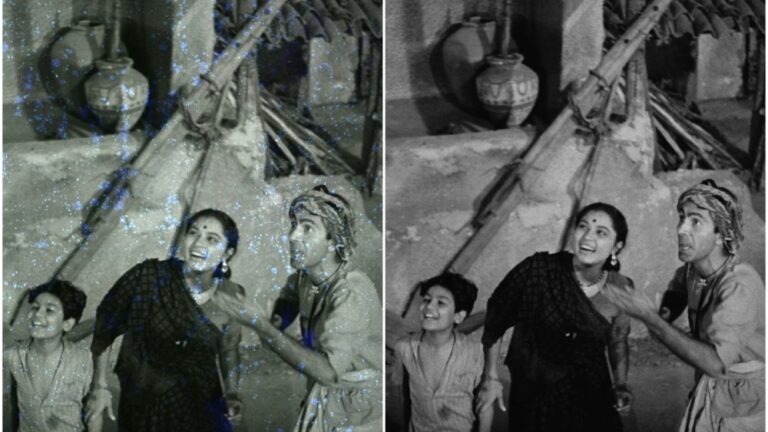
As the 4K restoration of Bimal Roy’s iconic film “Do Bigha Zamin” prepares for its premiere at the Venice Film Festival‘s Classics section, Shivendra Singh Dungarpur, director of the Film Heritage Foundation, shares insights into the extensive restoration process. This critical project not only revives a 1953 cinematic masterpiece but also underscores its enduring relevance. The Venice-bound restoration of “Do Bigha Zamin” serves as a tribute to Roy’s visionary storytelling, highlighting themes that resonate across decades.
The Legacy of Bimal Roy and “Do Bigha Zamin”
Bimal Roy’s “Do Bigha Zamin” predates Satyajit Ray’s “Pather Panchali” by two years, marking a significant shift in Indian cinema. As Dungarpur notes, Roy’s ability to move beyond traditional storytelling introduced a realism and subtlety that was groundbreaking at the time. The film’s deep humanism and compassion shed light on the struggles of the marginalized, issues surrounding migrant labor, and the urban-rural divide, themes that remain pertinent today.
Challenges in Restoration
The restoration of “Do Bigha Zamin” was a collaborative effort with Criterion Collection and Janus Films, facing numerous technical hurdles. The original camera negative held at the National Film Archive of India was incomplete and poorly preserved. “We sourced a complete 35mm combined dupe negative from the British Film Institute,” Dungarpur explains. Restoring the audio posed its own set of challenges, with missing sound portions and significant disturbances requiring meticulous work.
Influences and Innovations
Roy’s film, inspired by Vittorio De Sica’s “Bicycle Thieves,” features a narrative that resonates with Italian neo-realism and highlights key social issues. “Bicycle Thieves influenced not only Roy but other filmmakers like Raj Kapoor,” Dungarpur says. While Italian neo-realism arose from post-war devastation, Indian social realism emerged from the socio-political upheavals following Partition, addressing themes of migration, urbanization, and poverty. Dungarpur stresses that “Do Bigha Zamin” was a departure from studio-bound traditions, proving that authentic stories could unfold within real-world settings.
Preserving Indian Cinematic Heritage
“Do Bigha Zamin” plays a vital role in the Film Heritage Foundation’s mission to preserve India’s cinematic legacy. Dungarpur emphasizes the importance of restoring Roy’s works, like “Madhumati,” “Bandini,” and “Devdas,” in safeguarding Indian cinema history. The collaboration with Criterion and Janus not only ensures global distribution but also places Roy’s films within a broader international narrative, offering context and accessibility to new audiences.
The restoration’s premiere at Venice will be attended by Roy’s descendants, including Rinki Roy Bhattacharya, Aparajita Roy Sinha, and Joy Bimal Roy, alongside Dungarpur. With several restorations in the pipeline, the Film Heritage Foundation continues to champion the preservation of Indian cinema, embodying a commitment to cultural celebration and legacy.