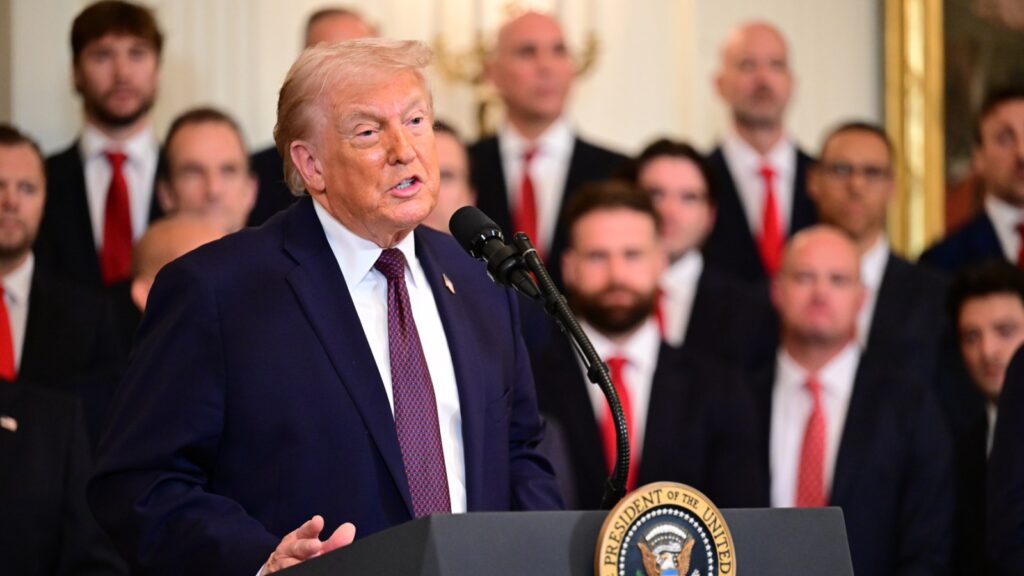
In a striking series of comments, former President Donald Trump suggested that the United States "shouldn’t even have an election," signaling potential unrest as he threatens to invoke the Insurrection Act. This comes amid declining approval ratings and growing voter dissatisfaction with the Republican Party. Trump’s controversial remarks have intensified debates around democratic norms and governance.
Trump’s Controversial Remarks on the Election
Trump recently stated, “When you win the presidency, you don’t win the midterms,” in an interview with Reuters, adding, “When you think of it, we shouldn’t even have an election.” These comments have fueled speculation about his willingness to accept the results of future elections, with Trump asserting that U.S. elections are “rigged.”
Responses and Reactions
The White House, attempting to manage the fallout, described Trump’s statements as lighthearted. Press Secretary Karoline Leavitt claimed he was “speaking facetiously” when he suggested canceling the midterms. However, pushback from reporters highlighted concerns about the implications of such remarks, questioning the seriousness of the president’s intentions.
Insurrection Act Threats
In another controversial move, Trump threatened to use the Insurrection Act against protests in Minnesota. He stated on Truth Social, “If the corrupt politicians of Minnesota don’t obey the law… I will institute the INSURRECTION ACT.” This act would enable federal intervention in state matters, raising alarms over potential misuse of authority.
Public Sentiment and ICE Controversy
Public disapproval of ICE and its enforcement practices has surged, with polls indicating a majority view that these actions make cities less safe. A CNN poll showed that 51% of Americans believe ICE’s tactics decrease safety, reflecting wider discontent with the administration’s approach to immigration and law enforcement.
As the administration grapples with challenges, including economic instability and international issues, Trump’s musings about bypassing elections suggest underlying tensions within the political landscape. His remarks continue to spark debate over democratic principles and the balance of power in the United States.