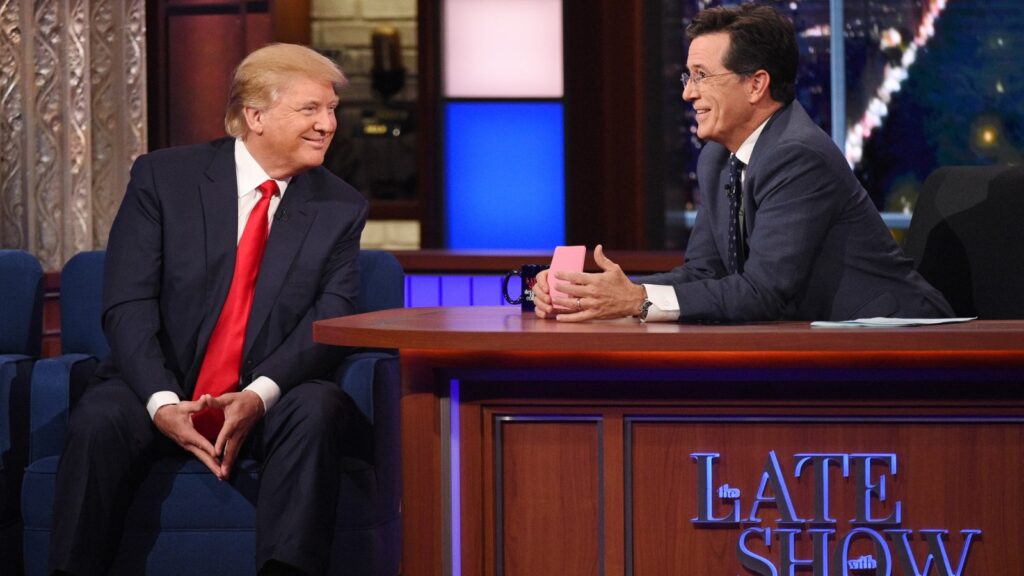
The end of Stephen Colbert‘s “The Late Show” has sparked significant discussion after Donald Trump remarked that he was not “solely responsible” for the show’s cancellation. Trump attributed the decision to a “lack of talent,” refuting claims of political influence. The controversy has fueled discussions around the show’s decline and broader trends in late-night television.
The Claims and Reactions
Speculation arose about CBS’s decision to end “The Late Show,” with many considering it a politically motivated move. Trump, however, stated on his platform Truth Social that the cancellation was due to “a pure lack of TALENT” and financial losses, reportedly reaching $50 million annually. Trump further predicted a similar fate for other late-night programs like NBC’s “The Tonight Show” and ABC’s “Jimmy Kimmel Live.”
Jimmy Kimmel, currently on vacation, responded swiftly on Instagram. His quip highlighted a schedule update, advising viewers to tune in for “Who Wants to Be a Millionaire.” Kimmel’s satirical response points to the enduring tongue-in-cheek exchanges between late-night hosts and their critics.
Financial Context
Earlier, CBS announced that the cancellation of Colbert’s “The Late Show,” after approximately a decade, stemmed from financial challenges rather than any issues with performance or content. The network emphasized, “This is purely a financial decision against a challenging backdrop in late night.”
Despite Trump’s assertions, CBS made it clear that financial struggles were at the heart of the decision. Colbert’s tenure has been marked by persistent critiques of Trump, exemplified by a recent segment highlighting a substantial settlement between CBS’s parent company, Paramount, and Trump.
Broader Implications and Reactions
The cancellation has stirred political and industry figures alike. The Writers Guild of America voiced concerns over the potential political underpinnings, stating, “Cancellations are part of the business, but a corporation terminating a show in bad faith due to explicit or implicit political pressure is dangerous and unacceptable in a democratic society.”
Colbert stepped into “The Late Show” role in 2015, succeeding David Letterman. His tenure began with high-profile interviews and has continued with a strong emphasis on political discourse.
As discussions continue around the cancellation, the future of late-night television and its interactions with political narratives remain in the spotlight.