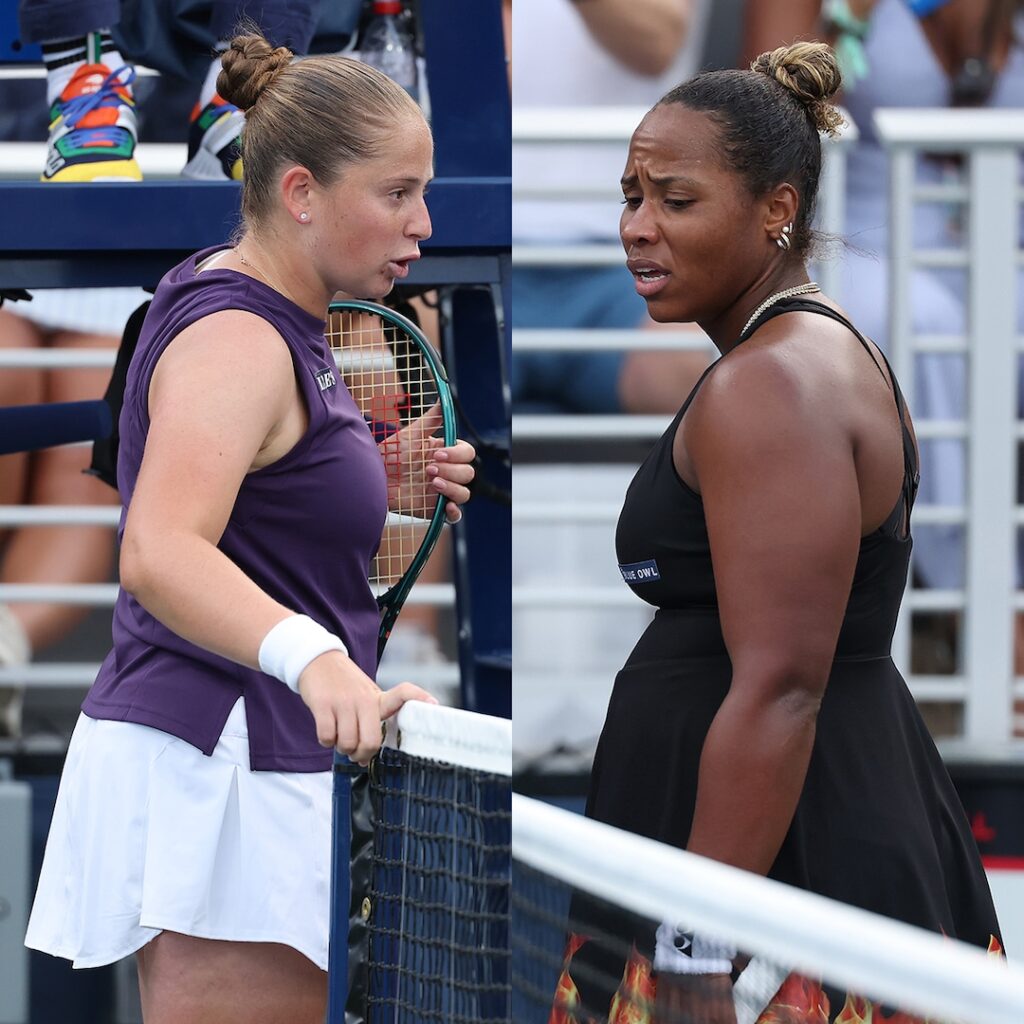
The US Open always promises drama both on and off the court, and the recent match between Taylor Townsend and Jelena Ostapenko did not disappoint. Tensions rose after Townsend’s victory, primarily due to Ostapenko’s comments during their post-match handshake. This interaction, where Ostapenko reportedly criticized Townsend, has sparked considerable attention and discussion in the tennis community. “Taylor Townsend on Jelena Ostapenko comment” has become a hot topic, drawing fans and analysts alike to weigh in on this exchange.
High-Stakes Match Turns Heated
The clash between Taylor Townsend and Jelena Ostapenko was intense, culminating in a 5-7, 1-6 defeat for the Latvian player. During their handshake, Ostapenko allegedly expressed her displeasure with Townsend, taking issue with her opponent’s actions during the game. The incident stemmed from Townsend hitting the net cord without offering an apology, a gesture some players traditionally perform, although it’s not mandatory.
This moment, which was accompanied by a chorus of boos from the crowd, added further drama to an already competitive match. Fans witnessed not only exceptional tennis but also the emotional fallout from a high-stakes game where every point mattered.
Taylor Townsend Responds Calmly
In her on-court interview following the match, Townsend addressed the comments from Ostapenko. “It’s competition, people get upset when they lose and some people say bad things,” Townsend said, reflecting on the exchange. She revealed that Ostapenko accused her of lacking class and education, further suggesting future repercussions once they meet outside the US.
This candid response showcased Townsend’s composure amidst the charged atmosphere, highlighting her ability to maintain professionalism even when faced with unexpected challenges.
Understanding the On-Court Etiquette
The incident also sheds light on the unwritten codes of conduct that permeate the tennis world. While some players instinctively apologize for a net cord advantage, it remains a gesture of sportsmanship rather than a requirement. The Taylor Townsend on Jelena Ostapenko comment highlights the varied perceptions of sportsmanship that can differ from player to player.
Such moments often ignite debate over what constitutes appropriate behavior in professional tennis, prompting discussions that extend beyond the matches themselves. These interactions add another layer to the sport, enriching its narrative and engaging audiences at a deeper level.
The Taylor Townsend on Jelena Ostapenko comment will undoubtedly continue to be a talking point as the US Open progresses, embodying the emotional intensity that makes tennis a captivating spectacle. As the tournament unfolds, all eyes will be on how these athletes navigate not only their matches but also the interpersonal dynamics that come with them.