Amid international economic discussions, Trump‘s tariff talk and border chaos are casting a shadow over the American Film Market (AFM). As global film executives descend on Los Angeles, concerns about navigating U.S. immigration take precedence alongside typical industry deals. With heightened border anxieties, attendees are finding new ways to prepare for entry into the country amid uncertainty, underscoring the event’s role as a hub for international business despite these challenges.
Immigration Hurdles for Attendees
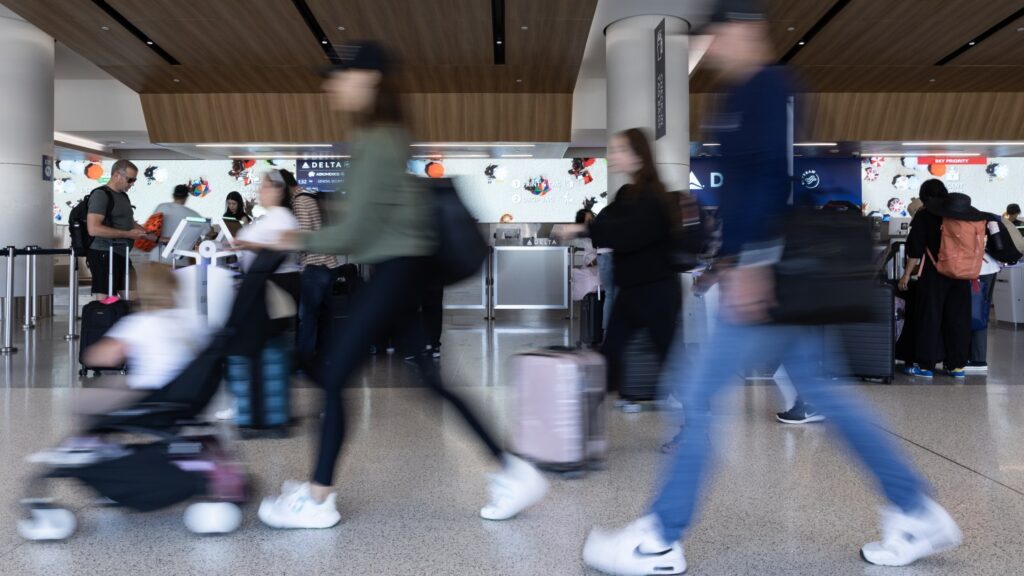
Many attendees at the American Film Market view their participation not just as an opportunity for presales or film packaging, but as an ordeal of navigating U.S. immigration. The prospect of being flagged by customs looms large, leading some to travel with “clean” devices—phones and laptops devoid of sensitive data—to avoid issues over political content or affiliations.
“It’s awful. And it’s so unpredictable,” shared one European executive anonymously, reflecting the prevalent unease. The situation has compelled some to delete messages that might raise suspicion, driven by fear of inadvertently landing on an immigration watchlist.
Visa Challenges and Preparedness
Compounded by tightened visa regulations, these concerns are not unfounded. Jean Prewitt, president and CEO of the International Film & Television Alliance, acknowledges the complications faced by AFM attendees. The organization now provides official documents to assist with border control processes, emphasizing the unpredictable nature of today’s immigration checks.
“We’re advising delegates to carry physical documentation,” Prewitt notes. “Those small things can make a big difference right now.”
Trump’s Tariff Talk Adds to Uncertainty
The unpredictability is further amplified by President Trump’s renewed discussions of tariffs on foreign films. His proposals for a “100 percent tariff” on movies produced outside the U.S. have stirred uncertainty among executives reliant on cross-border collaborations. The specifics of such tariffs remain unclear, but the rhetoric fuels concerns within the industry.
David Garrett, CEO of Mister Smith Entertainment, expressed skepticism and frustration: “Nobody knows what the plan actually is. I just have no idea what [Trump] is talking about.”
AFM’s Robust Attendance Amid Challenges
Despite these hurdles, AFM attendance remains strong. The event, now in Century City, Los Angeles, sees full bookings, illustrating the market’s importance. Executive eagerness to engage face-to-face in L.A., a critical industry hub, supersedes political and logistical obstacles.
“AFM is still where presales happen,” states Janina Vilsmaier of Protagonist Pictures, highlighting the event’s ongoing relevance for genre films. Even with its challenges, AFM’s role as a vibrant marketplace holds firm, reflecting the resilience of the international film industry.
As executives continue to traverse borders, the American Film Market reaffirms its place as a vital convergence point for filmmakers worldwide. While geopolitical tensions and tariff talks pose challenges, the global film community remains steadfast in its commitment to collaboration and creativity.