As the battle between Netflix and Paramount for control over Warner Bros. unfolds, the stakes are high for Hollywood’s workforce. Industry insiders worry that this power struggle, while promising more content, could leave labor forces at a disadvantage. With “tipping point” as the crucial theme, this scenario sheds light on the broader implications for employment and creativity in the film and television sectors.
The Industry’s Historical Doubts
When media giants like Netflix and Paramount engage in battles for dominance, the promises of increased content and job opportunities often ring hollow to seasoned Hollywood labor leaders. Lindsay Dougherty of Teamsters Local 399 captures this skepticism: “We’ve seen in the past how these mergers have impacted workers. It’s never been good. It’s never created jobs. We have never seen the benefit for working people.”
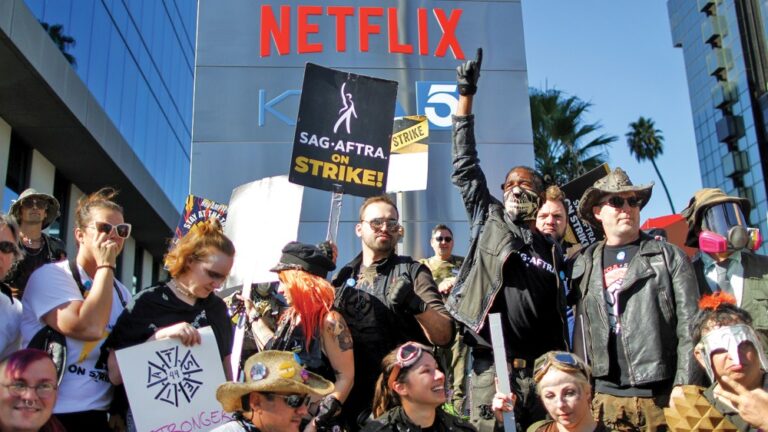
Many in Hollywood aren’t new to these narratives. Past mergers have rarely favored the workforce, leading to job reductions rather than the promised expansions. The current struggle over Warner Bros. has reignited these concerns, especially after a challenging period for the entertainment industry marked by strikes and a production downturn.
Regulatory Concerns and Market Control
The possible merger between Netflix and Warner Bros. could consolidate significant market power, with potential monopoly-like effects raising alarm. Under the Biden administration, labor market impacts have become a crucial component in evaluating such deals. This has opened doors to possible antitrust and monopsony considerations. David Berger, a Duke University professor, notes, “There has to be some small non-transitory change that permanently harms some class of workers in some market. It doesn’t need to be a huge class of workers. If it’s elite producers, that could be enough to form a viable worker claim.”
Union Reactions and Regional Implications
Unions like the Writers Guild of America (WGA) express deep concerns about these mega-deals. Despite their reservations, the Directors Guild of America and SAG-AFTRA maintain a more cautious approach. As the Justice Department and Federal Trade Commission consider the implications, state officials, such as those in California, emphasize their commitment to protecting the economy from harmful consolidations.
Netflix defends its position, arguing that its viewership share remains a small fraction of the total TV market. However, if viewed through the narrower lens of paid streaming, their combined entity could become a dominant force, prompting regulatory scrutiny.
Impact on Theaters and Broader Market Dynamics
Theater owners have raised concerns regarding vertical integration that might allow Netflix to prioritize its platforms over traditional theatrical releases. Such moves could attract antitrust investigations focused on market access and competition effects.
Regulators are likely to explore this as a potential monopsony case, drawing parallels to the publishing sector’s blocked mergers. The WGA has long cautioned against reduced competition in the film and TV industry, citing past consolidations like Disney and Fox as cautionary tales.
For some, Paramount might appear to be a more palatable choice due to its smaller size in the streaming domain, but labor unions argue that Warner Bros. should remain independent, avoiding further media concentration. As the WGA states, “These companies should be focused on investing in their own businesses rather than wasting tens of billions to buy up the competition.”