At the recent WAVES Film Bazaar, renowned filmmaker Shekhar Kapur issued a provocative warning to Hollywood studios and tech giants, signaling that artificial intelligence could dramatically alter the landscape of the entertainment industry. As AI democratizes filmmaking, the established hierarchies of major corporations risk collapsing, challenging the traditional barriers that have long defined media creation.
The Democratization of Filmmaking
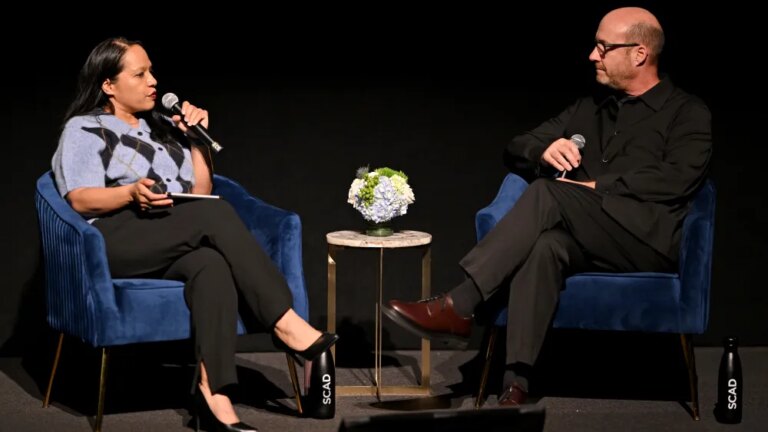
During a session titled “Bringing AI and Creativity Together to Craft Stories that Inspire,” moderated by Sujay Sen, Kapur shared his insights after evaluating entries in India’s first AI Film Festival. He boldly claimed, “Large corporations are about to fall because the pyramid is going flat. New corporations will be formed.” This declaration underscored his belief in AI’s role as a transformative force in the industry.
Kapur observed the creative potential of 181 teams who participated in a 48-hour AI filmmaking hackathon. These participants, though not professional filmmakers, successfully crafted two-minute films on the theme of “memories” using only AI tools. “The first thing I said is that we should retire. Literally, I’m not kidding,” he noted, pointing to the quality of work produced in such a short timeframe.
Breaking Down Traditional Hierarchies
Central to Kapur’s thesis is the concept of “the collapse of the pyramid.” He illustrated this with a story about a CEO and a cleaning lady who, using AI prompting skills, creates a more compelling investment pitch than a team of Ivy League graduates. “The cleaning lady knows more about raising $10 billion than he does because she learned the art of prompting and went at it with full force and emotion,” Kapur explained.
He argued that AI drastically lowers entry barriers to filmmaking, asserting, “The best thing about AI is it’s the most democratic technology. There is a $300 million film that can now be made in $300,000. If it’s India, it can be made in $30,000.”
AI’s Impact on the Studio System
Kapur predicted major studios will face upheaval as AI democratizes content creation. He referenced practical limitations in traditional cinema, such as limited screens in India. “We keep talking about India as the greatest filmmaking nation in the world, but we have only 8,000 screens,” he noted, adding that similar constraints exist in the U.K. and the U.S.
He foresees AI creating its own distribution platforms, akin to TikTok and YouTube: “We have to assume, if you want to tell stories and you can’t get to a theater, an AI film could do very quickly. I can make an ‘Avatar’ for YouTube of the same quality with AI.”
AI’s Limitations and Human Creativity
Despite AI’s potential, Kapur emphasized its limitations in replicating human creativity. He argued that AI cannot replace fundamental human experiences like hope, fear, and faith. “The only time that AI can take over humanity is if we have so much inertia that we become predictable,” he said.
Moreover, Kapur pointed out current technological challenges, such as creating accurate close-ups due to the complexity of human pupils. He also raised concerns about shorter attention spans: “Is it getting shorter and shorter because we are becoming as human beings having shorter attention spans? Or is it getting shorter because films are getting shorter?”
Despite these challenges, Kapur remains firm that storytelling fundamentals are unchanged. “Storytelling never changes. Storytelling is the way we communicate with each other. Everything is a story,” he affirmed, citing influences from famed director Kurosawa Akira.
The WAVES Film Bazaar highlighted these discussions, offering a platform for dialogue on AI’s evolving role in the filmmaking world. The AI Film Festival’s hackathon entries are set to be screened on Nov. 26, aiming to further explore AI’s potential in democratizing and reshaping the industry.