Prince Harry‘s ‘Charm’ Offensive Shows William How to Be Royal: Expert
In a recent analysis, experts have noted how Prince Harry’s engaging demeanor during his latest public appearances might offer a lesson for his brother, Prince William. This notion encapsulates the idea that Prince Harry’s ‘charm’ offensive shows William how to be royal, illustrating how charisma and relatability can redefine royal engagements in contemporary society. Harry’s recent activities have reignited conversations about royal responsibilities and public perception while suggesting that the traditional stiff upper lip may need updating.
Harry’s Active Engagements
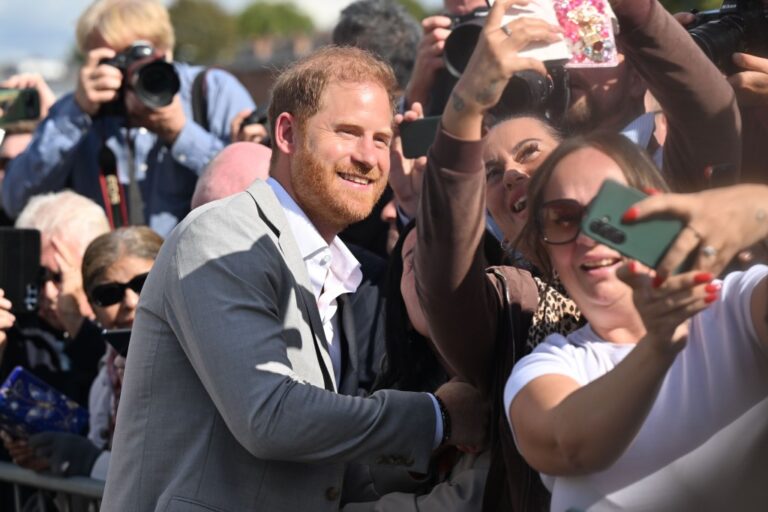
Before heading to Ukraine to support the country’s wounded veterans, Prince Harry completed a busy “quasi-royal” tour in London. His cheerful presence was felt as he engaged with organizations and pledged a remarkable $1.5 million donation to a children’s charity, alongside what might be the first steps toward reconciliation with his father, King Charles III, during a private tea.
Observers, including editor and biographer Tina Brown, pointed out that during this vibrant week, Harry’s uplifting public appearances—such as a playful encounter with a young girl at the WellChild Awards—seemed to overshadow Prince William’s return to royal duties after an extended family vacation. Brown noted this dynamic and remarked, “At last, Prince Harry has got it right, which is bad news for the Prince of Wales.” She suggested that, in the public’s eye, Harry’s effervescent spirit stood in stark contrast to the more reserved style typically associated with William and Kate Middleton.
The Shift in Royal Image
Brown articulated that Harry’s cheerful presence harkens back to a time when he was a beloved figure within the royal family, before he and Meghan Markle charted their course toward a more celebrity-focused lifestyle. After years of grappling with his public image, characterized by criticism and perceived negativity, this week’s events marked a turning point. “What Harry got right this past week,” Brown explained, “is that he’s finally accepted that all royals have to do to win public enthusiasm is to ‘zip around the U.K. and smile.’
This revitalization of Harry’s approach highlights a potential roadmap for William. As discussions about royal responsibilities evolve, it poses the question of whether the traditional royal persona is still viable in an age of increasing transparency and public engagement.
William’s Responsibilities Under Scrutiny
William’s return from five family vacations has also been scrutinized. In stark contrast to Harry’s energetic week, William’s schedule included only two engagements, drawing questions about his commitment to royal duties. Brown pointed out that while William promotes a family-first agenda, it often comes off as a veiled criticism of King Charles’s historically demanding workload, especially in light of Charles’s own ongoing health challenges.
The juxtaposition between Harry’s newfound vitality and William’s quieter approach has raised eyebrows. Columnist Amanda Platell argued that Harry’s recent triumphs — marked by genuine joy and laughter — highlight a missed opportunity for his brother, suggesting, “Which leaves many of us asking why William and Kate have decided to hide away and become the Prince and Princess of Boring.”
The Impact of Charity and Public Perception
Interestingly, Harry’s substantial donation to Children in Need was not just a PR victory but placed an uncomfortable spotlight on William. With reported annual incomes stemming from the Duchy of Cornwall, many now wonder what initiatives William champions with those funds. While royal insiders attempted to defend William’s quieter giving approach, some questioned the efficacy of such anonymity in an era when public engagement often calls for more visible support.
Harry’s announcement of his donation, while beneficial for his image, has spurred discussions about the underlying motivations for public giveaways within the royal family. The debate traversed beyond numbers, touching on the broader narrative of what it means to be royal in today’s context, and whether the ‘charm’ offensive displayed by Prince Harry should serve as a guiding principle for William and the monarchy moving forward.