As anticipation builds for the release of “Dune: Part Three,” the film’s production designer, Patrice Vermette, is promising viewers a “major spectacle.” In a recent interview, he likened the experience to a grand fireworks display, hinting at a climax that will leave audiences in awe of what they see on screen.
Continuing the Journey of Paul Atreides
“Dune: Part Three,” set to open on December 18, sees Timothée Chalamet reprise his role as Paul Atreides, now navigating the complexities of his power following the events of “Part Two.” This installment, inspired by Frank Herbert’s “Dune Messiah,” is positioned 17 years after the previous narrative, exploring the impact of Paul’s reign as emperor and the fallout of his choices.
Creative Excellence Recognized
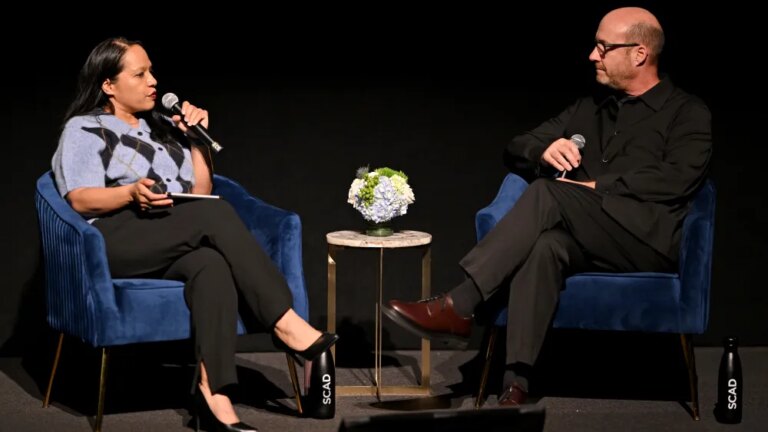
Vermette, recently honored with Variety’s Creative Impact Award at the SCAD Savannah Film Festival, shared insights into his meticulous design process during a conversation with senior artisans editor Jazz Tangcay. He revealed that the guiding directive from director Denis Villeneuve was to avoid repeating sets, a challenge he embraced wholeheartedly.
A Bold Opening Sequence
One particularly ambitious element of the film is the opening sequence, described by Vermette as a “crazy idea.” In his conceptual illustrations, he envisioned a vast expanse of black sand, where spaceships launch an onslaught against a planet. Building one of these ships, which weighed 55 tons, required innovative engineering, including placing it underground and managing elaborate water effects for a rain-soaked battle scene. “The results are worth it,” he states, reflecting on the complexities involved in bringing this vision to life.
Collaborating to Elevate the Art
Vermette emphasized that working with Villeneuve is a highlight of his career due to their shared ethos: a commitment to innovation and collaboration. He mentioned their motto, “Let’s challenge each other. Let’s make it different,” which has driven them to continually push boundaries within the same cinematic universe.
From Music Videos to the World of Dune
Before embarking on “Dune,” Vermette recounted his beginnings in the film industry, which started with music videos. He discovered his aptitude for translating a director’s vision into visual elements that energize the viewer. His friendship with Villeneuve blossomed through various projects over the years, finally culminating in their work together on the 2013 film “Enemy.”
A Lifelong Dream Realized
When Villeneuve proposed “Dune,” Vermette recognized the significance of Herbert’s work to the director, noting that Villeneuve had been storyboarding it since he was 15. Upon receiving the initial script, Vermette meticulously took notes and re-engaged with the book, grounding his designs in the narrative’s reality while ensuring that every object served a purpose in the story.
Bringing Complex Worlds to Life
The design of various settings played a pivotal role in Vermette’s approach. He crafted the dark world of Giedi Prime, inspired by industrial septic tanks, and designed iconic locations such as the Atreides Castle and the Imperial Nexus Laboratory on Arrakis. Through collaborative efforts with cinematographer Greig Fraser and other department heads, they showcased their ingenuity by executing significant scenes without compromising on artistic integrity, often overcoming the challenges of realistic lighting.
The Essence of Collaboration
During the SCAD Savannah Film Festival, a panel discussion highlighted the importance of collaboration in filmmaking, echoing Vermette’s ethos. Kathleen Radomski, Chair of Production Design at SCAD, noted, “Our favorite films and TV series are not created by soloists; they take a village.” The festival recognized ten artisans making impactful contributions in the industry, reaffirming the belief that teamwork is critical to the filmmaking process.
Conclusion
As “Dune: Part Three” prepares for its release, the insights from Patrice Vermette and the discussions from the SCAD Savannah Film Festival reinforce the film’s commitment to high artistic standards and collaborative filmmaking. Viewers can expect nothing short of an extraordinary cinematic experience come December.