In a world where nostalgia often dictates the success of modern cinema, Bobby Farrelly’s “Driver’s Ed” seeks to resurrect the charm of the ’90s teen comedy genre. Yet, instead of delivering a fresh take, it seems to merely rehash past elements, offering little more than a fleeting remembrance of an era long gone. By positioning itself as a throwback, “Driver’s Ed” stirs curiosity but fails to breathe new life into the iconic ’90s teen comedy format.
Stuck in Time: The Nostalgia Trap
“Driver’s Ed” is steeped in ’90s nostalgia, a choice that ultimately pigeonholes the film. Although technically grounded in the present day—with smartphones and references to modern-day medications like Ritalin—the film’s essence remains firmly entrenched in the past. The screenplay, penned by Thomas Moffett, further cements this, evoking memories of pre-millennial pop culture without adding contemporary relevance.
The film struggles with humor, especially for those familiar with Farrelly’s earlier works like “There’s Something About Mary.” The comedy feels watered down, missing the bold, risky humor that marked Farrelly’s previous successes. Instead, the film relies on tame, predictable jokes that fail to captivate the audience’s engagement with ’90s teen comedy.
Characters and Clichés
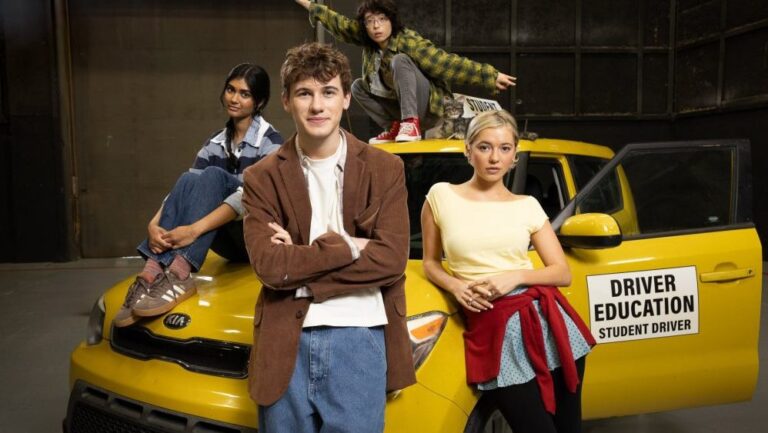
At the heart of “Driver’s Ed” is Jeremy, played by Sam Nivola, whose journey mirrors classic coming-of-age tales. However, the narrative quickly reveals its clichés—an earnest young man embroiled in a long-distance relationship, navigating the predictable pitfalls of teenage romance. His co-stars include the stereotypical valedictorian, a stoner, and a cynic, all bound together by circumstances rather than genuine connection.
Their road trip provides encounters that are bizarre yet seemingly uninspired, featuring a mix of scenarios reminiscent of old teen comedies. Despite these characters’ potential, they seem frozen in time, like remnants of the ’90s teen comedy playbook.
Homage or Rehash?
While “Driver’s Ed” attempts to pay homage to classic films like “The Breakfast Club,” it inadvertently emphasizes its disconnection from modern storytelling. The film borrows extensively but lacks originality, which diminishes its impact. Set pieces, like the impractical hiding of iPhones on a bridge, stretch believability without delivering compelling humor or insight.
Despite these shortcomings, the cast gives a spirited effort, injecting as much energy as possible into dialogue and scenarios that don’t quite match their potential. Their performances hint at a missed opportunity—suggesting that with more nuanced writing, “Driver’s Ed” could have been more than just a reanimated tribute to the golden age of the ’90s teen comedy genre.
In pursuing the spirit of the past, “Driver’s Ed” inadvertently highlights the evolution that has occurred since the ’90s. Overall, the film remains more of a selective nod to nostalgia than a revival, reminding us that while the past can inspire, it’s vital to innovate for the present.