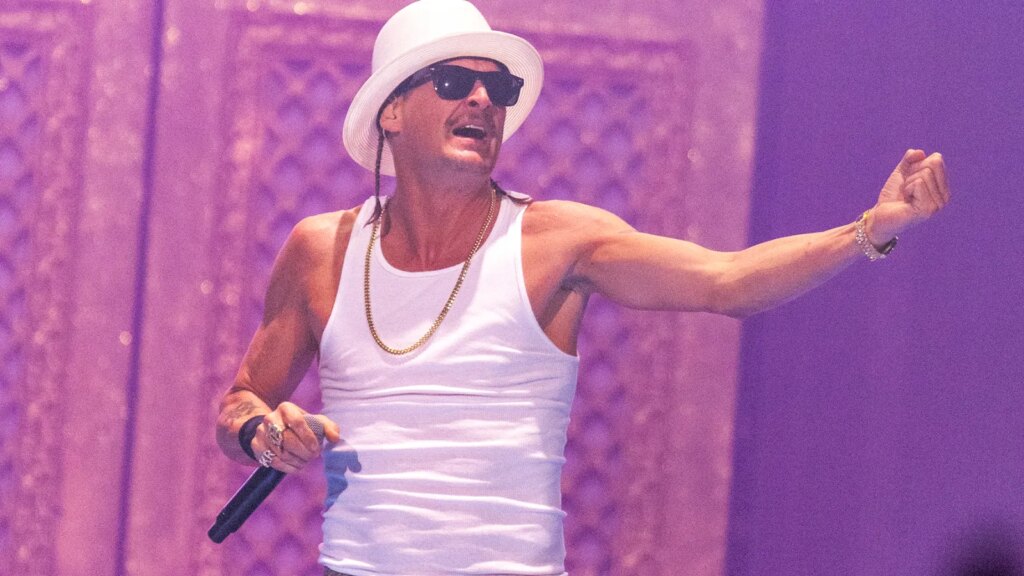
Kid Rock’s recent appearance at the TPUSA Anti-Halftime Show has sparked conversation across social media, highlighting a unique blend of entertainment and political messaging. Set against the backdrop of the traditional Super Bowl halftime spectacle, the event featured a range of performances geared towards a particular American ethos. Despite the mixed reviews, Kid Rock’s headline act didn’t quite meet the expectations of many viewers.
A Different Kind of Halftime Show
The “All-American Halftime Show” presented by Turning Point USA aimed to provide an alternative to the mainstream Super Bowl event, which featured Puerto Rican artist Bad Bunny. Gathering around 16 million views on YouTube despite a platform switch due to licensing issues, the show carved out a niche audience. While this is commendable, the numbers were still dwarfed by the official halftime show’s record-breaking viewership of 133.5 million.
Kid Rock’s Underwhelming Performance
Headliner Kid Rock delivered a short set at the event, featuring just two songs. His performance of “Bawitdaba” suffered from noticeable lip syncing issues, while his acoustic rendition of Cody Johnson’s “Til You Can’t” was performed under his real name, Robert Ritchie. The performance didn’t quite land as hoped, especially against the backdrop of a show filled with pyrotechnics and heavy guitar riffs.
Supporting Acts Take Center Stage
Other artists stepped up to provide most of the evening’s entertainment. Country rock singer Brantley Gilbert delivered “Real American,” whereas Lee Brice addressed cultural tensions with his song “Country Nowadays.” Gabby Barrett, a standout from American Idol, performed her hits “The Good Ones” and “I Hope,” adding depth to the event’s musical lineup.
Reception and Cultural Context
Despite the strong conservative messaging, Bad Bunny’s Super Bowl show, celebrating cultural ties across the Americas, resonated widely. Echoing the sentiments of Grammy-winning artist Kacey Musgraves, many viewers felt a shared sense of unity that transcended the spectacle of Kid Rock’s performance.
This unique event, while divisive, clearly illustrates the evolving landscape of entertainment where cultural and political interests often intertwine.