John Travolta has always approached his characters with a unique perspective; he often doesn’t feel the need to connect with them. In fact, he admits to sometimes loving to hate the roles he takes on. “They say you have to find something you like,” explains Travolta. “But I’ve never felt that. I think you have to like the result, pulling it off. That’s where the joy comes from. To become these people, you don’t have to identify with them or enjoy being them. You just have to be excellent at executing them.”
Facing a New Challenge in ‘November 1963’
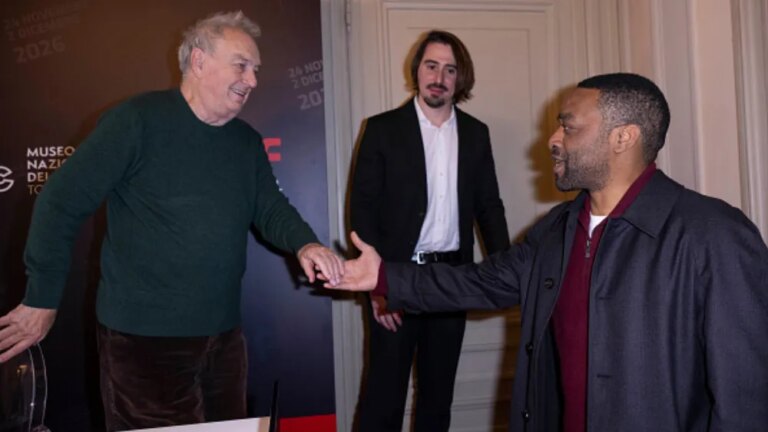
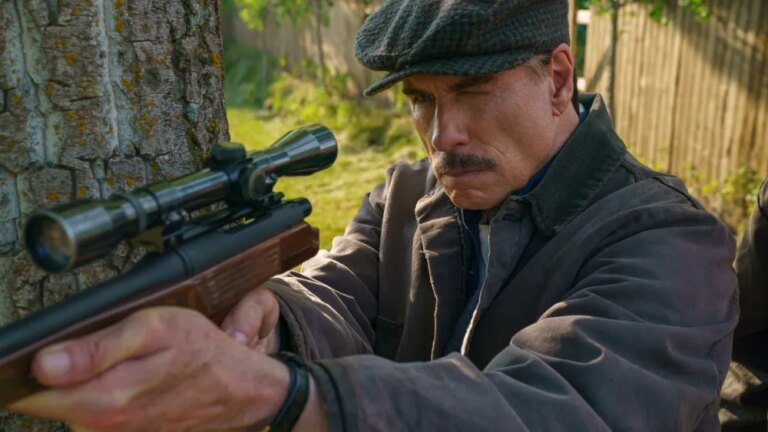
His latest role as Johnny Roselli, a notorious figure in the world of organized crime, presents one of the biggest challenges of Travolta’s career. The film “November 1963,” which premiered at the Torino Film Festival, delves into the life of Roselli— a real-life wiseguy turned showbiz fixer who entangled himself in the dark undercurrents of American history.
Roselli’s life was a complex tapestry that intertwined Hollywood glamour with gritty crime; he was a key player in connections between figures like Sinatra and JFK. “He was an odd mix,” Travolta comments. “He was the guy who asked Sinatra to connect Kennedy with the mob. He hooked Kennedy up with Marilyn Monroe. He was a Hollywood icon of sorts, and had this other, darker side as a hitman. That’s complex. I’ve done dark subject matter before, but this was real. It actually happened, and that’s the difference.”
A Historical Context of Chaos
“November 1963” posits Roselli as a key player in the assassination of President Kennedy, a historical crime that still resonates deeply. “It was the biggest crime of the century,” says Travolta, recalling the moment he learned about the assassination as a child. “The announcement came at 11 a.m. Eastern Standard Time that the President had been shot, and then three hours later, at 2 p.m., they confirmed that he had passed. We all went to our homes, and all I can remember is being home with my father, glued to the television, sitting on his lap and trying to make sense of it all.”
The actor felt the weight of that historical moment while filming, portraying “a very evil man with moments of humanity.” Working alongside other conscientious actors, he found it challenging to embody characters whose moral compass sharply differed from their own. “It took a glass of wine and a nice dinner to snap out of the zone,” Travolta admits about dealing with the darker elements of the role.
A Transformative Experience at Torino
When Travolta finally saw his performance at the film’s premiere in Torino, he experienced a profound introspection. “I thought, ‘Wow, I can’t believe that’s me.’ I’ve never seen myself lose my soul in a film, and [here] I was soulless. I was very proud that I could portray that because it’s against my very essence. When I looked at it on screen, I went, ‘Oh my god, he’s the devil.’”
Exploring the Narrative of ‘November 1963’
Written and produced by relatives of notorious Chicago crime boss Sam Giancana, the film explores the implications of organized crime in the assassination narrative while leaving the full scope of CIA involvement open for potential exploration in sequels. “This is not history; it’s about human beings,” Travolta comments, pointing out the complexity of human interactions during chaotic times.
Director Roland Joffé emphasizes the historical ambiguity in “November 1963,” framing the narrative through a lens that captures the chaotic nature of events. “I’d say this story is probably 90% true, insofar as no one will ever know what really happened,” he states. “It’s about the transactional mindset, the mafia mindset, the idea that power is all that counts and loyalty has to be bought at the point of a gun.”
The film notably includes a revisionist portrayal of slain Dallas policeman J.D. Tippit, exploring the murky waters of conspiracy theories while steering clear of a neatly orchestrated plot. “I reject the conspiracy theory,” Joffé asserts. “If it were a conspiracy, we would have known by now, and we absolutely do not. What it was is collusion, and collusion is very different. It’s subtle. It’s a nod, a wink, a knowing glance.”
This perspective underscores Joffé’s belief that what transpired in reality was chaotic rather than the result of a grand conspiracy. “It’s not about control,” he concludes. “It’s about the fact that life is chaotic, and the killing of the President comes out of that. We made a film about chaos.”