Amid ambitious efforts to transform Jakarta into a regional film hub, Indonesia‘s film agency is in the process of drafting a revised Film Law that aims to enhance its authority. This initiative is in tandem with the growth of local film production, as exemplified by Netflix’s recent commitment to produce four titles in the capital city.
Drafting a New Film Law
Fauzan Zidni, the chair of the Indonesian Film Agency (BPI), shared insights with Variety about the ongoing drafting process, which has been developed with the Ministry of Culture since the Cannes Film Festival. “It is still in discussion, and I will say more when the moment is right, but the direction is right and the momentum is there,” Zidni stated, alluding to the potential impact of the revised law.
Jakarta’s Film Commission Initiatives
June saw the launch of the Jakarta Film Commission alongside the initiative ‘Filming in Jakarta,’ designed to serve as a one-stop service for producers. Vice Governor Rano Karno noted that this development has already attracted production companies from Malaysia and India to the city.
Netflix’s Growing Presence
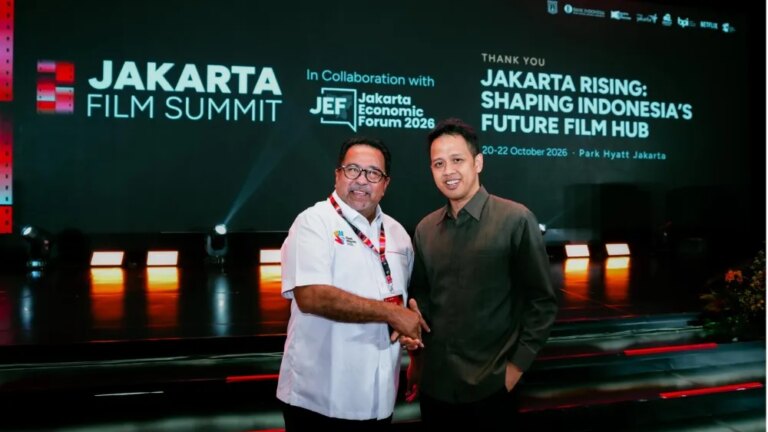
Currently, Netflix is working on four titles in Jakarta, including “Tygo,” a spinoff of their hit “Extraction.” Karno expressed satisfaction with Netflix’s commitment, highlighting the collaboration as a part of a memorandum of understanding established during the inaugural Jakarta Film Summit, where Netflix pledged to assist in developing local film talent.
Aiming for Regional Parity
Governor Pramono Anung’s vision for Jakarta is to rival the success of Busan as a film hub. Veteran actor and filmmaker Karno, who has been instrumental in shaping the city’s film policy, emphasized the desire to establish a complete ecosystem within the next five years, which would include production, financing, and market access alongside infrastructure improvements such as soundstages and post-production facilities.
Financial Incentives and Regional Collaboration
To stimulate growth, Jakarta has implemented a 50% reduction in certain location fees and introduced tax concessions for qualifying Indonesian films. Karno mentioned that the city is learning from Thailand and Malaysia to develop more robust production incentives.
The Jakarta Film Commission has been collaborating closely with the Busan Film Commission and gained official membership in AFCNet, the Asian Film Commissions Network, which Karno views as an opportunity to establish Jakarta as the future film hub in the region.
Broadening the Impact Beyond the Capital
To extend the benefits of this film initiative beyond Jakarta, the city is partnering with Bank Indonesia’s local representative office to explore opportunities in the film and creative sectors. The Jaksinema initiative aims to make films more accessible to lower- and middle-income audiences by providing cheaper tickets in public markets.
Addressing Financing Challenges
Zidni noted that the upcoming film summit will address significant barriers to institutional investment in the film sector. Traditional banks focus on physical assets for loans, leaving intellectual property (IP) rights largely unvalued in terms of collateral. The summit aims to bring together the Financial Services Authority, banks, and various government agencies to establish a standard IP valuation method and pilot financing scheme.
The Need for a Stronger Institutional Framework
Zidni highlighted the lack of a dedicated national body similar to France’s CNC or Korea’s KOFIC, which limits the Indonesian Film Agency’s capacity to fund films or enforce policies effectively. He is advocating for a revised law that would empower BPI with statutory authority and guaranteed funding.
While BPI works alongside two overseeing ministries, Zidni articulated the need to address coordination issues that are both political and institutional in nature. He remarked on the unprecedented support from the Minister of Culture, but he refrained from providing a timeline for the law’s approval in parliament.
Local Productions on the Rise
Local films accounted for about 67% of Indonesia’s box office last year; however, Zidni indicated that growth may slow by 2026 given current global economic conditions. “What we have not built is the bridge that carries those stories outward,” he conveyed, emphasizing the need for better international collaborations.
International Co-production Efforts
At the Lumière Summit, plans for a new international co-production fund were announced, created in collaboration with France’s CNC and aimed at filmmakers globally who wish to work with Indonesian partners. This is accompanied by a matching fund supporting producers who secure international financing.
Zidni acknowledged that while the matching fund may not directly help independent producers without overseas connections, it serves as a significant incentive to invest in those relationships, providing tangible rewards supported by the government.
Future Partnerships and Talent Development
Indonesia has initiated its first audiovisual co-production agreement with the Netherlands and is currently negotiating a bilateral treaty with France. Zidni noted the emergence of increased interest from Korean producers in Southeast Asia, positioning Indonesia as a key partner based on density and scale.
With approximately 1,200 film graduates emerging from 27 campuses annually, Zidni highlighted the industry’s challenge of retaining talent, with a turnover rate of about 60%. His goal extends to 2030, where he plans to establish at least two bilateral co-production treaties, implement a reliable financing system, and create a strong presence for Indonesian producers in international markets.
“When the system works routinely, not heroically, that is when I will know we have built something that lasts,” Zidni concluded, underlining his vision for a transformed Indonesian film industry.