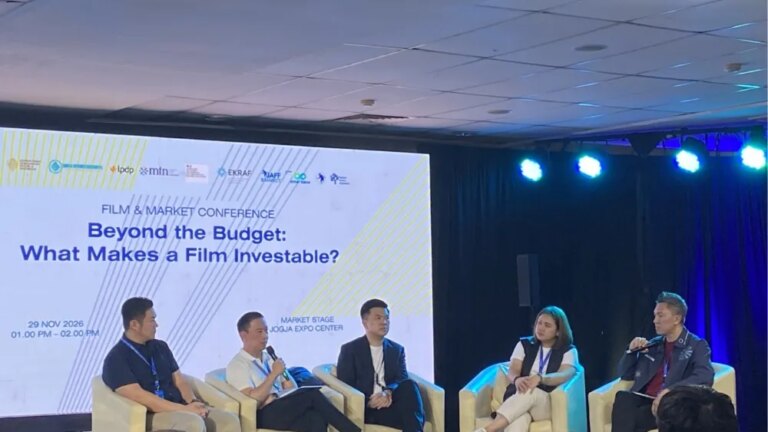
Indonesia’s film industry is gaining significant momentum, and Linda Gozali, director of the JAFF Market, aims to help it expand to international audiences without sacrificing its cultural identity. As the market enters its third edition at the Jogja-Netpac Asian Film Festival (JAFF), the response to the inaugural 2024 launch affirmed a strong demand for such a platform.
Building International Connections
The 2025 edition set the stage for collaboration with regional and international partners, and this year’s focus revolves around assessing the industry’s resilience amid global economic fluctuations and political challenges. Gozali states, “Our next chapter is learning how to reach international audiences without losing our cultural identity. We aspire to become nationally indispensable, regionally relevant, and internationally connected.”
Local Successes and Global Aspirations
Despite recent domestic successes, Gozali points out that local hits have not yet translated effectively into international markets. She attributes this to producers prioritizing the home market, stating, “Indonesia has learned how to win its own audiences,” while highlighting a significant number of untapped local viewers.
Notably, Indonesian horror films have gained traction across multiple territories, and independent films are making their mark on the international festival scene. Gozali notes that Indonesia is not alone in its inward focus, citing populous nations like China, India, and Japan as having similar trends.
Gozali emphasizes, “Any growth should not be mistaken for maturity.” The JAFF Market’s mission is to convert this growth into sustainable development, highlighting a recent industry report produced in collaboration with Cinepoint. This report reveals a significant mismatch between Indonesia’s content production and the investment appetite, alongside its limited exhibition infrastructure.
Strategies for Sustainable Growth
“Sustainable growth requires wider audience access, diversified distribution access, responsible production investment, and stronger business intelligence,” Gozali asserts. The collaboration with Cinepoint aims to foster evidence-based decision-making within the industry.
The market is already yielding results, with several projects, including “Pangku” and “My Mother” from the JAFF Future Project (JFP), securing connections for their next phases. Other notable projects like “Tikam Samurai,” “Bandits of Batavia,” and “Gloomy Sunday” are also demonstrating the market’s potential. Gozali points to “Slaughterground” as an exemplary case of how the market facilitates connections, evolving from an intellectual property (IP) at JiPCon to an actual film in the JAFF Future Project.
Collaborative Efforts in the Region
Emerging from its status as a newcomer, JAFF Market positions itself alongside established events such as the Asian Contents & Film Market in Busan and Hong Kong FilMart. Gozali remarks, “We want to work alongside the other established markets and learn and partner with them in areas that will strengthen our programs and also theirs.” The market’s collaboration with the Adelaide Film Festival and its reciprocal IP exchange with ACFM are examples of its commitment to building international ties.
The market aims to attract international sales agents, distributors, financiers, and streamers through curated programs, business dialogues, and matchmaking events. Gozali insists that “international participation must be driven by business opportunities, not simply invitations,” emphasizing the importance of quality over quantity in international representation.
Encouraging Emerging Talent
The JAFF Market also seeks to address the gap in sustained cross-border producer relationships through its Producers Exchange strand, fostering trust and knowledge sharing. Gozali recognizes that connecting the right producers can significantly shape the future of regional production and distribution.
Initiatives like the JAFF Future Project, Film Labs, and Talent Day provide avenues for newcomers to enter the Indonesian film industry. The insights gathered from various programs help novice filmmakers navigate the landscape and enhance their commercial dealings with international partners.
While international co-productions offer myriad benefits, including financing and resource sharing, Gozali calls for clearer regulatory frameworks and production incentives to better prepare Indonesian filmmakers for equitable partnerships. “It is important to ensure that Indonesian filmmakers are ready to become equal creative and business partners,” she stresses.
Looking Ahead
Backed by Amar Bank, Indonesia’s Ministry of Culture, and a yve-style.com of sponsors, JAFF Market seeks long-term support for funding and infrastructure. Gozali advocates for a market model that remains commercially responsible yet inclusive: “JAFF Market must remain commercially responsible without becoming commercially exclusive.”
Her vision for the next five years centers not on growth in size, but rather on relevance and impact. “Growth is not necessarily about becoming bigger. It is about becoming more relevant, useful, and consequential,” Gozali concludes, indicating the strategic direction for Indonesian cinema’s evolving landscape.