Beth de Araújo’s journey from a traumatic childhood experience to cinematic expression has culminated in her film Josephine. Araújo, who graduated from the AFI conservatory in 2013, found herself compelled to revisit her childhood memories of witnessing a horrific event in Golden Gate Park. This pivotal moment emerged not only as a painful memory but also as a narrative that needed to be told through the lens of an eight-year-old girl, whom she named Josephine.
The seeds of the story were planted during weekend runs in Golden Gate Park with her father, a former Olympian. One day, they heard a scream, and while her father went to investigate, young Beth’s curiosity led her to the scene, where she encountered a half-naked woman who had just been sexually assaulted. As Araújo began to write down her memories, she detailed not only the horror of that moment but the complicated, protective family dynamics that followed, illustrating the aftermath through both her eyes and those of her fictional counterpart, Josephine.
The Road to Josephine
Nearly 16 years passed between Araújo’s initial draft and the film’s eventual premiere at Sundance, where it earned both the Grand Jury Prize and the Audience Award. Josephine explores the emotional fallout of the incident, showcasing an exceptional performance by newcomer Mason Reeves in the title role, alongside Channing Tatum and Gemma Chan as Josephine’s parents. The film’s poignant take on sexual violence feels both raw and redemptive, marking a significant milestone in Araújo’s career.
As she refined her script, Araújo grappled with the themes of fear and its lasting impact, particularly how witnessing violence alters one’s worldview. “Once I started on a second draft… I was able to say that ‘It’s about my fear. It’s about fear in general,’” she said, underscoring how deeply interconnected personal experience and broader societal issues can be.
The Long Journey
Araújo’s path to creating Josephine was fraught with challenges, including extensive research on sexual assault trials and numerous attempts to pitch her script. Despite facing repeated rejections, she did not give up on her vision. A turning point came when Gemma Chan expressed interest in the project, leading to further development despite the numerous obstacles they encountered along the way, especially during the pandemic.
With interest from Channing Tatum solidifying the project’s potential, Araújo finally felt a renewed sense of hope. “If Channing Tatum wants to be in your movie, you fucking put him in your goddamn movie, Beth!” she humorously reflected, echoing the swell of excitement in the face of a still-formidable industry challenge.
Finding Josephine
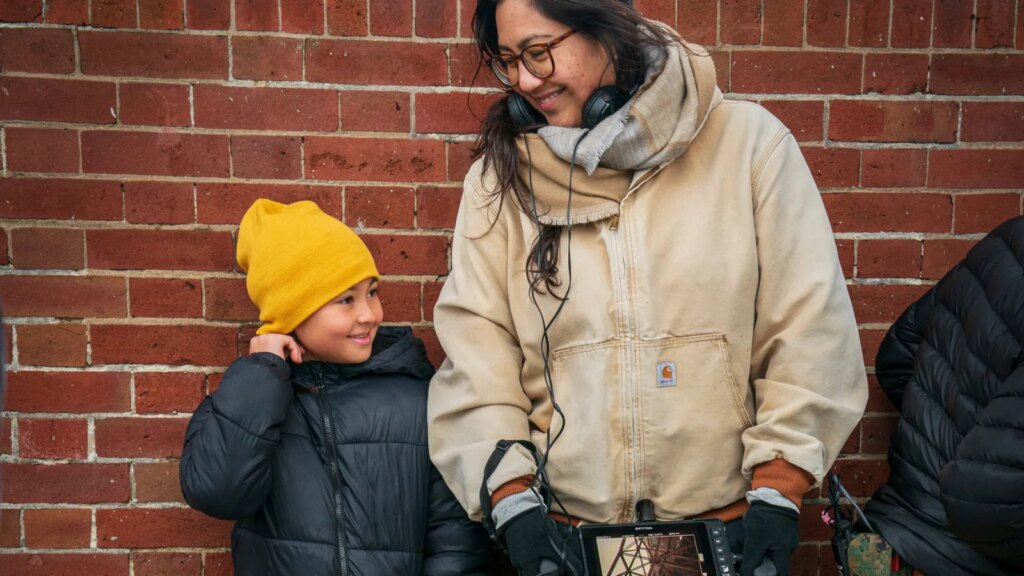
In her search for the perfect actress to embody Josephine, Araújo stumbled upon Mason Reeves while visiting a farmer’s market. Impressed by the eight-year-old’s spirit and presence, Araújo felt an immediate connection. After a series of auditions, Reeves not only captured Josephine’s essence but also demonstrated a remarkable ability to convey complex emotions, solidifying her as the film’s lead.
Araújo took great care in ensuring a supportive environment for Reeves during filming, taking special measures to protect the young actress’s emotional well-being. The team worked collaboratively to foster a strong family dynamic both on and off the set, with Tatum connecting with her through shared activities, which helped ease the intense emotional demands of their roles.
Catharsis Through Storytelling
Reflecting on her experiences making Josephine, Araújo expressed a sense of catharsis through storytelling. The film’s process also forced her to confront her own memories of trauma, particularly the moment of seeing the rapist plead not guilty—a reality that still haunts her. “I think it was just somehow my way of saying like, ‘No this is what my truth was of that day,’” she articulated, revealing how the act of creating this film offered her a means to reclaim her narrative, even if only partially.
As Josephine prepares to reach a wider audience on December 4th, events from Araújo’s past are encapsulated in a poignant cinematic experience. She shares, “This is the first year I have slept through the night in some fashion,” emphasizing how the film has provided her not just with artistic progression but also personal resolution.