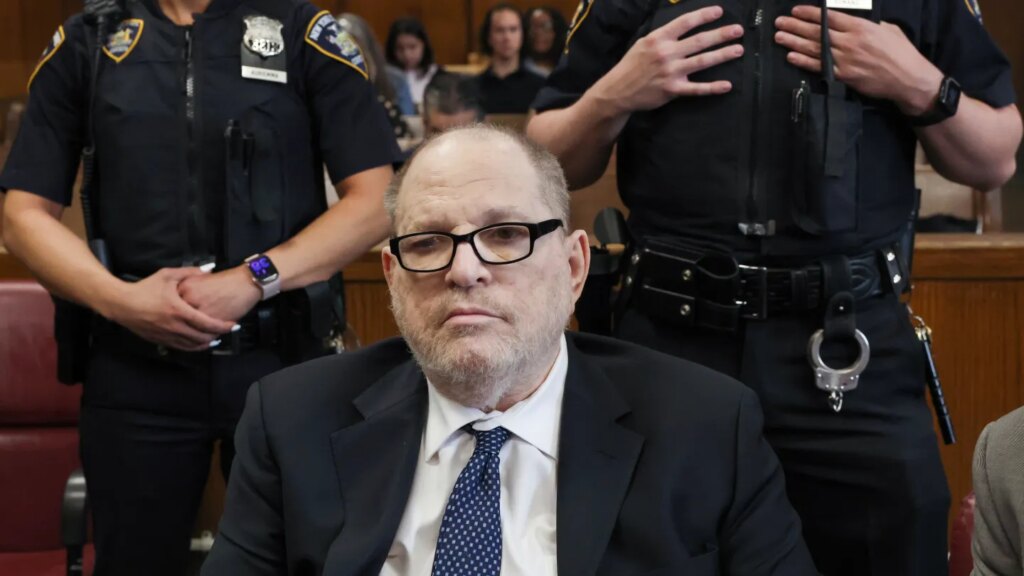
In a significant moment for the #MeToo movement, Harvey Weinstein has been sentenced to 15 years in prison in New York after being found guilty of criminal sexual acts against former Project Runway assistant Miriam Haley. The sentencing follows Weinstein’s prior conviction and reflects ongoing legal battles surrounding his actions and their implications.
Prosecutorial Recommendations and Defense Arguments
Prosecutors had sought a 20-year sentence combined with five years of supervision after release. This same recommendation was previously imposed during Weinstein’s related charges in 2020. Weinstein’s defense team, advocating for a nine-year sentence based on his deteriorating health, argued that a longer term would likely ensure the 74-year-old’s death in prison. The Class B felony to which he was convicted carries a maximum penalty of 25 years in prison.
Defendant’s Statement and Legal Findings
During his court appearance, Weinstein addressed the judge, stating, “I am not a perfect person. But I am a person who has made mistakes.” He expressed a desire to apologize to anyone he may have hurt but maintained his innocence regarding the charges brought by Haley. This stance has drawn criticism, as Manhattan Assistant District Attorney Nicole Blumberg pointed out, “Despite being found guilty of that offense, not once, but twice, the defendant has never shown an ounce of remorse.” She highlighted his history of victim blaming and alleged online harassment, including attempts to sway public opinion while incarcerated.
Judicial Sentencing Remarks
Weinstein’s sentencing will run consecutively with his sentence in California, a detail left to the state’s discretion. Judge Curtis Farber noted, “You will be remembered for the many films you brought to the silver screen, but that pales in comparison to what you became: a sexual predator, the literal face of the #MeToo movement.” His sentence mandates registration as a sex offender and includes five years of post-release oversight, reflecting the court’s assessment of his lack of remorse.
Details from the Victim’s Testimony
Haley’s testimony was pivotal in both trials, recounting her initial meeting with Weinstein in 2004 and the subsequent sexual assault in 2006 at his Manhattan apartment, where he allegedly forced oral sex on her despite her protests. This was Haley’s second testimony in relation to the charges, with Weinstein previously convicted in New York in 2020 for raping another woman, Jessica Mann, as well as assaulting Haley. However, the New York Court of Appeals overturned that conviction in 2024, leading to the retrial.
Impact Statements from Victims
Haley described her experience of testifying as traumatizing, voicing the pressure she felt throughout the legal process, including difficult cross-examinations and media scrutiny. “For every person who gets scared, tired, intimidated and shamed, I knew those were the reasons I had to keep going,” she stated tearfully. Weinstein, seated at the defense table in a wheelchair, did not look at her during her testimony.
Continuing Legal Battles and Health Situations
Weinstein is also facing a 16-year sentence in California, set to follow his New York punishment. Yet, inconsistencies in his sentencing have arisen, as a state appeals court has ordered his resentencing, with no date currently established for that hearing. His legal team has additionally filed for a review of the conviction with the California Supreme Court.
Throughout the proceedings, Weinstein has remained incarcerated at Rikers Island, frequently hospitalized due to numerous health concerns, including chronic myeloid leukemia and coronary artery disease. His attorney noted that treatments for his cancer have worsened his heart condition, leading to more hospital stays.
A Vision Beyond Prison Walls
Despite his current situation, Weinstein expressed a desire for a future beyond prison, stating, “I want to live outside these walls. I’m not a violent man. I ask for mercy.” He indicated plans to establish a foundation aimed at rehabilitating former inmates upon their release.
Reflections on the #MeToo Movement
After the sentencing, Gloria Allred, Haley’s attorney and a prominent advocate for women’s rights, emphasized the ongoing relevance of the #MeToo movement. She countered claims that this sentencing signifies the movement’s decline, asserting that victims continue to seek accountability, whether through public trials or private settlements.