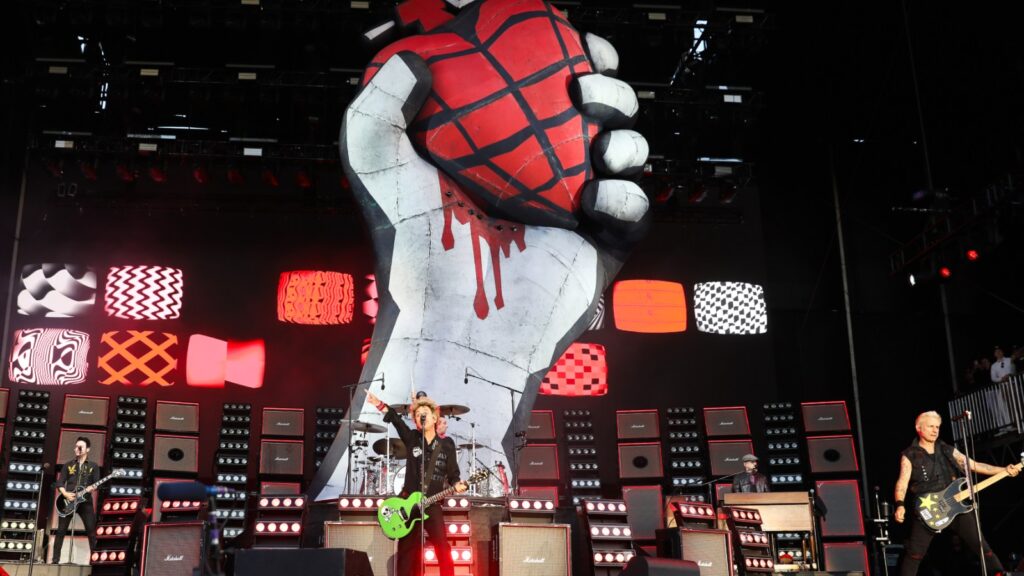
In a lighthearted jab, Green Day recently took aim at Will Smith over suspicions he used artificial intelligence to enhance crowd visuals in a tour video. This playful critique adds to the ongoing conversation about AI’s role in content creation and its authenticity. Green Day cheekily asserted they don’t rely on AI, implying a more genuine connection with their audiences.
Green Day’s Playful Critique
On TikTok, Green Day posted a video from their South American tour displaying enthusiastic fans at the front, energetically singing along to “Basket Case.” The post humorously declared, “Don’t need AI for our crowds 😜,” a clear nod to the recent controversy surrounding Will Smith.
AI Allegations Against Will Smith
Will Smith found himself under scrutiny after sharing a video celebrating fans from his European tour. The video, which showed the audience in what seemed like a polished montage, drew suspicion for possible AI use. Observers noted anomalies such as blurred faces and oddly formed features, leading to questions about its authenticity.
Community Reactions and Analysis
Although the video sparked considerable discussion, Smith and his team have not addressed the AI allegations. Tech blogger Andy Baio conducted an analysis, examining Smith’s social media. He discovered many controversial shots already existed as still photos, suggesting the video may have stemmed from existing images rather than digitally altered crowds.
YouTube’s Role in Content Alteration
Adding another layer, some speculated YouTube’s experimental image enhancement technology might have unintentionally altered Smith’s video. A YouTube spokesperson confirmed to The Atlantic that the platform is testing machine learning enhancements on select videos, potentially contributing to visual discrepancies between different platforms.
Despite mixed findings, Baio and others hypothesized that AI was involved, likely in transforming still images into video clips, rather than fabricating extensive fan visuals. This aligns with recent technological trends, indicating a shift in how archival images may be utilized creatively, as seen in projects like Andrew Dominik’s animated homage to Elvis Presley.