In Gianfranco Rosi’s “Below the Clouds,” the keyword “Vesuvius” is more than just a geographical landmark; it serves as a silent observer of life’s ebb and flow in its shadow. The film delves into the vibrancy and contrasts of the Neapolitan landscape, capturing the interplay between its storied past and its lively present. Through Rosi’s lens, the omnipresent Vesuvius looms quietly, blending into the fabric of everyday life as people navigate through histories, cultures, and modern dilemmas. This documentary provides a rich tapestry of life surrounding the ancient volcano, interwoven with stories that transcend time and politics.
Vesuvius, with its mythical resonance, is not just a backdrop but a character in its own right in “Below the Clouds.” The legendary cone doesn’t overshadow the documentary; it enhances its narrative by being a nuanced figure in the ordinary lives of the people around it. The film explores various perspectives—some people see Vesuvius as an environmental threat, while for others, it is merely a vestige of ancient history. Rosi effectively captures these diverse experiences, creating a tapestry of life around an active volcano.
The documentary extends beyond the volcano’s shadow, weaving contemporary geopolitics into its narrative. Conflicts in places like Syria and Ukraine subtly thread into Rosi’s exploration of Naples, offering a broader, global context. Unlike Rosi’s previous films such as “Notturno” and “Fire at Sea,” “Below the Clouds” is less entrenched in the maze of current events. Instead, it focuses on larger societal questions through individual, everyday experiences, beautifully captured in striking black-and-white cinematography.
Inspired by a Jean Cocteau quote, “Below the Clouds” presents a silver-hued Naples, with clouds and volcanic gas veiling the cityscape. The film steers away from the gritty Neapolitan dramas typically associated with the Mafia, opting for a more lyrical and poetic depiction. Rosi peels back layers to reveal the city’s heartbeat, punctuated by the work of its busy fire department, handling everything from small mishaps to large-scale emergencies—all under the watchful eye of Vesuvius.
Rosi explores the intersection of history and modernity, capturing various lives and activities. The film spends time with Naples’ fire department, highlighting their resilience in facing not just natural calamities, but persistent urban issues. From rescuing kittens to responding to an earthquake, the documentary showcases their central role in the community. A curator, working amid ancient relics, bridges the past and present, while a teacher in a local library nurtures future generations. These interactions offer glimpses into a contemporary Naples that honors its legacy.
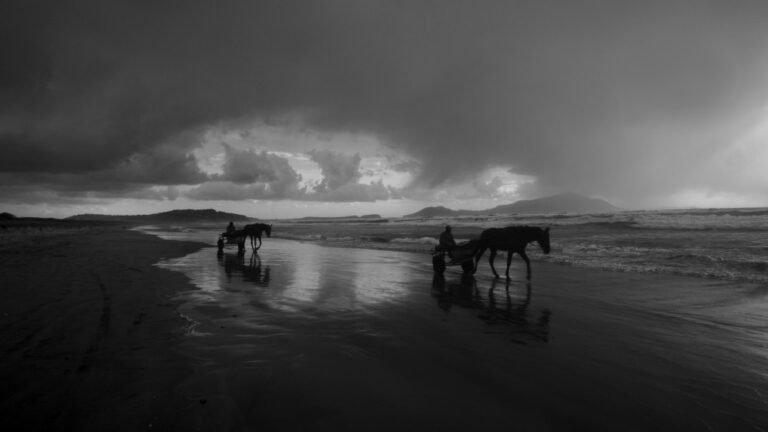
“Below the Clouds” is replete with vivid imagery and raw sounds that paint a complex portrait of the region. Rosi’s high-contrast black-and-white cinematography teases out the beauty amidst scars, capturing everything from horsedrawn carts on rainy beaches to industrial scenes touched by geopolitical shifts. The score by Daniel Blumberg complements this visual journey, using unconventional soundscapes to echo the voices of land and sea, giving Vesuvius a metaphorical voice. Through this, Rosi crafts an intricate reflection on life “Below the Clouds,” where past and present continuously converge under the watchful gaze of Vesuvius.