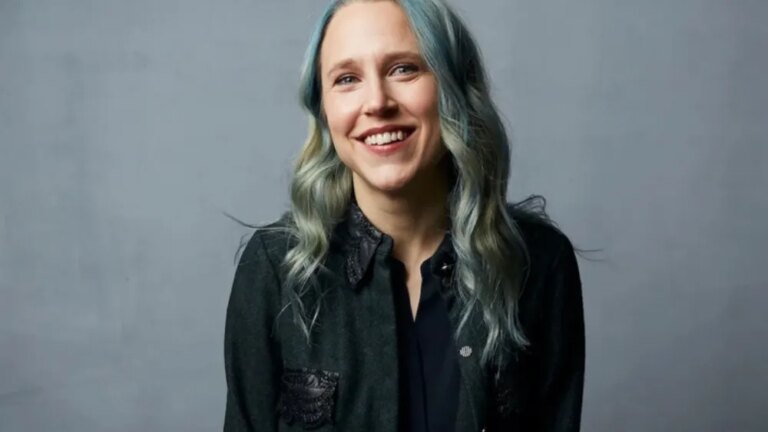
In an industry facing unprecedented challenges, Josephine Decker, the acclaimed director of award-winning films like “Madeline’s Madeline” and “Shirley,” is advocating for collaboration and community among filmmakers. Her latest work, “Chasing Summer,” featuring comedian Iliza Shlesinger, exemplifies her innovative approach to storytelling and her commitment to artistic collaboration.
Community as a Creative Force
Decker dreams of establishing a residency for films made without scripts, inspired by the improvisational success of her short film “A Stable Marriage.” “We basically had one paragraph, and then we spent a whole day improvising together. It was so much fun and so refreshing,” she shared in an interview with Variety. For her, the essence of filmmaking lies in community, stating, “I don’t write alone. I either write with a community or build stuff with actors.”
A New Recognition
Decker’s contributions to the film industry will be recognized at this year’s Tauron American Film Festival, where she will receive the Indie Star Award. The festival’s director, Urszula Śniegowska, noted that Decker’s films often reflect her own journey as a woman in a shifting landscape of art and cinema. “This retrospective has been a long time coming,” she remarked.
Redefining Artistic Comedy
In “Chasing Summer,” Decker aimed to create an “art comedy,” a genre she explored deeply while working on the film. “I think Iliza was interested in working with me because she wanted the film to feel artistic. I was thinking: ‘What’s an art comedy?’ ‘Punch-Drunk Love’ was the only one I could think of, so I watched it a bunch of times,” she explained, reflecting on the artistic challenges she embraced.
The Changing Landscape of Filmmaking
Despite her optimism for collaboration, Decker acknowledges the loneliness that permeates the current indie film scene. “Filmmaking is lonelier than ever, probably just because the world is lonelier than ever,” she noted. The landscape has shifted dramatically since Trump’s first election, making it increasingly difficult for filmmakers to navigate a market dominated by major corporations. Decker expressed concerns about the limited number of buyers in the American market, stating, “What shocked me when I took my film to Sundance this year was realizing that there are now only three buyers: HBO, Netflix, and Amazon.”
Finding Joy in the Process
Yet, Decker remains hopeful and encourages filmmakers to embrace the creative process. “We put all this pressure on ourselves to get our movie made because we think it’s going to ‘save our souls’. Art won’t save you. But the process could,” she asserted. She believes that it’s crucial to focus on the enjoyable aspects of filmmaking: “Making work is really fun. So, so fun! Instead of sitting alone in a room desperately sending your script to everyone in the world, you’re with your friends, writing in community.”
Decker’s journey as a filmmaker has been shaped by her unique upbringing, which included viewing avant-garde films from a young age. Her father, a poet and cinephile, introduced her to complex cinema, while her unconventional movie-watching experiences—often arriving late and missing key narrative elements—instilled in her a belief that “you were sculpting a narrative out of something you don’t totally understand.”
Conclusion
In an era where the film industry faces significant hurdles, Josephine Decker’s vision for community in filmmaking presents a refreshing perspective. By fostering collaborative creativity, she hopes to navigate these challenges and inspire others to find joy and connection through the art of cinema.