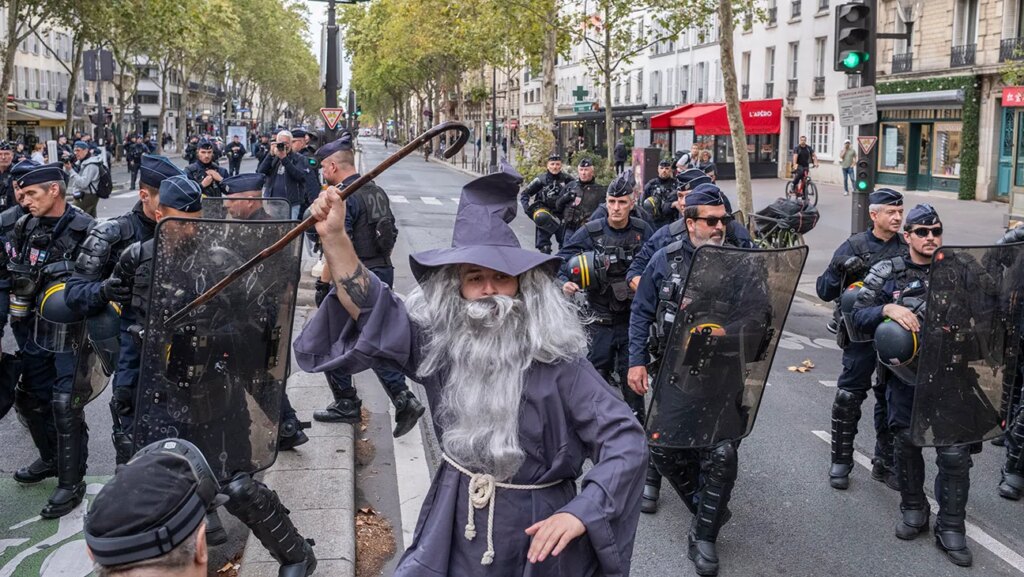
In France, high school students have taken to the streets in protest, demanding better educational conditions. Their movement has gained momentum as they are joined by a diverse group of multi-generational protesters outraged by the rising cost of living. Over three consecutive Saturdays in October, the demonstrations have featured a striking trend: participants donning costumes of superheroes, wizards, and knights, adding a theatrical flair to their calls for change.
Theatrical Protest: A Nod to History
This creative approach echoes the pageantry of the French Revolution, during which costumes from classical antiquity served as symbols of political resistance. However, the Paris Police Prefecture is cautioning against such expressions, particularly with the upcoming Halloween Protest, enforcing a 2010 anti-mask law to prevent “secret identities” at gatherings. This legislation allows for fines against any participants concealing their faces during the demonstrations.
School Conditions Under Fire
Many students have returned from break to overcrowded, poorly maintained classrooms, facing issues such as leaking roofs, malfunctioning heating systems, and inadequate sanitary facilities. The devastating heatwaves in Europe have exacerbated these issues, leaving students frustrated and disillusioned about a job market increasingly threatened by AI and automation. These concerns are intensifying the urgency of their demands for educational reform.
Creative Costumes as Catalysts for Conversation
In an effort to foster dialogue with younger participants, Hippolyte Leibovici, a 29-year-old filmmaker dressed as Gandalf from The Lord of the Rings, expresses how costumes facilitate interaction. “I ask them how school is going, what they are studying, and what they aspire to be. Every student I’ve talked to is already highly politicized and aware of the pressing issues in their education,” he shares.
As protests escalated in mid-September, students began blocking school entrances and called for national action to reform the education system by October. However, these demonstrations turned violent, resulting in serious injuries, including a 15-year-old student who lost a hand due to the police’s use of stun grenades. Reports indicated that by October 8, over 6,600 primarily underage students had been arrested.
Humor in the Face of Adversity
Dressing up as superheroes isn’t just an artistic whim; it serves a purpose. Leibovici reflects, “It truly brings joy during this dark moment in France’s history, and it’s vital for people to see the light at the end of the tunnel. Humor and satire do not diminish the seriousness of the struggle.” This sentiment resonates with other protesters, including Luca Kraether and Thomas Honoré, who don knight costumes as symbols of solidarity and shared heritage.
Kreezy, a personal trainer from the Paris region, embraced the symbolism of Marvel’s Black Panther. He states, “[Black Panther] represents the Black African community, protecting his people. I embody the peace, joy, and hope that he symbolizes. We need better people to build a better world—who better than a superhero?”
BaddyDeadpool, a content creator known for his lighthearted antics, believes that his costume captures the spirit of protest through freedom of expression. “I’m with the protesters; I don’t support violence. What’s happening with the police response to our gatherings is not right,” he asserts, emphasizing a peaceful intent behind the masked activism.
Legal Restrictions vs. Freedom of Expression
While the Paris Police Prefecture reiterated the enforcement of the anti-mask law, with violators facing heavy fines, many protesters feel this poses an unnecessary barrier to peaceful expression. “Security measures are valid, but they shouldn’t be a pretext to repress peaceful protest,” shared Kraether and Honoré, who noted the fine line between legality and civil rights in public demonstrations.
Despite the looming threat of penalties, Kreezy remained unfazed, asserting that the measures against concealment could actually harm the very essence of peaceful protests by grouping all demonstrators—be they peaceful or violent—under one banner. Reflecting on his experiences, BaddyDeadpool noted that during the October 31 protest, he faced no repercussions for his costume and message, suggesting a nuanced understanding from law enforcement about the intentions behind their disguises.
The Power of Storytelling Through Costumes
All interviewees emphasized the storytelling power of their costumes. “If we can remind our peers in the film industry that a bit of audacity, creativity, and passion can convey a story, then we’ve achieved something fruitful,” concluded Kraether and Honoré, emphasizing their belief in art as a vehicle for social change.
As students return from fall break, they are recommitting to their cause, defying warnings against protests. Major demonstrations are being organized nationwide, set to culminate in a significant strike on November 5. When asked if Gandalf would reappear at the protests, Leibovici responded with vigor: “Hell, of course, I am.”