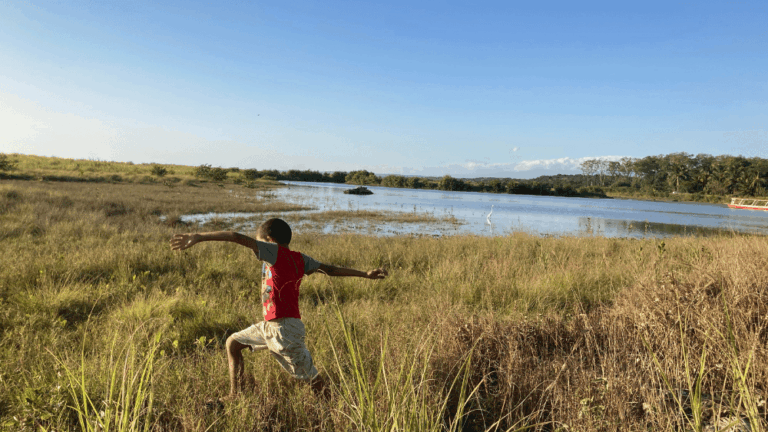
In the serene fishing village of Playa Azul, where the rhythm of life has long been dictated by the sea, the traditional way of living faces a troubling transformation. Álvaro Torres Crespo’s documentary, “Ella se detiene a mirar” (“She Stops to Look”), premiering at the Costa Rica International Film Festival, delves into the unsettling shift from artisanal fishing to drug trafficking in this corner of Costa Rica. This poignant narrative captures the community’s struggle as heritage gives way to hazardous change.
Álvaro Torres Crespo’s Inspiring Journey
Álvaro Torres Crespo reflects on his initial visit to Playa Azul, a visit not originally intended to inspire a film. “As a filmmaker, you are always thinking about films,” Crespo shares with Variety. Captivated by the fishermen resting on nets, he began exploring the community, documenting his experiences through photographs, which eventually planted the seed for his documentary.
Reuniting for a Purpose
Crespo teamed up with his long-time collaborator Caleb Kuntz, an American photographer and cinematographer. Their collaboration began with Crespo’s debut documentary “Nosotros las piedras,” and the pair recreated that immersive experience in Playa Azul. Over four years, they returned to capture the evolving narrative of this fishing village.
A New Perspective Through Yesenia
Initially, Crespo focused on the children of the village, yet his perspective shifted. The story found its voice through Yesenia, a woman from a fishing family, quietly observing as her world changed. Her husband and children, along with neighbors, gradually veered from traditional fishing to drug trafficking. “At first, she was always in the background,” Crespo notes, yet ultimately her perspective became central to conveying the community’s story.
Exploring Human and Nature Dynamics
The film touches on broader themes Crespo has explored before—how people relate to nature across Costa Rica. His previous works like “Nosotros Las Piedras” and “Not Only the Bird is Beautiful” also navigate the tension between human life and the natural world. Crespo asserts, “I want us to understand our relationship with nature,” emphasizing a reality far removed from glossy tourism portrayals.
A Commitment to Costa Rican Cinema
Despite studying in the U.S., Crespo’s dedication remains with Costa Rican filmmaking. He returned home immediately after his studies, driven by a passion to tell local stories. “I don’t see myself making films elsewhere,” he insists, highlighting a burgeoning movement of filmmakers in the region.
Premiering “Ella se detiene a mirar” at the Costa Rican festival is a homecoming for Crespo. The documentary brings a little-known reality to light, challenging audiences to understand and empathize with the unseen struggles unfolding not far from the capital. For Playa Azul’s residents, Crespo hopes his film resonates as true and honest, authentically reflecting their lived experiences.