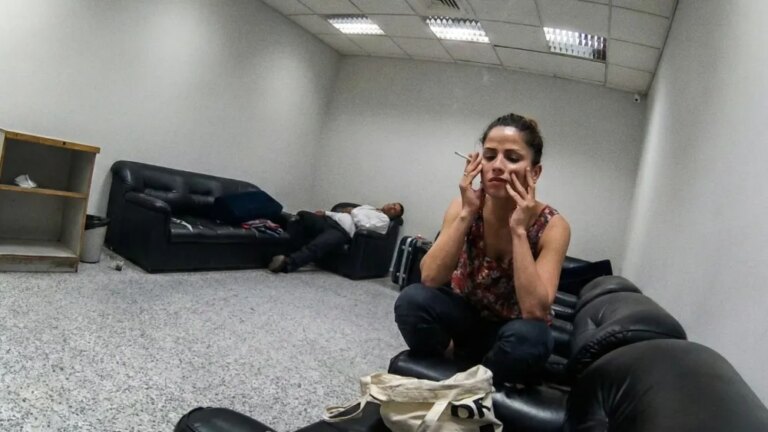
In a world where stories of resilience are pivotal, the narrative of filmmaker Daro Hansen emerges, chronicling her journey from a forced marriage to capturing personal healing through her debut documentary, “Little Sinner.” Hansen’s story begins with a daring escape plan that marked the beginning of a new life, a defining moment captured in her film. Using the camera as a tool not just for storytelling but as a form of therapy, Hansen transforms trauma into art, offering a raw portrayal of survival and self-discovery.
From Forced Marriage to Filmmaking
Back in 2009, Daro Hansen, a Syrian journalism student, orchestrated a bold escape from a violent marriage. Armed with a SIM card hidden in her shoe and a phone concealed in her clothing, she sent a critical message to friends as she stepped into a building in Damascus, marking the beginning of a life in hiding. This daring escape is the genesis of her documentary journey.
“Little Sinner,” Hansen’s debut feature co-directed with Danish filmmaker Thomas Papapetros, is set to premiere at the Copenhagen International Documentary Film Festival, CPH:DOX. Spanning nearly 20 years and drawing from a trove of personal footage filmed across Syria, Denmark, Lebanon, and Greece, the film provides an intimate look into Hansen’s efforts to address her past, marred by forced marriage, familial betrayal, and exile.
Navigating Trauma Through the Lens
Hansen’s ordeal began with a supposed temporary engagement intended to safeguard her family’s honor, which instead spiraled into a violent relationship. A turning point came when Hansen’s husband attempted a brutal assault, prompting her realization that escape was necessary for survival. With the support of her Danish boyfriend Toke, who played a pivotal role in her escape, Hansen relocated to Denmark, though the psychological scars endured.
The Syrian civil war in 2011 reignited Hansen’s unhealed wounds, drawing her into humanitarian work in Lebanon and Greece. Engaging with refugees, she recognized parallels with her own story and uncovered aspects of herself she had been avoiding. “Meeting these people, their strength, their way of continuing to live made a deep impression on me,” she reflects. Her film captures this personal and shared resilience.
The Emotional Core of “Little Sinner”
The heart of “Little Sinner” lies in Hansen’s realization that the deepest harm came not from physical violence but from her mother’s failure to protect her. “If there is one simple message I hope people take away from this film, it’s that they find a shorter way home to themselves than the one I did,” she shares, emphasizing that the narrative transcends religious affiliations and highlights universal themes of social control present across cultures.
Hansen emphasizes, “People often associate forced marriage with Islam, but this is about tradition. Social control exists in every culture – it’s here in Denmark, it’s in the U.S., it’s in China.” The film challenges these stereotypes and provides a broader view of the societal pressures that can lead individuals away from their true selves.
A Collaborative Artistic Process
Hansen and Papapetros first joined forces in 2012 while working on a documentary about the Syrian conflict, eventually collaborating on film workshops with refugees in Lebanon. Their partnership extended to humanitarian efforts on Lesbos during the migration crisis. Papapetros, feeling a natural compulsion, began documenting Hansen as she navigated these challenging situations.
“Much of the footage used in the film was not originally intended for a documentary,” Hansen notes, revealing how she often turned to the camera for solace. “It’s super private. Sometimes I just used the camera as therapy.” The inclusion of editor Michael Aaglund brought fresh insight, shaping the vast archive into a cohesive narrative.
The documentary finds its natural closure with the birth of Hansen and Papapetros’ son, Lukas. “The last scene we recorded for the film was the birth of Lukas,” Papapetros recalls. “When that was in the box, we said: ‘OK – this is the end.’”
For Hansen, “Little Sinner” represents more than a film—it’s a journey towards self-forgiveness and understanding. The title reflects her personal experience of self-betrayal, turning the lens inward. “We learn very early in life to take responsibility for the atmosphere in our families and the relationships around us. We often go beyond our own boundaries for others, and in doing so, we forget to check in with our bodies and our gut feelings. Sometimes we forget ourselves completely – and that, for me, is the real sin. I forgot myself. I let myself down.”
Produced by GotFat Productions with support from several institutions, “Little Sinner” is poised to leave a lasting impact at CPH:DOX, encouraging audiences to explore their own paths to healing.