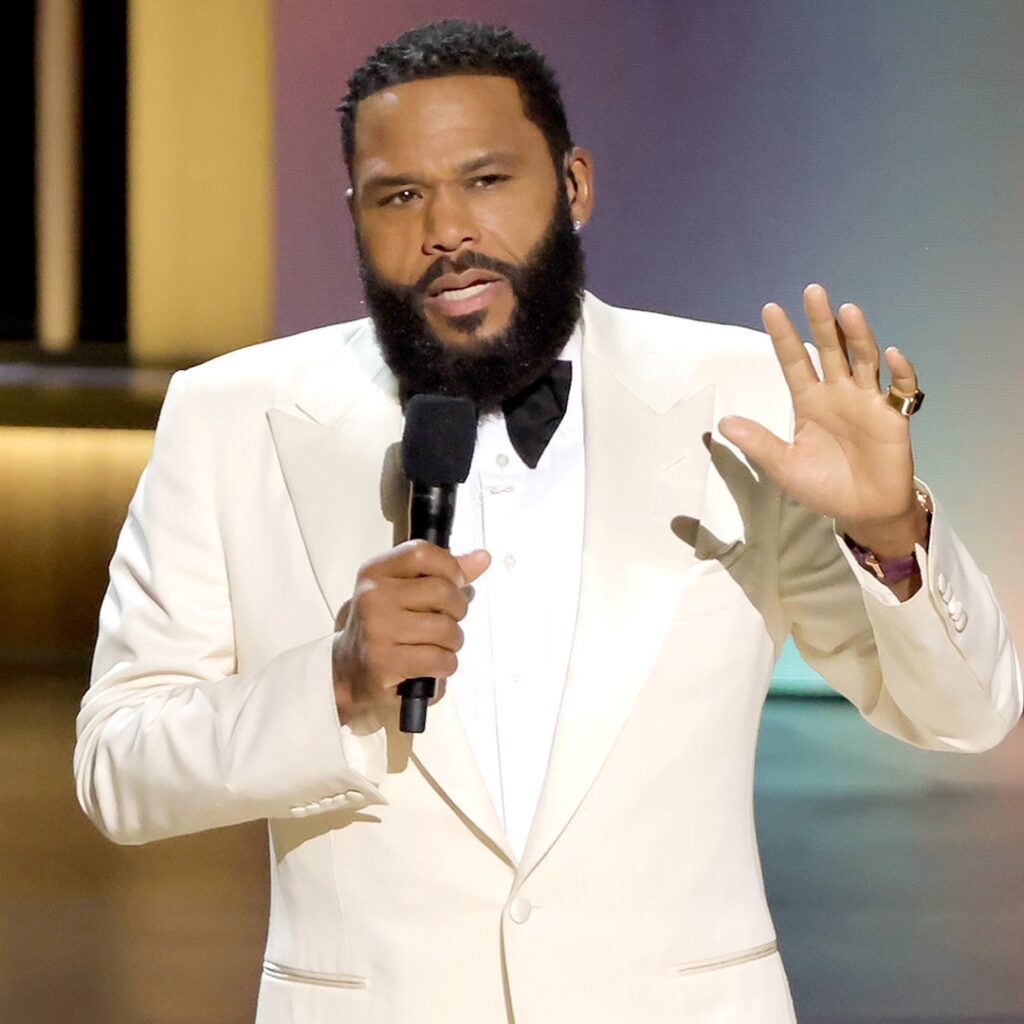
Anthony Anderson has recently addressed renewed attention on a past interview involving Lindsay Lohan, with the Black-ish star clarifying recent criticism. In a resurfaced clip from his 2003 appearance on The Sharon Osbourne Show, Anderson engaged in a controversial exchange with a then-17-year-old Lindsay Lohan. As discussions around the interview gain momentum, Anderson aims to provide context and clear the air.
A Resurfaced Interview Sparks Controversy
The interview clip that has ignited the conversation features Anthony Anderson interacting with Lindsay Lohan, who was promoting her work shortly after purchasing a home with Raven-Symoné. During the segment, Anderson asked Lohan about potential male visitors to her new place, prompting her to respond, “No one,” indicating she was single. Anderson humorously announced to the audience, “She’s single but looking!” Lohan quickly added, “But I’m illegal for people that are old,” to which Anderson quipped, “Well, you know, some men like ’em young. We ain’t gonna mention no names, but, you know, I’m one of ’em,” before breaking into laughter.
Online Reaction and Backlash
As the 2003 clip gained traction online, social media erupted with criticism. Viewers highlighted the interview’s discomfort, with comments suggesting the exchange “hasn’t aged well.” This digital resurgence has prompted many to re-evaluate past media interactions through a modern lens, bringing new sensitivities and perspectives to light.
Anthony Anderson Responds
Amidst the backlash, a representative for Anthony Anderson spoke out, aiming to mitigate the criticism. The representative emphasized the comedian’s intention to entertain and conveyed that the comments were made in a light-hearted context. In seeking to address the controversy, Anderson hopes to quell any misunderstandings surrounding the interaction with Lohan.
As the conversation about past media conduct continues, Anthony Anderson’s recent statements contribute to a broader discourse on how humor and sensitivity have evolved, encouraging audiences to reflect on the cultural shifts in media interactions.