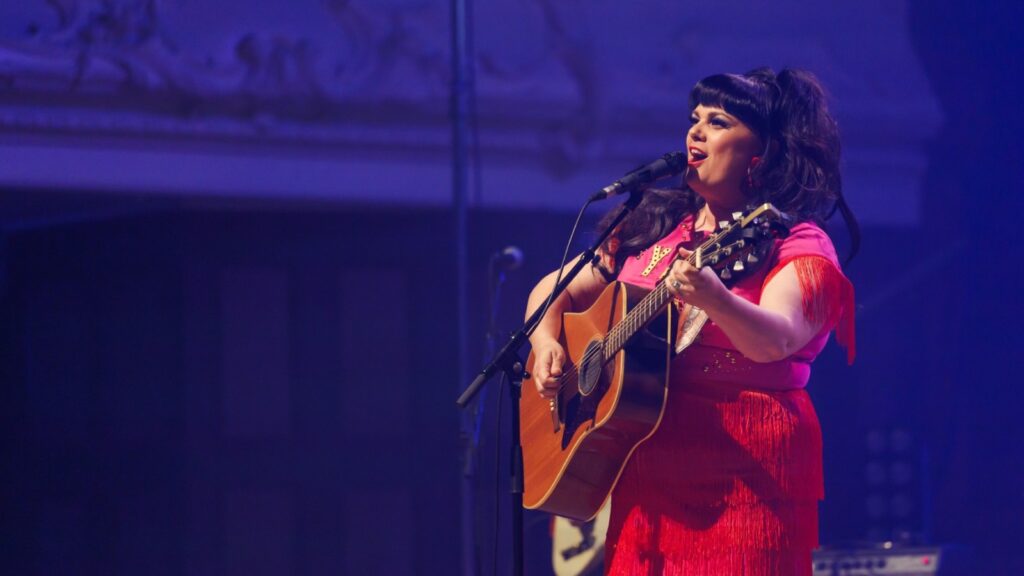
The proposed funding cuts to public broadcasting under Trump‘s administration are sparking concern among Americana artists who see these reductions as a threat to their livelihood. For musicians like Tami Neilson, whose genre relies heavily on public radio support, the cuts represent more than just a financial setback; they signify a severing of a crucial connection to their audience. This change could leave many artists without a platform.
Shockwaves Through the Americana Community
Recently, Tami Neilson found herself celebrating as her album, Neon Cowgirl, made it into the Top 10 of the Americana Music Association’s radio chart. This milestone was celebrated alongside works by Mumford & Sons and Tyler Childers. However, this triumph was overshadowed by the news of Congress withdrawing funding from the radio stations that champion her genre. “It was complete joy and gratitude,” Neilson shared. “But hearing about the defunding was a gut punch.”
The cuts stem from a plan by President Trump to reduce funding for public broadcasting, affecting stations dedicated to Americana and other roots music genres. As budgets shrink, the very platforms that introduced and popularized these artists are now at risk.
The Financial Strain on Public Radio
Public radio stations depend on the Corporation for Public Broadcasting (CPB) to help cover music licensing fees. With over $1.1 billion redirected away from the CPB, these stations face a dire financial challenge. The organization announced that it will “begin an orderly wind-down of its operations” following recent budget cuts. These stations are vital, offering a platform for Americana music, among others.
WMOT in Nashville, a beacon for Americana music, now needs around $200,000 for fees necessary to broadcast their music mix. Program director Jessie Scott emphasized the importance of this support: “Without that license, you can’t play music, and we obviously don’t want that to happen.”
Broader Implications for Community Music
The impact extends beyond radio playlists; it threatens community engagement with the music. The Folk Alliance International (FAI) Folk Chart, for example, depends on these stations for its rankings. According to FAI’s executive director Jennifer Roe, “Community radio stations are an outlet for discovery.” The loss could mean fewer opportunities for local talents to reach wider audiences.
Singer-songwriter Mary Gauthier expressed concern that defunding might suppress artists opposing the administration. Public radio offers them a crucial platform, which may soon diminish. “Speaking our minds is a big deal,” Gauthier noted, emphasizing how these stations help artists connect with listeners.
Seeking Solutions Amidst Uncertainty
Stations like WMOT are seeking to offset financial losses through fundraising and appealing to patrons passionate about public radio. Yet, solutions remain uncertain as Americana music gains in popularity. The community hopes events like the AmericanaFest in Nashville will continue to celebrate the genre’s vibrant culture.
WMOT’s Scott stressed that the focus remains on music, not politics: “We just play the music.” As the genre’s champions grapple with change, the future of Americana music on public airwaves hangs in the balance.