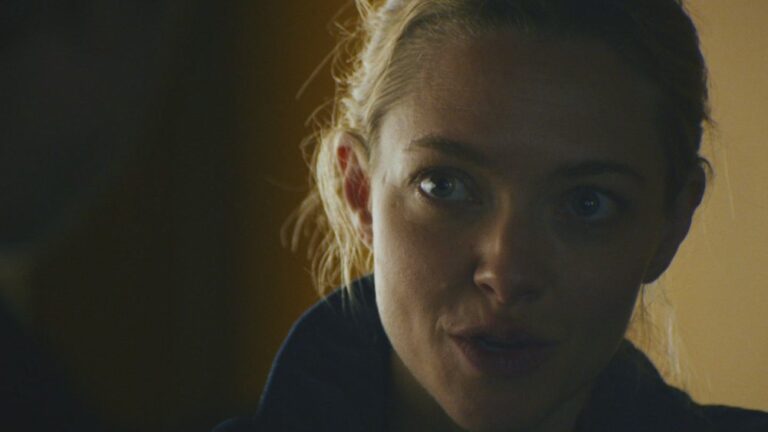
Amanda Seyfried is making waves with her striking performance in the documentary “You Can See Everything,” which explores the life of Elizabeth Holmes. Not only does Seyfried appear in the film, but her dual role as both Holmes and herself has sparked discussions about the possibility of her becoming the first actor to win an Academy Award for a documentary performance. Furthermore, since she previously portrayed Holmes in Hulu’s “The Dropout,” this could also position her for a unique achievement: winning both an Oscar and an Emmy for playing the same character.
The Secret Participation
Distributor A24 kept Seyfried’s involvement in the documentary under wraps, adhering to a strict guideline that prevented media outlets from mentioning her role in early reviews. This secrecy heightened the film’s anticipation and allowed Seyfried to introduce a layer of authenticity and emotional resonance to an otherwise complex narrative.
A Box Office Hit
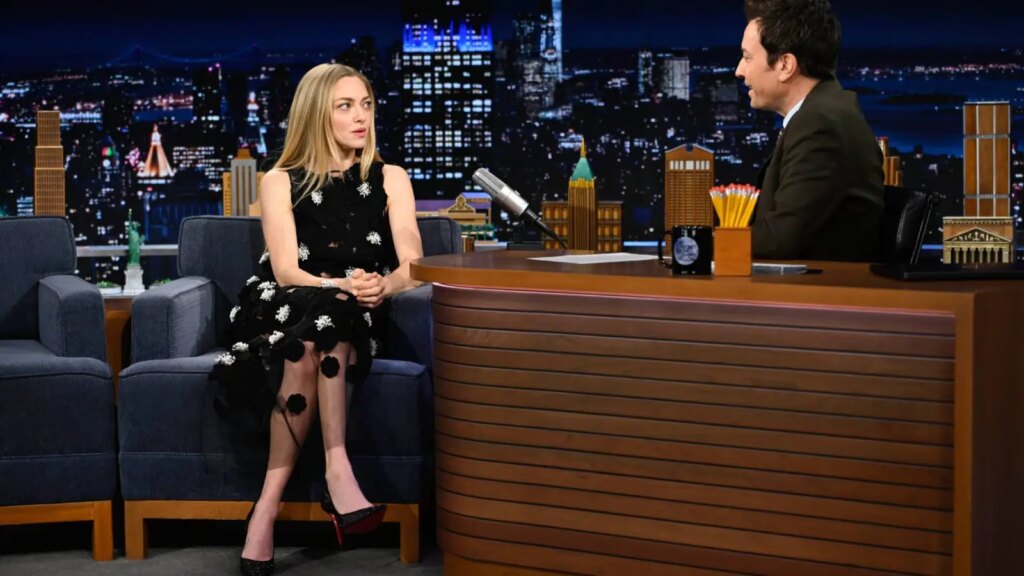
As the film has captured the public’s imagination—breaking the $100 million mark at the global box office, inspiring a wave of memes, and contributing to the evolution of the documentary genre—Seyfried’s status as a frontrunner in awards circles has been solidified. Her press tour recently included an appearance on “The Tonight Show with Jimmy Fallon,” where she shared more insights about her unexpected role.
Unusual Circumstances
During her conversation with Fallon, Seyfried discussed the unique circumstances surrounding her participation in the project. Initially, she joined “You Can See Everything” during the final stages of production. “At first, they had just done their whole documentary, and then I just jumped in kind of at the last minute, and it turned into something else,” she explained.
Research and Script Security
On set, once Holmes was incarcerated, Seyfried adopted her persona, reenacting key scenes. She described having considerable research material about Holmes, given the latter’s public image. However, she noted an intriguing twist: “The only footage I had of her in the present-day, or at that point when they were living with her, is the documentary itself, and I couldn’t watch the footage until I got to set.”
Adding to the film’s secrecy, Seyfried pointed out that the script itself was closely guarded. She remarked, “I didn’t know what the script would be until I got to set, or it would be, like, a five-factor authentication app where I could maybe read it the night before,” showcasing the lengths to which the production team went to preserve the film’s surprises.